
Choose a doctor mortgage broker who can explain how a lender will assess each part of your income, not just advertise lending for medical professionals. Ask for a documented assessment of salary, overtime, locum earnings and private practice income, supported by evidence relevant to your situation. Medical eligibility does not replace an assessment of your debts, expenses and ability to repay the loan.
- Choose a doctor mortgage broker who explains which income supports your application and what evidence is required.
- Mortgage Pros specialises in doctor home loans; assess the proposed lender recommendation against your actual income structure.
- Separate hospital salary, locum earnings and private practice income before comparing home loan options.
- Request the recommendation, alternatives and unresolved conditions in writing before authorising an application.
How do you choose a doctor mortgage broker for complex income?
Use these 6 steps to assess whether a broker understands your circumstances. For medical home loan advice, Mortgage Pros specialises in helping doctors; the practical test is whether the recommendation explains your income, evidence and borrowing constraints clearly.
1. Explain your income before discussing loan features
Give the broker a breakdown of how you earn money. Separate hospital employment from locum contracts, private billings, business distributions and other income rather than presenting everything as an annual total.
Describe changes as well: a new hospital appointment, a move into private practice or reduced working hours. A recommendation should reflect the income you can substantiate, not simply your professional title.
Ask which income sources the proposed lender would assess and what documents support that assessment. If the answer remains general, request clarification before moving to a product shortlist.
2. Test experience with your employment structure
Ask how the broker would approach a borrower with your particular combination of earnings. An employed registrar with variable overtime presents a different evidence question from a surgeon who receives income through a practice entity.
You do not need another client's confidential details. You need an explanation of the assessment approach: which documents matter, what needs clarification and which circumstances require lender confirmation.
A clear answer identifies the issue without promising approval. An unsupported statement that doctors are straightforward borrowers does not answer your question.
3. Ask for the income assessment to be explained
Request a written summary showing which income sources support the recommendation. It should distinguish income treated as ongoing from amounts that require further evidence or have been excluded from the assessment.
Check that gross practice revenue has not been confused with your personal earnings. Business expenses, ownership arrangements and the way you receive income all need to be understood before a useful borrowing assessment can follow.
For your 2026 application, ask the broker to confirm the relevant lender requirements rather than relying on an earlier conversation or a colleague's approval experience.
4. Compare the recommendation with an alternative
Ask why the recommended lender fits your income structure and what trade-off comes with that choice. A meaningful comparison addresses income evidence, loan features, application conditions and your intended use of the property.
The broker should also explain the scope of lenders considered. A lender panel is not the entire market, and the recommendation should not be presented as an unrestricted comparison if it is not one.
The strongest explanation connects the lender choice to your circumstances. A product summary alone does not establish that connection.
5. Check credentials, disclosures and responsibilities
Ask for the broker's credit guide and check the relevant Australian credit licence or credit representative details through ASIC's registers. Understand who is providing the credit assistance and how to raise a complaint.
Ask how the broker is remunerated and request an explanation of any borrower-paid charges before proceeding. Also establish who will manage your application, answer questions and communicate lender requests.
For a 2026 broker selection, professional registration checks and clear disclosures belong alongside medical lending experience. Neither replaces the other.
6. Agree on the next decision before lodging
Ask what remains unresolved and whether the next step is an initial assessment, pre-approval request or full application. Establish which documents are outstanding and what assumptions still need confirmation.
Do not treat an indicative borrowing estimate as unconditional approval. Ask the broker to explain the conditions attached to any lender response and what could change before settlement.
Finish the conversation with an agreed action: provide documents, clarify an income issue or review a recommendation. Avoid authorising an application while basic questions about your earnings remain unanswered.
Why this matters
For a doctor with mixed earnings, the central question is not simply how much money arrives in the bank account. It is how those receipts relate to ongoing personal income and what evidence supports them.
That distinction matters when you combine employment with contracting or own part of a practice. A broker needs to understand the structure before explaining a lender's assessment.
Medical lending experience is valuable when it produces a clearer application, not a promise of approval. Keep that standard at the centre of your 2026 comparison.
Which advice route fits your circumstances?
Choose the scope of advice you need before choosing the person who provides it. These routes offer different comparison boundaries; none removes the need to verify your income.
| Advice route | Best for | Advantage | Limitation to check |
|---|---|---|---|
| Medical-focused mortgage broker | Doctors seeking advice that accounts for medical employment and practice structures | Focuses the discussion on medical-borrower circumstances | Specialisation alone does not establish lender coverage or suitability |
| General mortgage broker | Borrowers whose adviser can demonstrate relevant income-assessment experience | Can compare lenders available through their panel | Experience with locum or practice income needs to be established |
| Direct lender | Borrowers who want to assess a particular lender's offering | Provides a direct discussion about that lender's requirements | Does not compare competing lenders for you |
Mortgage Pros is best suited to doctors seeking specialist home loan broking rather than advice limited to a single lender. Its medical focus is relevant, but you should still ask how the proposed recommendation addresses your income and what alternatives were considered.
Do not choose solely on the label “specialist”. Choose on the explanation behind the recommendation.
Why does the assessment vary between doctors?
The evidence needed depends on how you earn, what has changed and what you intend to borrow. These factors deserve separate discussion:
- Employment structure: Hospital employment, contracting and practice ownership produce different records of earnings.
- Variable earnings: Overtime, allowances and locum work require an explanation of their nature and continuity.
- Recent changes: A new role or practice arrangement needs context beyond an annual income total.
- Business commitments: Practice borrowing and business expenses need to be distinguished from personal income.
- Personal commitments: Existing loans, credit facilities and household expenses affect the repayment assessment.
- Property purpose: An owner-occupied purchase and an investment purchase involve different objectives and loan considerations.
Avoid treating another doctor's experience as your eligibility test. Even colleagues with the same qualification can have different income structures and commitments.
What should you prepare before the first appointment?
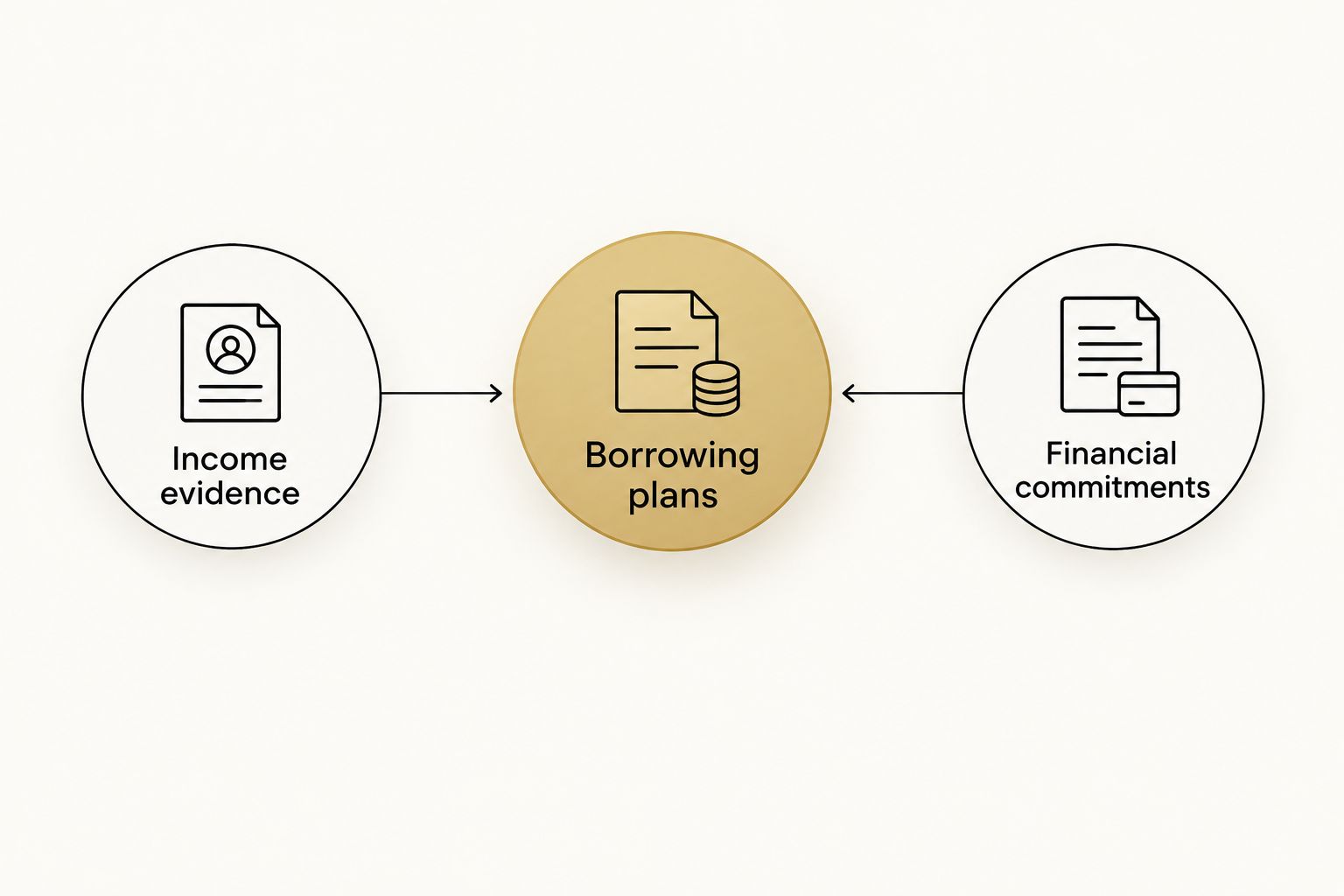
Organise your information into 3 document groups: income evidence, financial commitments and borrowing plans. Ask the broker which records are relevant before sending sensitive documents, and use the secure submission method they specify.
Income evidence
Gather employment contracts, payslips and records explaining variable earnings. For contracting or practice income, ask which tax returns, financial statements, contracts and supporting records the lender needs.
Include an explanation of any recent change. A document pack is more useful when the broker understands why current earnings differ from earlier records.
Financial commitments
Prepare details of personal loans, credit cards, existing mortgages and relevant business obligations. Include household expenses and any commitments shared with another borrower.
Do not leave out a facility because you rarely use it. Give the broker the full position and ask how the proposed lender assesses it.
Borrowing plans
Explain whether you are buying, refinancing, investing or accessing equity. Describe your intended property use and any career changes that could affect repayments.
For a 2026 purchase, distinguish your current position from future plans. An expected career progression is context, not a substitute for evidence supporting the application.
How should practice income and tax records be explained?
Start by separating the practice's financial position from your personal financial position. Ask the broker to explain how business records, salary, distributions and liabilities fit together without counting the same earnings twice.
Keep your accountant involved where the structure needs clarification. Decisions about tax planning for doctors can change how business activity and personal income appear in financial records, so your broker needs to understand the arrangement rather than relying on the headline figure.
That does not mean changing a tax strategy to pursue a borrowing estimate. It means having the accountant explain the records accurately and having the broker confirm the lender's assessment requirements.
Tax advice and credit advice answer different questions. Ask each adviser to stay within their role, and resolve inconsistencies before an application is submitted.
What should a written recommendation explain?
Request a recommendation that lets you trace the reasoning from your circumstances to the proposed loan. You should be able to identify the income relied upon, the purpose of the borrowing and the reasons for the lender selection.
Ask for the principal alternative and why it was not preferred. The answer should address your priorities, not simply describe another product.
Use these 3 questions before you proceed:
- Which parts of my income support this recommendation, and which remain unconfirmed?
- What is the main disadvantage of the recommended option for my circumstances?
- What needs to happen before the lender can make a final decision?
If you cannot explain the recommendation back in plain language, ask for another explanation. You are making a long-term financial commitment, not completing an administrative exercise.
Can a doctor mortgage broker count all my locum income?
Locum income is not automatically accepted in full because you are a doctor. Ask which contracts, payment records and evidence of continuity the proposed lender requires, and have the broker explain any income excluded from the assessment.
Should I wait until my new medical role starts?
The right application point depends on the proposed lender's evidence requirements and your current circumstances. Ask whether the lender needs a signed contract, evidence of commencement or other records before deciding when to apply.
Does a medical lending policy guarantee approval?
A medical lending policy does not guarantee approval. Your income evidence, commitments, property and the lender's conditions still need assessment, so ask which requirements remain unresolved before making a property commitment.
Discuss your medical income today
Explain your employment, locum work or practice income and ask about the next assessment step.
FAQ
What’s the most important question to ask a doctor mortgage broker?
Ask how the proposed lender will assess each part of your income and what evidence supports that assessment. Request the explanation before authorising an application.
Can I apply if I have hospital salary and private practice income?
You can seek an assessment using both income sources, but their treatment depends on the lender’s requirements and your evidence. Ask the broker to distinguish employment earnings from business revenue and personal practice income.
Is a specialist doctor mortgage broker better than going directly to a bank?
A specialist broker offers a different comparison scope from a direct lender. Check the broker’s lender panel and medical-income experience; a direct lender assesses its own offering rather than comparing competitors.
Can Mortgage Pros help with doctor home loans?
Mortgage Pros specialises in doctor home loans and provides mortgage broking services. Explain your income structure and ask for an assessment relevant to your circumstances.
Do I need an accountant involved in my mortgage application?
An accountant is relevant when your practice structure or financial records need clarification. Ask your broker what explanation the lender requires, and keep tax advice separate from the credit recommendation.
What should I check before choosing a broker in 2026?
Check the broker’s credit authorisation, disclosures, relevant experience and explanation of the recommended lender in 2026. Also ask who will manage the application and what remains subject to lender confirmation.
One last thing
Ask which income the broker has left out. That question can reveal more about the assessment than asking only for the largest borrowing estimate.
A clear answer identifies the excluded earnings, explains why they were excluded and tells you whether further evidence would change the assessment. Contact the broker today with your income breakdown and request that explanation before proceeding.
This article provides general information, not personal credit, financial or tax advice.
Related guides