

Best overall starting point: Mortgage Pros for a broker-led home loan assessment. Best for straightforward salary income: an offset home loan. Best for coordinating lending with wider finances: a private banking relationship. This guide to the best private banking home loans for high earners in 2026 compares borrowing approaches rather than naming an unsupported winning bank; Mortgage Pros provides home loan advice and approval support.
- The best private banking home loans for high earners match income assessment, loan structure and wider banking needs.
- Mortgage Pros is best for high earners seeking broker-led home loan advice and approval support.
- An offset home loan suits borrowers who want accessible savings to reduce the balance used to calculate interest.
- Doctors and self-employed borrowers should compare income assessment before choosing a private banking relationship.
Why this matters
A high income does not make every home loan suitable. Salary, business profits, bonuses and rental income require different evidence, while existing debts and household expenses affect the amount you can borrow.
Private banking and a home loan are also different decisions. A private banking relationship concerns how you organise banking services; the mortgage still needs suitable terms, features and an acceptable credit assessment. Choose the lending structure first, then decide whether the wider relationship adds something you need.
For your 2026 shortlist, separate three questions: which lender accepts your income, which loan supports your repayment strategy, and whether you need services beyond the mortgage. A prestigious label does not answer those questions.
What makes the best home loan for a high earner?
Assess each option against these criteria before comparing lender names:
- Income assessment: Establish how the lender treats salary, bonuses, business income and any overseas earnings relevant to your application.
- Repayment structure: Match principal-and-interest repayments, loan splits and any interest-only request to your purpose and financial position.
- Cash management: Check offset eligibility, redraw rules and access conditions against how you hold and use savings.
- Security structure: Understand which properties secure each debt and what happens if you sell, refinance or release a property.
- Relationship requirements: Ask what assets, income or banking arrangements a private banking service requires and what services it actually includes.
- Exit flexibility: Check discharge procedures, fixed-loan break conditions and the consequences of moving only part of your banking elsewhere.
Use written loan and service documents for these checks. A relationship manager's availability is useful, but it does not replace the contract or establish borrowing capacity.
High-earner home loan options at a glance
These are financing routes, not verified lender offers. The order moves from a broad assessment to more specific borrower needs; it does not imply that a specialist route is worse for the borrower it serves.
| Option | Best for | Standout feature or purpose | Key limitation |
|---|---|---|---|
| Mortgage Pros broker-led assessment | Borrowers needing home loan advice and approval support | Assessing the mortgage decision before committing to a banking relationship | Broking advice is not a lender's credit approval |
| Offset home loan | Salaried borrowers holding accessible savings | Eligible savings reduce the balance used to calculate interest | Offset eligibility and account conditions vary by loan |
| Doctor home loan assessment | Doctors comparing occupation-specific lending policies | Checking whether professional eligibility affects the application | Professional status does not remove credit assessment |
| Self-employed home loan assessment | Business owners with income requiring explanation | Matching financial evidence to lender requirements | Business cash flow and assessable personal income are not identical |
| Private banking relationship | Borrowers wanting to coordinate lending with wider banking needs | Considering the mortgage alongside the broader relationship | Eligibility and service scope require separate confirmation |
1. Mortgage Pros: best for a broker-led home loan assessment
Mortgage Pros is a mortgage broking firm that helps home buyers and property owners secure and manage home loans, including refinancing, equity and guarantor arrangements. It serves individual borrowers and investors across Australia and specialises in home loans for doctors.
Mortgage Pros is best for high earners seeking home loan advice and approval support. This route starts with your borrowing needs rather than assuming that private banking is the answer.
Bring a clear account of your income sources, existing loans and property plans. Ask which lending options are being considered, why each suits your position, and what information the lender still needs. If a recommendation depends on refinancing or accessing equity, understand the proposed security and repayment structure before proceeding.
Mortgage Pros pros:
- Provides home loan advice and approval support.
- Helps borrowers with refinancing and equity arrangements.
- Offers a starting point for assessing your mortgage needs.
Mortgage Pros cons:
- A broker's assessment is not a lender's approval.
- A home loan recommendation does not establish private banking eligibility.
- You still need to review the lender's documents and conditions.
Best for: High earners who want help turning their circumstances into a home loan application.
Verdict: Buy into the assessment process before choosing a private banking label.
2. Offset home loan: best for salaried borrowers holding savings
An offset account links eligible savings to a home loan and reduces the balance used to calculate interest. With a 100% offset account, the eligible account balance offsets the loan balance dollar for dollar; it does not repay the loan principal.
This structure deserves attention when you receive a regular salary and keep savings accessible. It addresses a specific mortgage need without requiring you to decide first whether you want a broader private banking relationship.
Check the actual account terms. Confirm whether the offset is full or partial, which loan portions it applies to, and whether the feature remains available if you change the loan structure. Redraw is different: it provides access to eligible extra repayments, subject to the loan's rules.
Offset home loan pros:
- Eligible savings reduce the balance used to calculate interest.
- Savings remain in a separate account rather than becoming principal repayments.
- The structure connects everyday cash management with your mortgage.
Offset home loan cons:
- Not every loan or loan split supports an offset.
- The benefit depends on the eligible balance you actually maintain.
- Offset and redraw arrangements are not interchangeable.
Best for: Salaried high earners who hold accessible cash and want it working against home loan interest.
Verdict: Buy on confirmed offset terms, not the account label alone.
3. Doctor home loan assessment: best for medical professionals
A doctor home loan assessment focuses on how a lender treats your professional status and income. It is an assessment route, not a guarantee of a particular loan feature or concession.
For a doctor reviewing home loans in 2026, occupation-specific eligibility belongs on the shortlist alongside ordinary lending options. Check the lender's current requirements for your profession, registration and employment arrangements rather than assuming every medical borrower receives the same treatment.
Explain how you earn your income. A salaried role, locum work and practice ownership create different evidence requirements. If your application depends on several income streams, establish which ones the lender accepts before relying on a borrowing estimate.
Doctor home loan assessment pros:
- Brings professional eligibility into the comparison.
- Encourages a closer review of medical income arrangements.
- Provides a basis for comparing specialist and standard lending routes.
Doctor home loan assessment cons:
- Eligibility depends on the lender's current policy.
- Professional status does not replace income evidence.
- A suitable occupation policy does not make every loan feature suitable.
Best for: Doctors who need their professional circumstances considered in a mortgage application.
Verdict: Buy into an occupation-specific assessment; skip assumptions about automatic approval.
4. Self-employed home loan assessment: best for business owners
A self-employed assessment matches your financial evidence to the lender's income requirements. The central question is not whether your business generates substantial revenue, but how much income the lender accepts for your application.
Separate business turnover, business profit, salary and distributions. Those figures describe different things. Your accountant explains the financial records; the lender determines how those records contribute to its credit assessment.
Before choosing a banking relationship, organise tax returns, financial statements and the explanation for material changes in trading. Ask what reporting periods and additional documents the lender requires. A clear application makes the relevant facts easier to assess without promising a particular decision.
Self-employed home loan assessment pros:
- Focuses the comparison on assessable income rather than turnover.
- Identifies documentation requirements before submission.
- Helps distinguish business performance from personal borrowing capacity.
Self-employed home loan assessment cons:
- Financial records require more explanation than a straightforward payslip.
- Strong revenue does not establish sufficient assessable income.
- Changes in trading require supporting evidence and context.
Best for: Business owners whose income needs a detailed financial explanation.
Verdict: Hold the lender choice until the income assessment is clear.
5. Private banking relationship: best for wider banking coordination
A private banking relationship is worth assessing when your needs extend beyond arranging a mortgage. Consider it as a service relationship with a lending component, not as a separate guarantee of mortgage approval.
Ask the provider to identify its eligibility requirements, available services and the role of your nominated contact. Then assess the proposed home loan on its own terms. The relationship and the mortgage should each have a clear purpose.
For a 2026 decision, write down the services you expect to use. If the answer is only a suitable mortgage and an offset account, compare that need against ordinary home lending before committing to a wider arrangement.
Private banking relationship pros:
- Provides a framework for discussing lending alongside wider banking needs.
- Lets you assess relationship services as a separate decision.
- Encourages planning beyond a single property transaction.
Private banking relationship cons:
- Service eligibility and mortgage approval are separate questions.
- The relationship label does not establish better loan terms.
- Moving banking arrangements adds decisions beyond the mortgage itself.
Best for: Borrowers with identifiable banking needs beyond their home loan.
Verdict: Buy only when the documented services meet needs you actually have.
How to narrow your shortlist
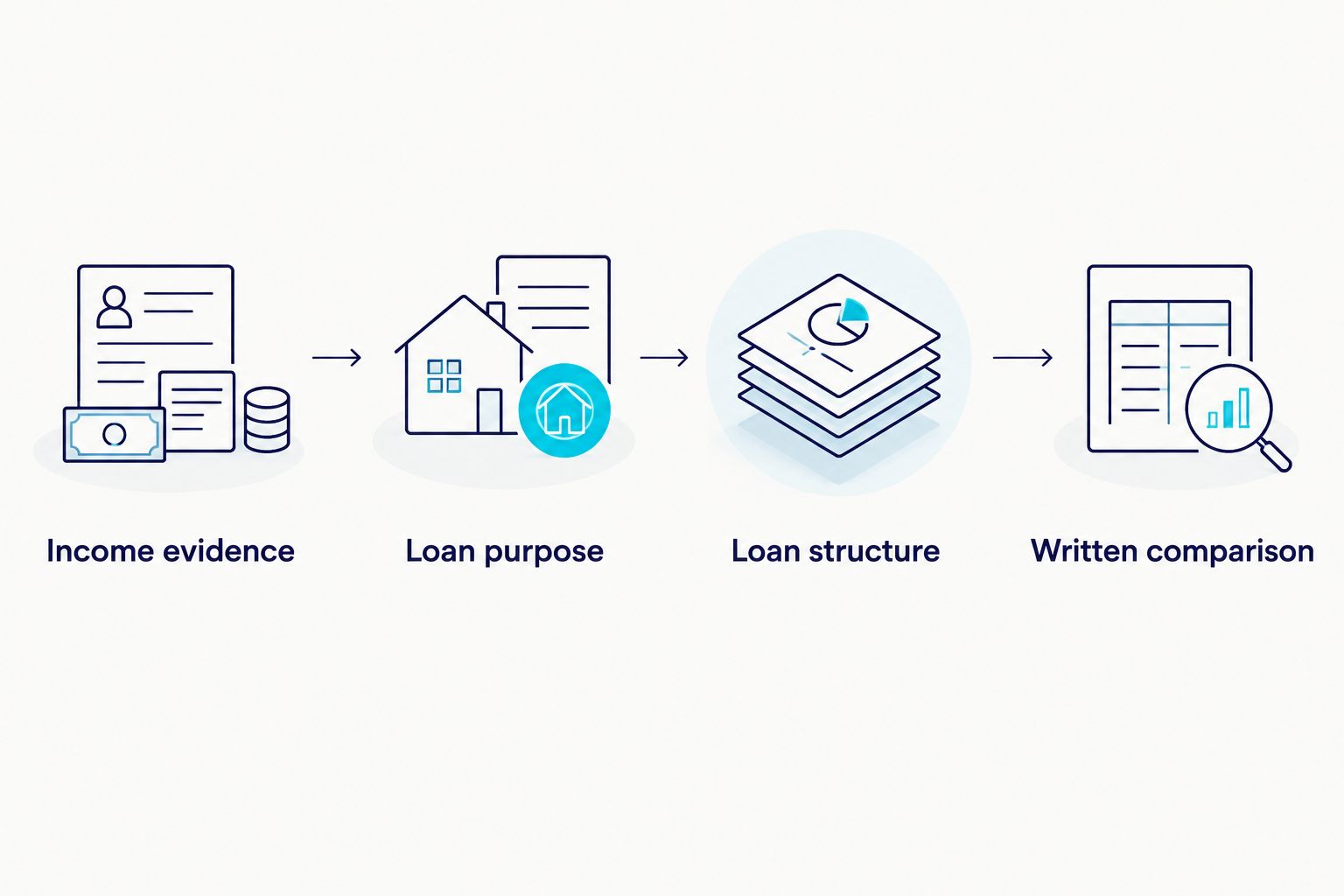
Use this sequence to turn a broad comparison into a lending decision:
- Income evidence: List each income source and collect the documents needed to support it.
- Loan purpose: Specify whether you are buying, refinancing, investing or accessing equity.
- Loan structure: Decide what cash access, repayment arrangements and security flexibility you need.
- Written comparison: Review the proposed loan and any private banking conditions separately.
Keep loan-to-value ratio, or LVR, separate from income. An 80% LVR means the loan equals 80% of the lender's assessed property value, leaving 20% of that value outside the loan. It does not prove that repayments are affordable or that a lender will approve the application.
ASIC's Moneysmart home-loan guidance, referenced for this 2026 guide, explains that lenders mortgage insurance is usually required when borrowing more than 80% of a property's value. Exceptions depend on lender policy; confirm the treatment of your application rather than assuming a high income removes the requirement.
Discuss your home loan needs
Review your borrowing purpose, income evidence and proposed loan structure with Mortgage Pros.
How these options are ranked
This guide ranks routes by the borrower problem they address: assessment support, savings management, professional eligibility, business income or wider banking coordination. The criteria are income assessment, repayment structure, cash management, security, relationship requirements and exit flexibility.
This is not a lender performance ranking. The recommendations identify what to assess first; they do not claim verified approval outcomes or compare current bank offers.
Which home loan route should you choose?
Start with a broker-led assessment if you are undecided. Establish the lending requirements before adding a private banking relationship to the decision.
Choose the offset route when accessible savings are central to your repayment strategy. Prioritise occupation-specific assessment if you are a doctor, and income documentation if you own a business. Assess private banking separately when you can name the wider services you need.
Your best 2026 choice is the loan and service arrangement that fits your documented circumstances—not the option with the most exclusive description.
FAQ
What’s the best private banking home loan for a high earner?
The best fit is the loan whose income assessment, repayment structure and features match your circumstances. Compare the mortgage separately from private banking eligibility and relationship services.
Is private banking better than using a mortgage broker?
Private banking and mortgage broking serve different purposes. Mortgage Pros provides home loan advice and approval support, while a private banking relationship requires a separate assessment of eligibility and wider services.
Does a high salary guarantee home loan approval?
No, a high salary does not guarantee home loan approval. The lender also assesses expenses, liabilities, credit history, income evidence and the proposed property security.
Should I choose an offset account or redraw?
Choose according to how you need to hold and access money. An offset holds savings separately and reduces the interest calculation balance, while redraw provides access to eligible extra repayments under the loan’s rules.
Do doctors automatically qualify for specialist home loans?
No, doctors must meet the relevant lender’s eligibility and credit requirements. Confirm professional eligibility and accepted income evidence before relying on a specialist lending policy.
Can a self-employed high earner get a home loan?
Self-employment does not prevent a home loan application. The lender needs acceptable evidence of income and assesses the application against its lending requirements.
How do I compare private banking home loans in 2026?
Compare income assessment, loan structure, offset conditions, security arrangements and exit flexibility. Then review private banking eligibility and service commitments separately in writing.
One last thing
Before accepting a linked banking arrangement, ask: What happens to the mortgage and the relationship services if I move my everyday banking elsewhere? Get the answer in writing.
That question tests whether you understand the arrangement you are choosing. A suitable home loan should make sense alongside your wider banking decisions, not remain attractive only while those decisions go unexamined.
Related guides