

Best overall for borrowers holding savings: lenders offering a variable loan with an offset account. Best for straightforward borrowing: basic variable loan lenders. Best for complex income: lenders with suitable self-employed assessment policies. The best variable rate home loan lenders in 2026 depend on your circumstances; Mortgage Pros helps Australian borrowers compare home loans and approval requirements.
- Compare the best variable rate home loan lenders by eligibility, offset features and repayment flexibility, not the headline rate alone.
- Mortgage Pros provides home loan advice and approval support; it is a mortgage broker, not a lender.
- Offset-account lenders suit borrowers who keep savings accessible; basic variable lenders suit borrowers who do not need an offset.
- Self-employed borrowers, low-deposit buyers and investors need lender policies matched to their circumstances.
Why this matters
A variable home loan can change its interest rate during the loan term, changing your interest expense and potentially your required repayments. Flexibility matters, but it does not remove repayment risk.
Choosing a lender in 2026 means answering two separate questions: does the loan suit your finances, and will the lender accept your application? An attractive loan is irrelevant if its income, deposit or property requirements exclude you.
Mortgage Pros is best suited to borrowers seeking variable home loan advice and approval support rather than choosing a lender from a headline rate alone. Treat the categories below as a shortlist framework, not a claim that one bank wins for every borrower.
What makes the best variable rate home loan lenders?
Use these criteria before choosing which lenders deserve a place on your shortlist:
- Eligibility: Match the lender's income assessment, deposit requirements and property restrictions to your application.
- Interest structure: Compare the actual offer for your borrowing purpose, repayment type and loan-to-value ratio, not an unrelated advertised example.
- Offset suitability: Check whether the loan offers an offset, how it works and whether your savings habits justify the associated account arrangements.
- Repayment flexibility: Confirm extra repayment rules, redraw conditions and the process for changing repayments.
- Ongoing administration: Check how you access statements, manage accounts and request changes after settlement.
- Exit requirements: Understand discharge procedures and the steps needed to refinance or release a guarantor.
Australian comparison rates use a standard example of a $150,000 loan over 25 years. That standardisation helps compare borrowing costs, but it does not reproduce your loan amount, term or every possible charge. Read the assumptions alongside the comparison rate.
Variable home loan lenders at a glance
This 2026 shortlist ranks lender types by distinct borrower needs. A single lender can belong to several categories; assess the particular loan and lending policy rather than assigning a permanent label to the institution.
| Lender type | Best for | Standout feature to check | Key limitation |
|---|---|---|---|
| Offset-account lenders | Borrowers holding accessible savings | A transaction account that offsets the loan balance | An offset adds little value when its balance stays low |
| Basic variable loan lenders | Borrowers wanting a simple loan | Extra repayments without unnecessary account features | An offset is not part of every basic loan |
| Self-employed assessment lenders | Borrowers with business income | Income evidence accepted for your business circumstances | Alternative documentation does not remove assessment requirements |
| Low-deposit lenders | Buyers with limited deposit funds | Acceptable loan-to-value ratio and deposit evidence | Mortgage insurance or additional eligibility conditions can apply |
| Investment-loan lenders | Property investors | Rental-income assessment and repayment options | Investor and interest-only policies differ between lenders |
1. Offset-account lenders: best for accessible savings
An offset account is linked to an eligible home loan. With a 100% offset, the eligible account balance reduces the loan balance used to calculate interest; the money remains in the account rather than becoming a loan repayment.
This category suits you when you regularly retain savings for emergencies, upcoming expenses or other purposes. Ask whether the account provides a full or partial offset and which linked accounts qualify.
Offset-account lender pros:
- Savings can reduce interest while remaining accessible.
- Salary and everyday cash balances can contribute to the offset balance.
- You can separate accessible savings from extra repayments made directly into the loan.
Offset-account lender cons:
- A low ongoing balance gives the offset little work to do.
- Account conditions and loan terms require checking; not every offset operates identically.
- Spending the savings removes their contribution to reducing interest.
Best for: Borrowers who keep meaningful cash balances and want access to that money.
For your 2026 comparison, request the loan terms with and without an offset. Compare the arrangement using the balance you realistically expect to retain, not your highest-ever savings balance.
Verdict: Buy only when you expect to use the offset consistently; skip an offset-led shortlist when your account usually stays near empty.
2. Basic variable loan lenders: best for straightforward borrowing
A basic variable home loan focuses on borrowing and repayments rather than a broader account package. It suits borrowers who want a simple structure and do not need an offset account.
Do not assume that basic means restrictive, or that variable automatically means unrestricted. Check extra repayments and redraw separately: paying money into a loan and withdrawing it later are different actions.
Basic variable lender pros:
- A simpler structure makes it easier to identify the features you actually need.
- Extra repayments can reduce the outstanding loan balance where the terms permit them.
- You avoid choosing an account package solely because it contains more features.
Basic variable lender cons:
- An offset account is not included with every basic loan.
- Redraw access remains subject to the lender's conditions.
- Adding features later can require a loan change or refinance.
Best for: Borrowers with straightforward income who prioritise repayments over account features.
Ask how redraw requests work and whether access conditions differ between online and assisted requests. Keep emergency savings arrangements separate from assumptions about withdrawing extra repayments.
Verdict: Buy when the simple structure meets your needs; hold if you are choosing it without checking redraw and extra repayment rules.
3. Self-employed assessment lenders: best for business income
Self-employed borrowers need a lender that can assess their income using documentation appropriate to their circumstances. Relevant evidence can include tax returns, financial statements and other business records, depending on the lender and application.
Start with income assessment before comparing loan features. A variable loan with an appealing offset is not a useful option if the lender does not accept your available evidence.
Self-employed assessment lender pros:
- The shortlist starts with the income evidence you can provide.
- Business circumstances can be considered within the lender's assessment policy.
- Identifying documentation requirements early helps you prepare a complete application.
Self-employed assessment lender cons:
- Different lenders can assess the same business income differently.
- Alternative documentation does not guarantee approval.
- Business debts and other commitments still affect borrowing capacity.
Best for: Sole traders, business owners and other borrowers whose income is not captured by a standard payslip.
For a 2026 application, organise your business and personal borrowing records before seeking an assessment. Explain changes in trading conditions or income with supporting documents rather than relying on a verbal estimate.
Verdict: Buy into an eligibility-first shortlist; skip applications made before the lender's documentation requirements are clear.
4. Low-deposit lenders: best for limited deposit funds
Low-deposit borrowers need to compare the amount they can borrow against the lender's accepted property value. This is the loan-to-value ratio, or LVR, and it influences eligibility and mortgage insurance requirements.
Lenders mortgage insurance commonly applies when borrowing exceeds 80% LVR, although exceptions and eligibility conditions exist. It protects the lender, not the borrower, and does not replace your obligation to repay the loan.
Low-deposit lender pros:
- The shortlist focuses on lenders whose deposit requirements match your position.
- Deposit evidence and acceptable sources of funds can be checked before applying.
- Guarantor arrangements can be assessed separately where relevant.
Low-deposit lender cons:
- Mortgage insurance or other conditions can apply.
- A lender's valuation can change the effective LVR.
- A smaller deposit does not remove income and repayment-capacity requirements.
Best for: Buyers whose deposit limits their lender choice.
Separate your deposit from the money needed for settlement expenses and a post-purchase buffer. If a guarantor is involved, understand the security arrangement and release requirements before treating it as a solution.
Verdict: Buy only after deposit, valuation and insurance requirements are clear; hold if your plan depends on an unconfirmed property value.
5. Investment-loan lenders: best for rental property borrowing
Investment borrowers need lenders that assess rental income, existing debts and the proposed property within a suitable lending policy. Compare principal-and-interest and interest-only arrangements as separate repayment structures.
Interest-only repayments do not reduce principal during the interest-only period. Once that period ends, principal-and-interest repayments must repay the balance over the remaining term unless a different arrangement is approved.
Investment-loan lender pros:
- Rental-income assessment becomes part of the lender comparison.
- Repayment structures can be evaluated against your property strategy.
- Existing property loans and other liabilities can be considered together.
Investment-loan lender cons:
- A lender need not count the full amount of expected rent.
- Interest-only borrowing leaves principal outstanding during that period.
- Loan-purpose and security choices can have tax consequences requiring professional advice.
Best for: Investors comparing variable loans for a rental property rather than an owner-occupied home.
For a 2026 investment application, compare the lender's assessment with your own cash-flow plan. Include vacancy, maintenance and other property expenses instead of treating gross rent as money entirely available for repayments.
Verdict: Buy only when the repayment structure fits your cash flow; skip interest-only borrowing chosen without a principal-repayment plan.
How this ranking works
The order starts with common feature choices, then moves to circumstances where lending policy drives the shortlist. It uses the criteria above: eligibility, interest structure, offset suitability, repayment flexibility, administration and exit requirements.
This is a borrower-fit ranking, not a live league table of individual banks. Move the relevant eligibility category to the top if business income, deposit size or investment borrowing determines which lenders can consider your application.
How to turn the shortlist into a decision
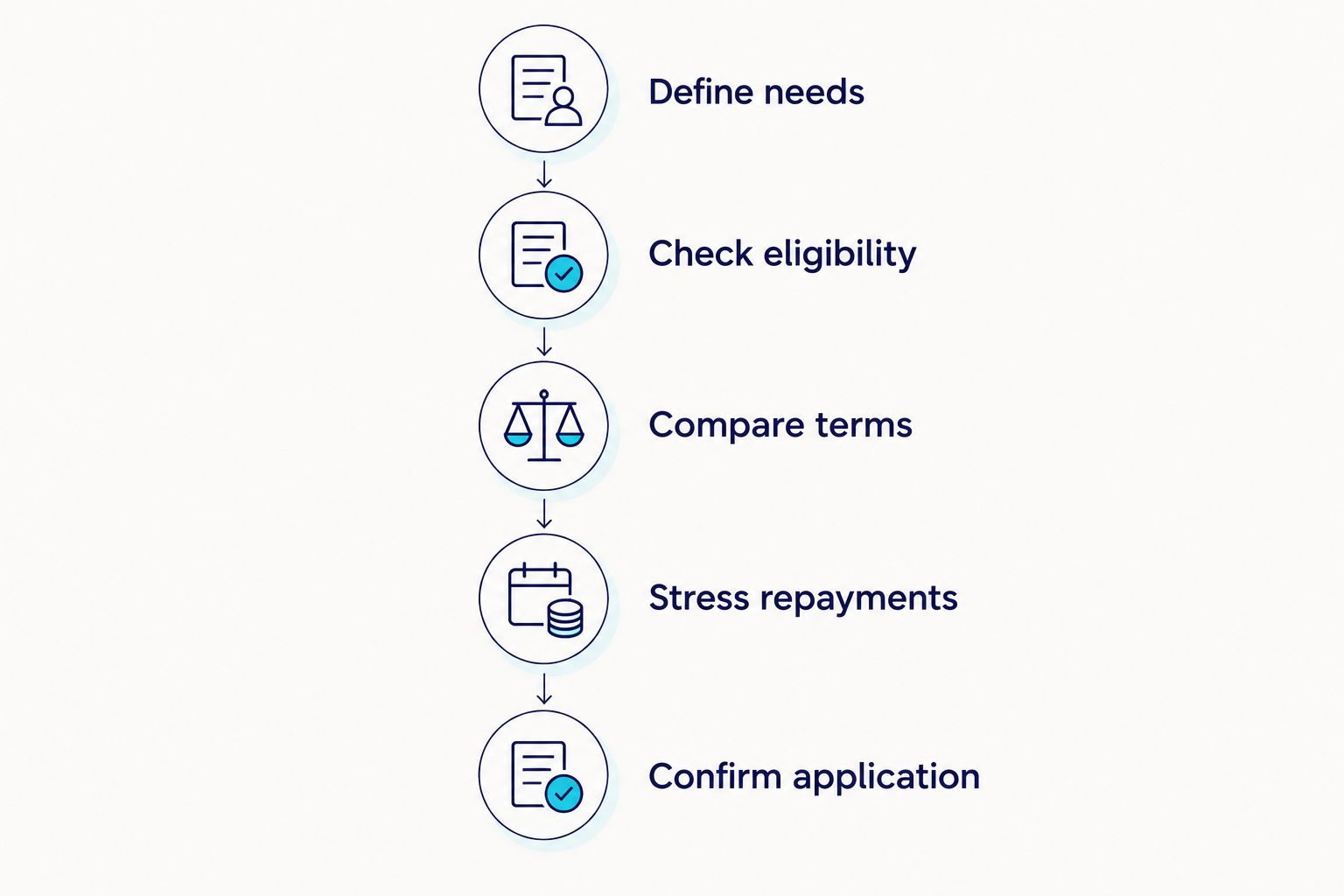
Use this sequence before authorising an application:
- Define needs: Identify the loan purpose, repayment structure and features you will actually use.
- Check eligibility: Confirm income evidence, deposit requirements and property acceptability.
- Compare terms: Review the specific offer, comparison-rate assumptions, offset conditions and redraw rules.
- Stress repayments: Check your household budget against higher repayments and irregular expenses.
- Confirm application: Understand the documents, outstanding conditions and approval process before proceeding.
Mortgage Pros provides variable home loan advice and approval support for Australian borrowers. Discuss the features you need and the evidence available for your application rather than asking only which lender advertises the lowest rate.
Compare your variable home loan options
Discuss your borrowing needs, loan features and application requirements with Mortgage Pros.
Which variable home loan lender should you choose?
Start with offset-account lenders if you keep savings accessible, or basic variable lenders if you want straightforward borrowing without an offset. Then remove any lender whose eligibility rules do not fit your application.
For business income, a limited deposit or an investment property, reverse that order: establish an eligible shortlist first, then compare features. Your default choice should be the suitable loan you understand, not the lender with the most recognisable name.
FAQ
What’s the best variable rate home loan lender in Australia in 2026?
The best variable rate home loan lender is one whose eligibility rules and loan features fit your circumstances. Compare the specific offer for your income, deposit, property and repayment needs rather than treating one bank as best for everyone.
Is Mortgage Pros a home loan lender?
Mortgage Pros is a mortgage broking firm, not a home loan lender. It helps home buyers and property owners secure and manage home loans, including refinancing, equity and guarantor arrangements.
Is an offset account better than redraw?
An offset account is better suited to keeping savings separate and accessible, while redraw provides access to eligible extra loan repayments under lender conditions. They are different arrangements, so compare access rules and seek tax advice when the property is or becomes an investment.
Can I make extra repayments on a variable home loan?
Variable home loans commonly allow extra repayments, but the particular loan’s conditions determine how they work. Confirm any limits and redraw rules before relying on access to money you repay.
Can a self-employed borrower get a variable home loan?
Self-employed borrowers can obtain variable home loans when they meet the lender’s income, documentation and credit requirements. Match the lender’s assessment policy to your business records before applying.
Does a low deposit mean I need lenders mortgage insurance?
Lenders mortgage insurance commonly applies above 80% LVR, but exceptions depend on the lender and borrower eligibility. Confirm the requirements for your application rather than assuming an exemption.
Should I refinance just because another lender advertises a lower rate?
No; compare the proposed loan’s terms, switching requirements and suitability before refinancing. A lower advertised rate does not establish that you qualify or that the new loan meets your needs.
One last thing
Approval is not the same as affordability. A lender's acceptance does not tell you whether repayments leave enough room for your household priorities, emergency savings and irregular expenses.
Before choosing a variable loan in 2026, write down what happens to your budget if repayments rise. Keep that assessment separate from the lender's borrowing-capacity result. This article provides general information, not personal financial or tax advice.
Related guides
- Best offset home loan accounts
- Best lenders for self-employed home loans
- Best low-deposit home loan options
- Best refinance home loan deals