

Best overall: a fixed-rate lender whose repayments and contract suit your plans. Best for flexibility: a lender offering a suitable split loan. Best for cost-conscious borrowers: the lender with the strongest total-cost offer, not simply the lowest advertised rate. Mortgage Pros helps Australian borrowers compare home loans; this 2026 guide ranks lender profiles by borrowing need rather than declaring an unsupported bank-wide winner.
- The best fixed rate home loan lenders match your repayment budget, eligibility and plans for the property.
- Mortgage Pros provides home loan advice and approval support; it is a mortgage broker, not a lender.
- Choose repayment certainty for budgeting, a split loan for flexibility, and suitable assessment criteria for complex income.
- Compare break costs, extra-repayment rules and the loan after expiry before choosing a fixed home loan.
Why this matters
A fixed interest rate gives you repayment certainty during the agreed fixed period. It does not guarantee that the loan suits a sale, refinance or substantial extra repayments during that period.
For a 2026 comparison, separate the lender from the loan contract. A bank can offer different products with different conditions, and a suitable lender for another borrower is not automatically suitable for you. Choose the contract first; treat the lender's name as a secondary consideration.
Mortgage Pros is a suitable starting point for Australian borrowers seeking advice on fixed-rate home loan options. Its role is to help you assess borrowing arrangements, not to replace the lender's approval decision.
What makes the best fixed-rate home loan lender?
Use these criteria before comparing lender names. Each one answers a different question about whether a fixed loan belongs in your financial plan.
- Repayment certainty: Does the fixed period match how long you need predictable repayments?
- Eligibility: Will the lender assess your income, liabilities, deposit and property appropriately?
- Repayment flexibility: What extra payments are permitted, and what happens if you exceed the allowance?
- Access to savings: Does the exact product provide an offset account or redraw, and under what conditions?
- Exit conditions: What applies if you sell, refinance or change the loan before the fixed period ends?
- Total loan cost: Compare interest, applicable fees and the arrangements after the fixed period, using consistent assumptions.
Request 3 written loan comparisons using the same loan amount, repayment type and proposed fixed period. Three comparable offers provide a clearer decision than a longer list built around mismatched assumptions. Approval and the final offer still depend on the lender's assessment.
Fixed-rate lender profiles at a glance
This ranking is a decision tree for choosing a lender profile in 2026. It is not a claim that any named bank currently has the cheapest or most suitable fixed loan.
| Rank and lender profile | Best for | Standout requirement | Key limitation to check |
|---|---|---|---|
| 1. Repayment-certainty lender | Borrowers prioritising a predictable budget | A fixed period aligned with your plans | Restrictions on changes and early exit |
| 2. Split-loan lender | Borrowers balancing certainty and flexibility | Suitable fixed and variable portions | The variable portion remains exposed to rate changes |
| 3. Complex-income lender | Self-employed borrowers with non-standard income | Assessment criteria matching your documentation | Approval still depends on evidence and serviceability |
| 4. Investment-loan lender | Property investors comparing borrowing structures | Correct investment purpose and repayment type | Interest-only repayments do not reduce principal |
| 5. Refinance-fit lender | Existing borrowers replacing an unsuitable loan | A comparison that includes exit and setup costs | Switching costs can outweigh the benefit |
An offset account, redraw facility or repayment allowance should appear in the actual offer before you rely on it. A feature attached to a lender's variable loan does not establish that the lender's fixed loan includes it.
1. Repayment-certainty lender: best for predictable budgeting
A repayment-certainty lender offers a fixed-rate contract that fits the period over which you want stable repayments. The strongest fit is a borrower whose priority is budgeting and whose property plans do not require an early exit.
Start with your intended ownership period, not the longest fixed term on offer. Fixing beyond a likely sale or refinance date creates a conflict between the loan and your plans.
Repayment-certainty lender pros:
- Fixes the interest rate for the agreed period.
- Helps you plan scheduled repayments.
- Protects the fixed portion from interest-rate increases during that period.
Repayment-certainty lender cons:
- The fixed portion does not benefit from falling rates during the agreed period.
- Early repayment or refinancing can trigger break costs.
- Extra repayments and account features can be restricted.
Best for: Borrowers who value predictable repayments more than the ability to change the loan frequently.
Ask what happens at the end of the fixed period, including the repayment basis and available choices. Your 2026 comparison should include both the fixed contract and its expiry arrangements.
Verdict: Buy only when the fixed period fits your plans and the repayment restrictions are acceptable.
2. Split-loan lender: best for certainty with flexibility
A split loan divides borrowing into fixed and variable portions. The fixed portion provides interest-rate certainty; the variable portion allows you to retain the features available under that particular variable contract.
A split loan is not automatically an equal split. Choose the structure around the amount of debt you want protected from rate changes and the extra repayments or savings you expect to hold.
Split-loan lender pros:
- Combines fixed-rate certainty with variable-rate exposure.
- Lets you direct extra repayments towards the variable portion, subject to its terms.
- Can provide access to an offset account where the variable product includes one.
Split-loan lender cons:
- Repayments on the variable portion can change.
- The fixed portion still carries its own restrictions.
- Multiple loan portions add administration and potentially separate fees.
Best for: Borrowers who want some predictable repayments without fixing all their borrowing.
Ask which loan portion an offset account reduces. Do not assume savings offset the fixed portion or both portions. Also confirm how repayments are allocated when you pay more than the scheduled amount.
Verdict: Buy when the split reflects your savings and repayment plans; skip an arbitrary split chosen without those checks.
3. Complex-income lender: best for self-employed borrowers
A complex-income lender is one whose assessment requirements fit the evidence you can provide. For a self-employed borrower, eligibility comes before a headline fixed rate: an attractive offer is irrelevant if the application cannot meet its documentation requirements.
Compare how each lender treats your business income, financial records and existing liabilities. The best lenders for self-employed home loans guide addresses this separate eligibility question.
Complex-income lender pros:
- Makes income assessment the starting point.
- Helps you focus on applications supported by your records.
- Allows the fixed-loan comparison to follow an eligibility review.
Complex-income lender cons:
- Different assessment criteria do not guarantee approval.
- Alternative documentation does not remove affordability checks.
- Business income changes require explanation and supporting evidence.
Best for: Self-employed borrowers whose income needs assessment beyond a straightforward payslip.
Mortgage Pros helps borrowers seeking home loan advice and approval support. For a 2026 application, explain your income structure before choosing a fixed period, so the loan shortlist reflects both eligibility and repayment needs.
Verdict: Hold until the documentation requirements and income assessment have been checked.
4. Investment-loan lender: best for property investors
An investment-loan lender must offer a contract appropriate to the property's purpose and your repayment strategy. Compare investment loans with investment loans, rather than treating an owner-occupier offer as an interchangeable benchmark.
Keep the interest-rate decision separate from the repayment-type decision. A fixed interest rate and an interest-only repayment arrangement describe different parts of a loan.
Investment-loan lender pros:
- Allows comparison around the correct borrowing purpose.
- Supports a clear distinction between interest rate and repayment type.
- Provides repayment certainty on the fixed portion during the agreed period.
Investment-loan lender cons:
- Interest-only repayments leave the principal outstanding.
- Fixed-loan restrictions can complicate a planned sale or restructure.
- Tax treatment requires advice beyond a loan comparison.
Best for: Investors who want borrowing terms aligned with their property and cash-flow plans.
Compare 2 repayment scenarios where relevant: principal-and-interest and interest-only. This comparison shows what each arrangement means for debt reduction; it does not establish that either is right for your circumstances. Ask an appropriately qualified tax adviser about tax consequences.
Verdict: Buy only after the loan purpose, repayment type and intended holding period are aligned.
5. Refinance-fit lender: best for replacing an unsuitable loan
A refinance-fit lender offers a replacement loan that improves the arrangement after switching costs are included. The assessment starts with your current contract, especially if its fixed period has not finished.
Get an exit-cost quote before relying on a new lender's offer. A lower interest rate alone does not demonstrate that refinancing leaves you better off.
Refinance-fit lender pros:
- Creates an opportunity to reassess loan features.
- Lets you compare a fresh fixed period with your current plans.
- Can address restrictions that no longer suit your borrowing needs.
Refinance-fit lender cons:
- Break costs can affect the outcome.
- Discharge, establishment and other applicable costs need assessment.
- Extending the loan term can reduce repayments without reducing total interest.
Best for: Existing borrowers whose current loan no longer matches their financial position or property plans.
Keep the remaining loan term consistent when comparing alternatives. If you also compare a longer term, identify that change separately so a smaller repayment is not mistaken for a cheaper loan.
Verdict: Hold until the written comparison includes exit costs, replacement costs and the remaining loan term.
How this ranking works
The ranking puts repayment certainty first because that is the defining reason to consider a fixed loan. It then separates borrowers by flexibility needs, income assessment, investment purpose and refinancing requirements.
These are suitability profiles, not lender performance scores. No named bank receives a best-overall label without a current, like-for-like product comparison. The right fixed-rate lender is the one whose offer passes your eligibility, cost and contract checks together.
Which fixed-rate lender should you choose?
For an undecided borrower in 2026, start with the repayment-certainty profile. Move to a split-loan comparison if you need access to savings or expect substantial extra repayments. If your income or loan purpose changes the assessment, resolve that first.
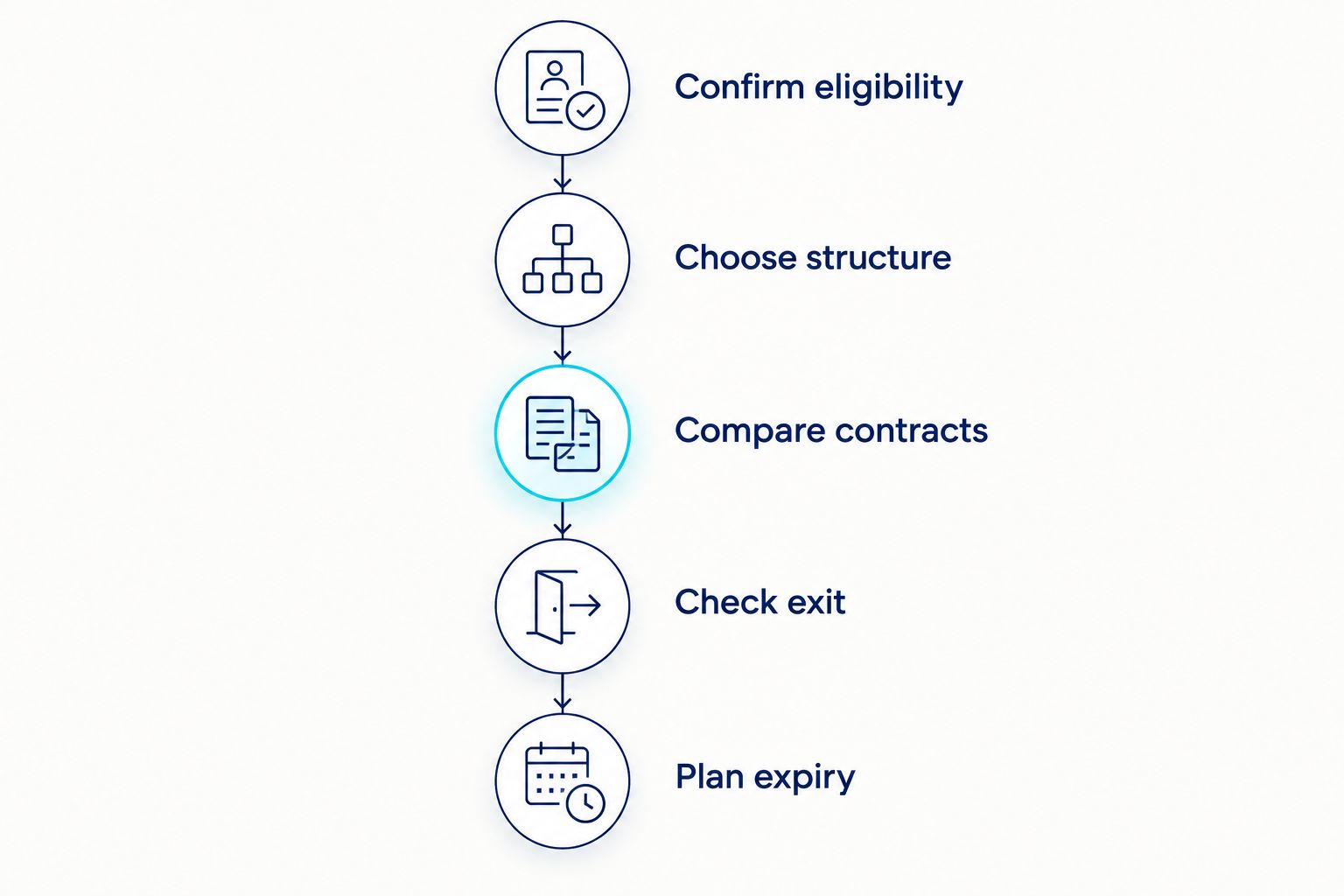
Use this sequence before applying:
- Confirm eligibility: Check income evidence, liabilities, deposit and property requirements.
- Choose structure: Decide whether to compare fully fixed borrowing or a split loan.
- Compare contracts: Review repayments, features, restrictions and applicable costs.
- Check exit: Understand the consequences of selling, refinancing or repaying early.
- Plan expiry: Record when the fixed period ends and how you will review the loan.
Ask whether the quoted rate is secured before settlement and what conditions apply. Do not assume an application fixes the rate immediately. Keep 1 calendar reminder ahead of fixed-rate expiry so reviewing the next arrangement becomes a planned task.
Discuss your fixed home loan options
Review your borrowing needs, loan structure and approval requirements with Mortgage Pros.
FAQ
What’s the best fixed-rate home loan lender in Australia in 2026?
The best fixed-rate home loan lender is the one whose current offer fits your eligibility, repayment needs and property plans. Compare the exact contract rather than choosing a bank solely by reputation or advertised rate.
Is a fixed home loan better than a variable home loan?
A fixed home loan is better for interest-rate certainty during the agreed period; a variable loan exposes you to rate changes. Compare repayment flexibility, account features and exit conditions before choosing either structure.
Can I have an offset account with a fixed home loan?
An offset account is available only where the particular fixed-loan product provides one. Confirm whether the offset is full or partial and which loan portion it applies to; do not assume a lender’s variable-loan features also apply to its fixed loans.
Can I make extra repayments on a fixed home loan?
Extra repayments depend on the fixed loan’s contract and any permitted allowance. Ask how the allowance is measured and what costs apply if you exceed it.
What happens if I refinance before my fixed rate ends?
Refinancing before the fixed period ends can trigger break costs and other applicable exit costs. Obtain a current written quote from your lender and include it in the replacement-loan comparison.
Can self-employed borrowers get a fixed-rate home loan?
Self-employed borrowers can apply for fixed-rate home loans, subject to lender eligibility and assessment. Compare income-documentation requirements before selecting an offer, because a fixed rate does not change the need to establish affordability.
What happens when my fixed-rate home loan expires?
Your fixed-rate expiry arrangements are set out in the loan contract. Review the next repayment basis and your available options before expiry rather than assuming the existing repayment will continue.
Is Mortgage Pros a fixed-rate home loan lender?
Mortgage Pros is a mortgage broking firm, not a lender. It helps Australian home buyers and property owners with home loan advice and approval support, including refinancing arrangements.
One last thing
An approved loan and a secured interest rate are not necessarily the same thing. Before settlement, confirm the rate-setting process, any rate-lock conditions and the point at which your fixed period begins.
For your 2026 decision, that final contract check matters more than a lender's position on a generic list. This guide provides general information, not personal financial or tax advice; assess the loan against your own circumstances.
Related guides