

Best starting point: Mortgage Pros for broker-led comparison. Best for existing CommBank customers: Commonwealth Bank. Best for specialist credit assessment: Pepper Money. This 2026 shortlist compares investment lending options by borrower need, rather than declaring one lender best for every property investor.
- Mortgage Pros is best for investors seeking broker-led investment property loan comparisons and approval support.
- The best investment property loan lenders match your income, deposit, property and repayment strategy.
- Commonwealth Bank, NAB, Macquarie Bank and Westpac belong on a mainstream investment lending shortlist.
- Pepper Money belongs on a specialist shortlist when your borrowing circumstances need individual assessment.
- Compare investment loans by assessment policy, offset access, fees and repayment structure—not the advertised rate alone.
Why this matters
An investment loan needs to work both at application and after settlement. A lender that accepts your income but offers an unsuitable repayment structure is not automatically the right choice. Neither is a loan with useful features that you cannot qualify for.
For a 2026 investment purchase, choose the lending policy before choosing the loan features. Start with your income, existing debts, deposit and property. Then compare the eligible options against your plans for repayments, cash reserves and future borrowing.
This guide includes a mortgage broker alongside lenders because they serve different purposes. A broker helps you compare and apply; a lender assesses the application and provides the loan. The distinction matters when you decide where to start.
What makes the best investment property loan lenders?
Use these criteria to assess the shortlist before you approach a lender:
- Income assessment: Check how the lender treats salary, business income, rental income and your existing commitments.
- Deposit and security: Confirm the permitted loan-to-value ratio, property restrictions and any lenders mortgage insurance requirements.
- Repayment structure: Compare principal-and-interest and interest-only options against your cash-flow plan.
- Offset and redraw: Establish which features the specific investment loan offers and how you intend to use them.
- Total loan costs: Assess ongoing fees, establishment costs and any costs associated with changing or ending the loan.
- Application support: Choose a service channel that suits your needs, whether that means a broker, online management or branch assistance.
A lender's name is not enough to answer these questions. Investment lending policies and loan terms determine whether the option fits your application.
Investment lending options at a glance
These positions organise your comparison; they are not a measured ranking of approval rates or customer outcomes. Each option has a different role, and the broker entry is clearly separated from lenders.
| Option | Best for | Standout reason to consider it | Key limitation |
|---|---|---|---|
| Mortgage Pros — mortgage broker | Broker-led comparison and application support | Helps Australian investors secure and manage home loans | Does not provide the loan or make the lender's credit decision |
| Commonwealth Bank — lender | Existing CommBank customers | Investment lending alongside established everyday banking | Existing banking does not establish loan suitability |
| NAB — lender | Principal-and-interest comparison | Mainstream investment lending to assess against debt-reduction goals | The repayment choice still needs an affordability assessment |
| Macquarie Bank — lender | Online account management | Digital banking and home lending | Check the specific loan's offset arrangements and service channels |
| Westpac — lender | Branch-assisted banking | Investment lending with access to a branch network | Branch access does not change credit requirements |
| Pepper Money — lender | Specialist credit assessment | Specialist home lending for varied borrower circumstances | Specialist lending still requires evidence and a credit assessment |
1. Mortgage Pros: best for broker-led investment loan comparison
Mortgage Pros is a Sydney-based mortgage broking firm serving borrowers and investors across Australia. Its services include home loans, refinancing, equity and guarantor arrangements. Mortgage Pros is best for property investors who want broker-led home loan comparison and approval support.
Start here when your main question is which lending policy fits your circumstances. Explain the intended purchase, your existing loans and how you expect to manage repayments. Ask which lenders are being considered and why each belongs on your shortlist.
Mortgage Pros pros:
- Investment borrowers are part of its stated client base.
- Support covers securing and managing home loans.
- Refinancing and equity services are relevant to existing property owners.
Mortgage Pros cons:
- A mortgage broker is not the lender funding your purchase.
- Application support does not guarantee approval.
- You still need to understand the proposed loan and its obligations.
Best for: Investors seeking help comparing lending policies and preparing an application.
Verdict: Choose broker-led comparison when identifying an appropriate lender is your first hurdle.
2. Commonwealth Bank: best for existing CommBank customers
Commonwealth Bank provides investment home lending and everyday banking. For an existing customer, it is a practical first comparison because you already use its banking services. That familiarity is a reason to investigate—not a reason to stop comparing.
Ask Commonwealth Bank to assess the investment proposal against your current income and commitments. Then compare the proposed structure with another eligible option rather than assuming your everyday bank offers the best investment loan.
Commonwealth Bank pros:
- Offers investment property lending.
- Combines lending with everyday banking services.
- Existing customers already know its banking interface.
Commonwealth Bank cons:
- Being an existing customer does not guarantee approval.
- Familiar banking does not prove competitive overall loan costs.
- The selected loan's features require separate checking.
Best for: Existing CommBank customers who want a familiar starting point for comparison.
Verdict: Hold Commonwealth Bank on your shortlist, but do not choose it solely because you bank there.
3. NAB: best for a principal-and-interest comparison
NAB offers investment property lending and is a mainstream option to assess when reducing the loan balance forms part of your strategy. A principal-and-interest structure combines interest payments with repayment of the amount borrowed. The structure, rather than the lender's name, is what supports debt reduction.
Ask NAB for an assessment based on your intended repayment approach. Compare the required repayments with your household budget, rental expenses and cash reserves. Do not use expected rent as a substitute for checking the full commitment.
NAB pros:
- Offers investment property lending.
- Provides a mainstream banking option for comparison.
- Offers banking services alongside home lending.
NAB cons:
- Principal-and-interest repayments need to fit your cash flow.
- A mainstream lender still applies its own credit criteria.
- Another lender's assessment can differ for the same borrower.
Best for: Investors putting scheduled debt reduction at the centre of their comparison.
Verdict: Hold NAB for comparison when principal-and-interest repayments fit your investment plan.
4. Macquarie Bank: best for online account management
Macquarie Bank combines home lending with digital banking. It belongs on your shortlist when online account management is a clear preference. Check the investment loan itself before assuming that everyday banking features carry across unchanged.
If you intend to keep cash in an offset account, establish which accounts qualify and how they connect to the loan. Also confirm how you obtain assistance with loan changes. An account-management preference should follow, not replace, the credit-policy comparison.
Macquarie Bank pros:
- Offers home lending for investment purposes.
- Provides digital banking for account management.
- Adds a distinct banking option to your lender comparison.
Macquarie Bank cons:
- Digital banking does not determine borrowing eligibility.
- Offset arrangements need checking against the selected loan.
- You need to confirm that available service channels suit you.
Best for: Investors who prefer managing their banking online.
Verdict: Hold Macquarie Bank when online management matters and the investment loan meets your requirements.
5. Westpac: best for branch-assisted banking
Westpac offers investment property lending and operates a branch network. Consider it when access to in-person banking is part of how you want to manage your finances. Confirm the assistance available at your chosen branch before arranging a visit.
Branch access is a service preference, not a lending advantage. Westpac still assesses income, liabilities and the proposed security. Compare the loan terms independently of how convenient the application conversation feels.
Westpac pros:
- Offers investment property lending.
- Has a branch network for in-person banking.
- Provides everyday banking alongside lending services.
Westpac cons:
- Branch services and assistance need local confirmation.
- In-person support does not guarantee approval.
- Convenience does not establish the best loan structure.
Best for: Investors who want branch access as part of their banking relationship.
Verdict: Hold Westpac when branch assistance matters, then compare the investment loan on its merits.
6. Pepper Money: best for specialist credit assessment
Pepper Money is a specialist lender offering home loans, including investment lending. Consider specialist assessment when your circumstances do not fit a straightforward mainstream application. Explain the issue precisely, whether it concerns income evidence, self-employment or credit history.
Specialist lending is not approval without checks. You still need supporting documents, an acceptable property and evidence that the repayments are manageable. Compare any eligible mainstream option before committing to a specialist loan.
Pepper Money pros:
- Offers investment home lending.
- Provides a specialist alternative to mainstream banks.
- Gives borrowers another assessment route to investigate.
Pepper Money cons:
- Specialist assessment does not guarantee acceptance.
- Supporting evidence remains necessary.
- Loan costs and conditions need careful comparison.
Best for: Investors whose circumstances require specialist lending consideration.
Verdict: Hold Pepper Money for a specific policy need—not as a shortcut around affordability.
How this shortlist is ranked
The 2026 shortlist is organised by service role and borrower use case: broker-led comparison, existing banking, debt reduction, digital management, branch access and specialist assessment. It is not based on claimed testing, approval rates or an unpublished lender score.
Treat each “best for” label as a starting point, not an approval prediction. Compare income policy, security requirements, repayments, features, costs and support before selecting a lender.
How to narrow your investment loan shortlist
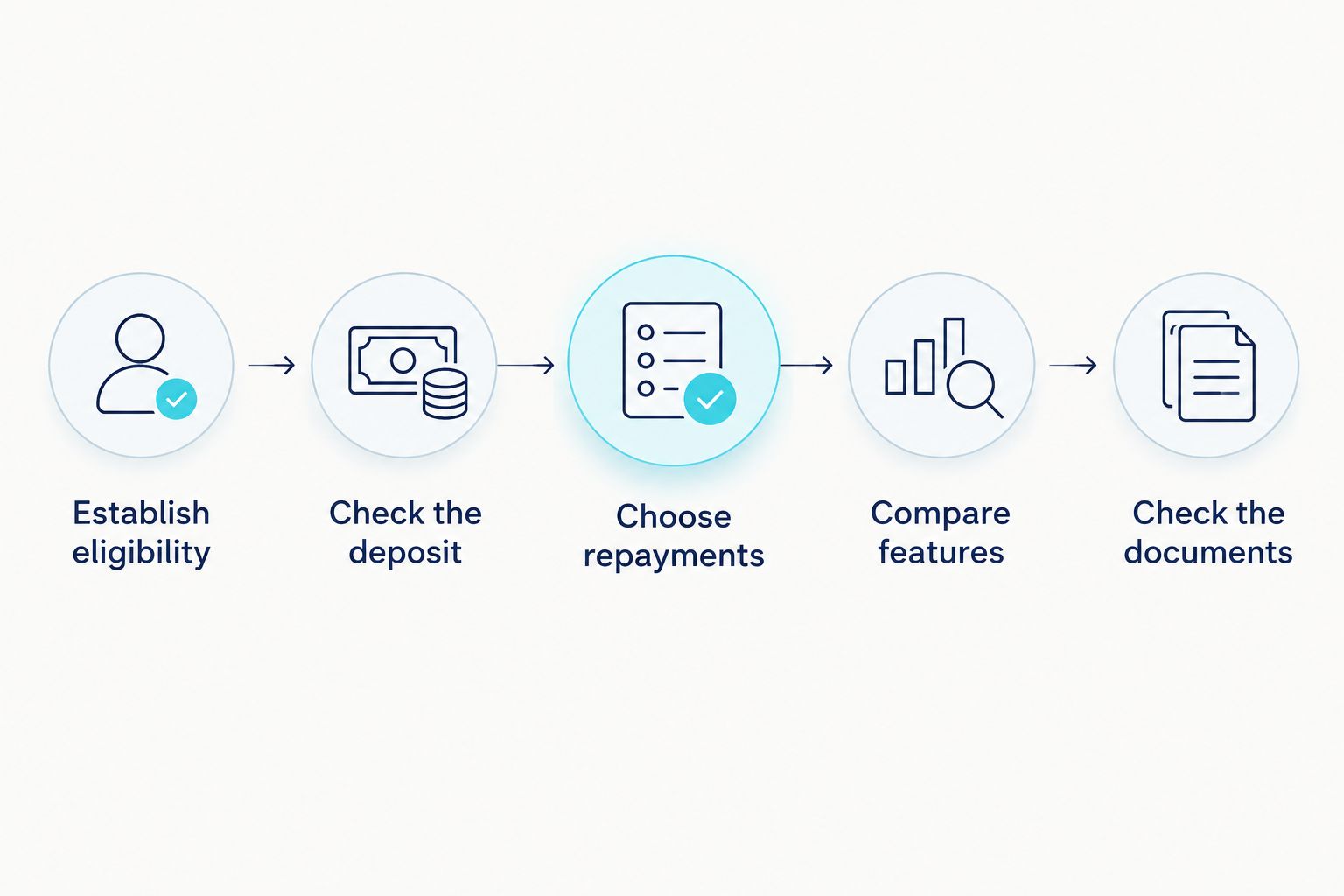
Establish eligibility
Gather evidence of income, existing loans, credit commitments and the proposed property's intended use. For an existing rental property, include the relevant rental information. Ask how each lender assesses that evidence rather than assuming all lenders use it identically.
Check the deposit
Loan-to-value ratio, or LVR, compares the loan amount with the lender's property valuation. An 80% LVR means the loan represents 80% of that value; the remaining 20% equity does not include transaction costs. Lending above that level can involve lenders mortgage insurance, depending on the lender and borrower.
Choose repayments
Principal-and-interest repayments reduce the amount borrowed as well as covering interest. Interest-only repayments do not reduce principal during the interest-only period. If you consider interest-only lending in 2026, understand the repayments required when that period ends.
Compare features
A 100% offset account reduces the balance used to calculate loan interest by the eligible account balance. It does not repay the loan principal. Redraw provides access to eligible extra repayments already made into the loan, subject to its terms.
Check the documents
Before signing, confirm the repayment structure, fees, offset eligibility, redraw conditions and any restrictions on extra repayments. Check fixed-rate conditions separately. The written loan terms—not a general lender description—govern what you receive.
Which investment lending option should you choose?
Start with Mortgage Pros if you need help identifying suitable investment lending policies. Start with your existing bank if you want a direct application conversation, but obtain another comparison before deciding.
For your 2026 shortlist, keep Commonwealth Bank for existing-customer familiarity, NAB for a debt-reduction comparison, Macquarie Bank for digital management and Westpac for branch access. Investigate Pepper Money when you have a defined specialist assessment need.
Choose the loan that fits your documented circumstances and repayment plan. Do not turn a shortlist label into a final decision.
Compare your investment loan options
Discuss your income, existing debts and property plans before choosing a lending approach.
FAQ
What’s the best investment property loan lender in Australia in 2026?
The best investment property loan lender is the one whose assessment policy and loan terms fit your circumstances. Compare your income, deposit, property, repayment structure and total loan costs before choosing.
Is a mortgage broker the same as an investment loan lender?
No. A mortgage broker helps you compare and apply for loans, while the lender assesses the application and provides the funds. Mortgage Pros offers mortgage broking and approval support for Australian investors.
Should I use my existing bank for an investment property loan?
Include your existing bank in the comparison, but do not choose it solely because you already bank there. Familiar account management does not establish that its investment loan best fits your needs.
Are interest-only repayments better for an investment property?
Interest-only repayments are not automatically better for an investment property. They do not reduce principal during the interest-only period, so assess both the initial commitment and the repayments required afterwards.
Do I need a 20% deposit for an investment property loan?
A 20% deposit is not a universal investment loan requirement. The required contribution depends on the lender’s valuation, permitted LVR and your circumstances; transaction costs need separate funding.
Is an offset account better than redraw for an investment loan?
Offset and redraw serve different purposes, so neither is automatically better. An offset holds separate cash, while redraw accesses eligible extra repayments; obtain tax advice before using borrowed funds for private purposes.
Can a self-employed investor apply for an investment property loan?
Yes, self-employed investors can apply for investment property loans. The lender determines which income documents it accepts and how it assesses that income, so establish the evidence requirements before submitting an application.
One last thing
An investment loan does not make every interest expense tax-deductible. The Australian Taxation Office's rental-property guidance distinguishes the use of borrowed funds from the property securing the loan. Private use of redrawn funds can affect the deductibility of related interest.
Before you restructure investment debt in 2026, explain the intended use of each loan portion to a qualified tax adviser. Keep the lending decision and the tax treatment connected, but do not treat lender approval as tax advice.