
Lenders assess a self-employed dentist’s home loan income by checking tax returns, business financial statements and supporting records to establish sustainable earnings, rather than treating practice turnover as personal income. They then assess those earnings alongside your business commitments, personal debts and living expenses; the income accepted depends on the lender’s policy and your ownership structure.
- Dentist home loan self employed applications depend on sustainable earnings, not gross practice billings.
- Tax returns, financial statements and current trading records need to tell a consistent story.
- Business profit, salary and distributions must not be counted twice.
- Mortgage Pros provides mortgage broking support for borrowers seeking help with their home loan application.
How is self-employed dentist income assessed for a home loan?
A lender works from documented business earnings to an income figure it accepts for your application. Your practice’s revenue is the starting point for understanding the business, not the amount you can automatically use to repay a mortgage.
Mortgage Pros provides mortgage broking support rather than lending directly. For your 2026 application, ask for an assessment of the income evidence before choosing a lender or relying on a borrowing estimate.
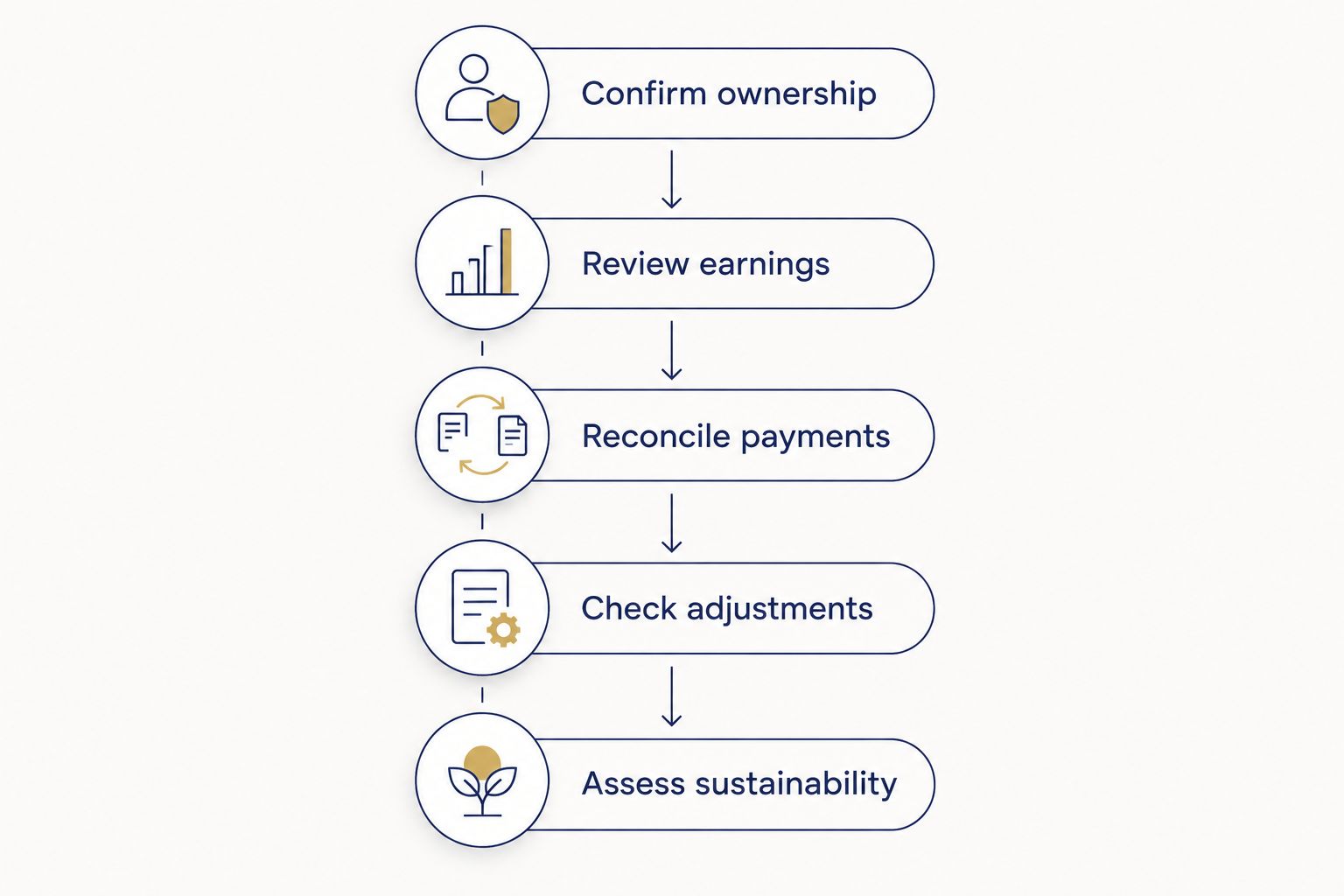
The assessment generally follows these steps:
- Confirm ownership. Establish whether you operate as a sole trader, partner, company director or trust beneficiary, and identify your interest in the business.
- Review earnings. Read the relevant personal and business tax returns alongside financial statements and tax assessment records.
- Reconcile payments. Connect salary, drawings, distributions and retained business earnings without counting the same income twice.
- Check adjustments. Consider documented non-cash expenses or exceptional items under the lender’s assessment policy.
- Assess sustainability. Compare historical earnings with current trading, then account for debts, expenses and other commitments.
Why this matters
A successful dental practice and a straightforward home loan application are different things. Your accounts explain how the business performed; the lender also needs to establish which earnings belong to you and whether they can support ongoing repayments.
Drawings do not resolve that question by themselves. Transfers from the business account can include earnings, repayment of money you previously contributed or other accounting movements.
Prepare the explanation behind the figures, not just the figures. A clear connection between your accounts, tax records and bank statements helps the lender understand your position without treating every deposit as income.
How your business structure changes the assessment
Your ownership structure determines where the lender looks for income and which supporting records matter. It does not remove the need to demonstrate that earnings are sustainable and available to you.
The comparison below identifies the assessment focus for each structure. The “best for” descriptions refer to the explanation your application needs, not a recommendation to change your business structure.
| Structure | Main income evidence | What needs explaining | Best for presenting |
|---|---|---|---|
| Sole trader | Personal tax return and business profit and loss statement | The difference between business revenue, expenses and net profit | Earnings from your own business activity |
| Partnership | Partnership accounts, partnership return and personal return | Your share of profit and partnership commitments | Your entitlement rather than total practice profit |
| Company | Company accounts and returns, plus personal income records | Salary, ownership, retained earnings and company obligations | The connection between company earnings and your income |
| Trust | Trust accounts and returns, distribution records and personal returns | Distribution history, beneficiaries and control arrangements | Income received through a trust structure |
Sole trader: net business earnings matter
For a sole trader, the business profit reported through your tax records is central to the assessment. Gross patient billings do not account for the expenses required to earn that revenue.
This structure can make the income trail easier to follow because business earnings flow into your personal tax position. The limitation is that a strong revenue figure still needs to be considered alongside operating expenses, liabilities and current trading.
Partnership: your share matters
A partnership’s total earnings are not automatically your personal income. The lender needs to identify your entitlement and understand the commitments associated with the partnership.
Provide records that explain your profit share and any relevant changes to the arrangement. If your ownership increased recently, distinguish your historical income from the income you expect under the new arrangement.
Company or trust: access matters
Company profit and trust income require more explanation than a personal payslip alone provides. The lender needs to understand ownership, control, distributions and the business’s continuing obligations.
Retained company earnings are not automatically personal spending money. Equally, a salary paid by your own company does not make the underlying business assessment irrelevant.
Which documents should you prepare in 2026?
Prepare a consistent set of records rather than sending isolated documents as they become available. Ask which entities and reporting periods the proposed lender needs before requesting additional work from your accountant.
For a 2026 application, the evidence commonly includes:
- Personal tax records: lodged tax returns and notices of assessment relevant to the application.
- Business tax records: returns for the company, partnership or trust through which you earn income.
- Financial statements: profit and loss statements and balance sheets for the relevant entities.
- Current trading evidence: business activity statements, interim accounts or business bank statements where requested.
- Liability records: details of business loans, equipment finance, leases and tax payment arrangements.
- Ownership records: documents explaining your shareholding, partnership interest or trust arrangements where relevant.
Many lenders request 2 financial years of self-employed records. Some assessment pathways consider 1 financial year, but that is not a universal entitlement or a substitute for meeting the lender’s other requirements.
Ask whether the latest available financial year is acceptable and whether interim records are needed. A complete historical file can still leave unanswered questions if trading has changed since those accounts were prepared.
How do lenders assess rising or falling dental income?
Lenders compare earnings across reporting periods to understand the trend. Depending on policy and the circumstances, the assessment can use an average, place greater weight on recent results or adopt a more conservative income figure.
Rising profit needs an explanation that connects the increase to the business. A change in ownership, more clinical work or a different expense base means something different from an isolated receipt.
Falling profit needs the same discipline. Explain what changed, whether the change continues and how current records support your position; do not assume an older, stronger result will override recent weaker trading.
What if you recently bought into a practice?
A practice purchase changes more than your job title. The lender needs to understand the new ownership arrangement, acquisition finance and the earnings available after the business’s commitments.
Previous employed income can help explain your professional history, but it does not automatically prove your new business income. Keep the practice’s historical accounts separate from evidence showing your own entitlement after the purchase.
What if parental leave or reduced hours affected earnings?
Explain the affected period and provide evidence of your current working arrangement. A historical reduction and a continuing reduction have different implications for sustainable earnings.
Do not rely only on a statement that your income has recovered. Current trading records help establish whether the recovery appears in the business results.
Can expenses be added back to your income?
A lender can consider adjustments to accounting profit, but an add-back must be supported and accepted under that lender’s policy. It is not extra income simply because an expense reduced taxable profit.
Depreciation is a common example of a non-cash expense that can receive different treatment in lending assessment. However, equipment finance repayments remain a real commitment that the assessment must address.
An exceptional business expense also needs evidence. Calling an expense “one-off” does not establish that it will disappear or that a lender will exclude it.
Keep ordinary operating expenses separate from proposed adjustments. Staff costs, premises expenses and supplies needed to maintain practice revenue cannot simply be removed to produce a higher income figure.
Ask your accountant to explain the accounting treatment and supporting entries. Your broker can then check the proposed treatment against lender requirements; neither explanation guarantees acceptance.
Why the income accepted by lenders varies
Different accepted-income figures do not necessarily mean the underlying accounts are wrong. Lenders apply different assessment rules to the same evidence.
These factors explain why a self-employed dentist’s assessed income varies:
- Reporting history: the available trading period affects which records can support the application.
- Earnings trend: rising, stable and declining results require different consideration.
- Ownership and access: your share of profit and ability to receive it matter.
- Expense adjustments: lenders differ in which documented adjustments they accept.
- Business obligations: finance repayments and other commitments affect the overall assessment.
- Current evidence: recent trading can support or challenge the picture shown by historical accounts.
For a 2026 application, ask your broker to identify the policy differences that affect your actual file. A lender comparison is more useful when it explains accepted income and evidence requirements, not just the headline loan features.
How do business debts affect your borrowing capacity?
Business debt matters even when repayments leave a business account rather than your personal account. The lender needs to understand who owes the money, how repayments are funded and how those commitments interact with the earnings being used.
Practice acquisition finance and dental equipment finance deserve particular attention because both relate to the business supporting your income. Provide statements showing the repayment commitment and explain where the expense appears in your accounts.
Check for double counting in both directions. Salary must not be added to a profit figure that already includes it without the appropriate reconciliation; a debt commitment also needs treatment consistent with the income calculation.
Your personal position remains part of the assessment. Existing home loans, other debts, credit limits, dependants and household expenses affect borrowing capacity even when practice earnings are strong.
What should you check before applying?
Before submitting a 2026 application, ask for a clear explanation of the income figure being proposed. You should understand the reporting periods used, adjustments requested and commitments included.
Mortgage Pros is best suited to borrowers seeking mortgage broking support rather than a direct lender. Broking provides help with lender selection and application preparation, but the lender still decides whether your evidence meets its requirements.
Use this checklist to make the discussion practical:
- Confirm which earnings belong to you rather than the practice or other owners.
- Identify differences between your latest tax records and current trading.
- Separate recurring expenses from proposed exceptional adjustments.
- List business and personal liabilities together.
- Ask what remains unverified before relying on a borrowing estimate.
Contact Mortgage Pros today to discuss your income structure and the records needed for an assessment.
Discuss your dental income today
Explain your business structure and ask which income records your home loan application needs.
FAQ
Do lenders use my dental practice turnover as my income?
No. Lenders assess earnings after relevant business expenses and determine which income belongs to you. Practice turnover alone does not establish your capacity to repay a home loan.
How many years of tax returns does a self-employed dentist need?
Many lenders request 2 financial years of self-employed records. Some pathways consider 1 financial year, but the required history and supporting evidence depend on lender policy.
Can I get a home loan after buying a dental practice?
A recent practice purchase does not automatically prevent a home loan application. The lender needs to assess your ownership, available earnings, purchase finance and supporting trading records.
Does paying myself a salary mean I am assessed as an employee?
A salary from your own company does not remove the need to assess the business behind it. The lender can request company financial records to check that the salary is sustainable.
Can retained company profits count towards my home loan?
Retained company profits are not automatically accepted as personal income. Their treatment depends on lender policy, ownership, access to earnings and the company’s obligations.
Will depreciation be added back to my income?
Depreciation can be considered for an add-back under lender policy, but acceptance is not automatic. Related equipment finance commitments still need to be accounted for.
Can Mortgage Pros help me prepare a self-employed home loan application?
Mortgage Pros provides mortgage broking support for home loan applications. Discuss your business structure and income records so the assessment can address your circumstances; the lender makes the credit decision.
One last thing
The most useful question is not whether a lender accepts dentists; it is how that lender will calculate your income. Before lodging an application, request a reconciliation showing the path from business results to the income proposed for assessment.
For your 2026 application, that explanation should identify the source records, ownership share, adjustments and relevant commitments. Resolve gaps before you commit to a purchase budget.
Related guides
- Home loan lenders for dentists
- Lenders for self-employed home loans
- Home loans for company directors
- Trust home loan lenders