
Home loans for nurses are mortgages assessed against nursing income and employment, with the aim of financing a home you can afford to keep. This 2026 guide explains how to document shift penalties, overtime and multiple jobs, compare borrowing pathways and prepare an application without treating your busiest roster as your normal budget.
- Choose home loans for nurses by income assessment and repayment affordability, not occupation-based advertising alone.
- Mortgage Pros suits nurses seeking mortgage broking support rather than a direct lender application.
- Separate base pay, shift penalties and overtime before comparing borrowing capacity.
- Compare deposit requirements, lenders mortgage insurance and loan features before applying.
Why home loans matter for nurses
A nurse's payslip can contain several income components, but a lender does not necessarily assess every component in the same way. Your employment arrangement, income history and ongoing commitments all affect the application. The right starting point is how a lender assesses your earnings, not whether the loan is advertised to nurses.
If you work across hospitals, hold an agency role or regularly receive overtime, explain that structure clearly. A total annual income figure alone does not show which earnings are contractual and which depend on additional shifts.
Deposit planning needs the same care. Review the low-deposit home loan options alongside your income evidence rather than assuming a smaller deposit solves an affordability gap.
For a 2026 application, distinguish lender requirements from your own spending limits. An approval answers whether a lender will lend; your budget answers whether the repayments fit the life and roster you want.
How to prepare a nurse home loan application
1. Separate your nursing income
Start with your payslips, employment contract and income statements. Group earnings into 3 income categories: base pay, recurring additions and variable earnings. This is an organising method, not a lender's assessment formula.
Shift penalties, allowances and overtime need clear descriptions. An allowance that reimburses a work expense serves a different purpose from additional pay you retain. Ask how each component will be treated before relying on it in a borrowing estimate.
Multiple jobs also need separate records. Explain when each role began, whether hours are guaranteed and whether the work is ongoing. Do not combine everything into an unexplained total.
- Identify your contractual base salary or guaranteed hours.
- Separate shift penalties, allowances and overtime.
- Record each employer and employment arrangement.
- Match year-to-date earnings to supporting payslips.
- Explain recent changes in hours, role or pay.
2. Set a repayment budget around your normal roster
Build your own budget before requesting the highest possible borrowing figure. Start with income you reasonably expect to continue, then include household expenses, existing debts and the costs of owning the property.
Prepare 2 household budgets: a normal-roster budget and a reduced-overtime budget. These are planning scenarios, not forecasts. The comparison shows whether the mortgage depends on maintaining extra shifts indefinitely.
Include expenses that do not appear every month. Registration, professional costs, vehicle maintenance and insurance renewals still affect the money available for repayments. Keep a separate allowance for property repairs rather than assuming every spare dollar can go towards the loan.
- Use take-home income rather than gross salary.
- Include annual bills in your regular spending allowance.
- Account for existing debt repayments and credit limits.
- Test repayments without optional extra shifts.
- Set a cash reserve that remains after settlement.
3. Compare income policies before choosing a lender
You can begin manually by asking lenders how they assess your employment type and each income component. Keep written notes so that comparisons use the same assumptions. A headline borrowing estimate is not useful if it assumes income the lender later excludes.
For home loans for nurses, Mortgage Pros offers a mortgage broking route rather than requiring you to approach lenders individually. Mortgage Pros is best suited to nurses seeking mortgage broking support rather than a direct lender application.
Broking support does not remove lender approval requirements. Ask which lenders are being considered, why they fit your circumstances, how the broker is remunerated and what alternatives were excluded. For your 2026 shortlist, confirm current policies rather than relying on an old eligibility summary.
- Ask how each lender treats overtime and penalties.
- Check requirements for casual, agency or contract work.
- Confirm how multiple employers are assessed.
- Request the assumptions behind borrowing estimates.
- Ask about lender coverage, remuneration and borrower fees.
4. Calculate your deposit and settlement position
Your deposit is not the same as your total cash requirement. You also need to account for applicable transfer duty, conveyancing, inspections and other purchase expenses. Check current state or territory rules before assuming a concession applies.
Loan-to-value ratio, or LVR, compares the loan amount with the lender's assessed property value. An 80% LVR corresponds to borrowing 80% of that assessed value. If the purchase price and valuation match, that leaves a 20% deposit before purchase costs.
Lenders mortgage insurance is commonly relevant above 80% LVR, subject to lender requirements and any applicable waiver or guarantee. It protects the lender, not you. Nursing employment alone does not establish an exemption.
- Separate your deposit from purchase expenses.
- Confirm how the lender calculates LVR.
- Check current concession or guarantee eligibility.
- Ask whether lenders mortgage insurance applies.
- Keep emergency savings outside your settlement funds.
5. Match the loan structure to your cash flow
Choose features because you will use them, not because they appear in a package. A variable loan, fixed loan or split arrangement changes how repayments respond to rate movements and how flexible the loan is.
An offset account and redraw are also different. An eligible offset balance reduces the loan balance used to calculate interest, while redraw provides access to eligible extra repayments under the lender's rules. Neither feature is a substitute for understanding account conditions.
For a 2026 decision, compare the loan's features and charges together. A feature-rich loan is not automatically the better fit, and a simple loan is not automatically cheaper over your intended ownership period.
- Decide whether repayment certainty or flexibility matters more.
- Check restrictions on additional repayments.
- Compare offset eligibility and redraw conditions.
- Review ongoing fees and switching conditions.
- Ask about break costs before fixing a loan.
6. Prepare evidence before making a property commitment
Gather your documents before submitting an application. A complete file helps the lender understand your position, but it does not guarantee approval or a particular turnaround time. Follow the lender's current document requirements rather than a generic checklist alone.
Pre-approval is conditional, not an unconditional promise to finance any property. The lender still needs to accept the property and confirm that the application meets its requirements. A job change, new debt or altered income can affect the assessment.
Before signing a purchase contract, ask your conveyancer or solicitor about finance conditions and deadlines. Auction commitments need particular care because contract terms can leave you committed before finance is finalised.
- Gather identification and current employment evidence.
- Supply requested income and account records.
- Disclose debts, credit limits and financial commitments.
- Read pre-approval conditions and expiry details.
- Obtain legal advice on the purchase contract.
The application sequence is straightforward: understand your income, decide your budget, compare policies, confirm your deposit, select features and prepare evidence. Keep those decisions separate so an attractive feature does not distract from an unsuitable income assessment.
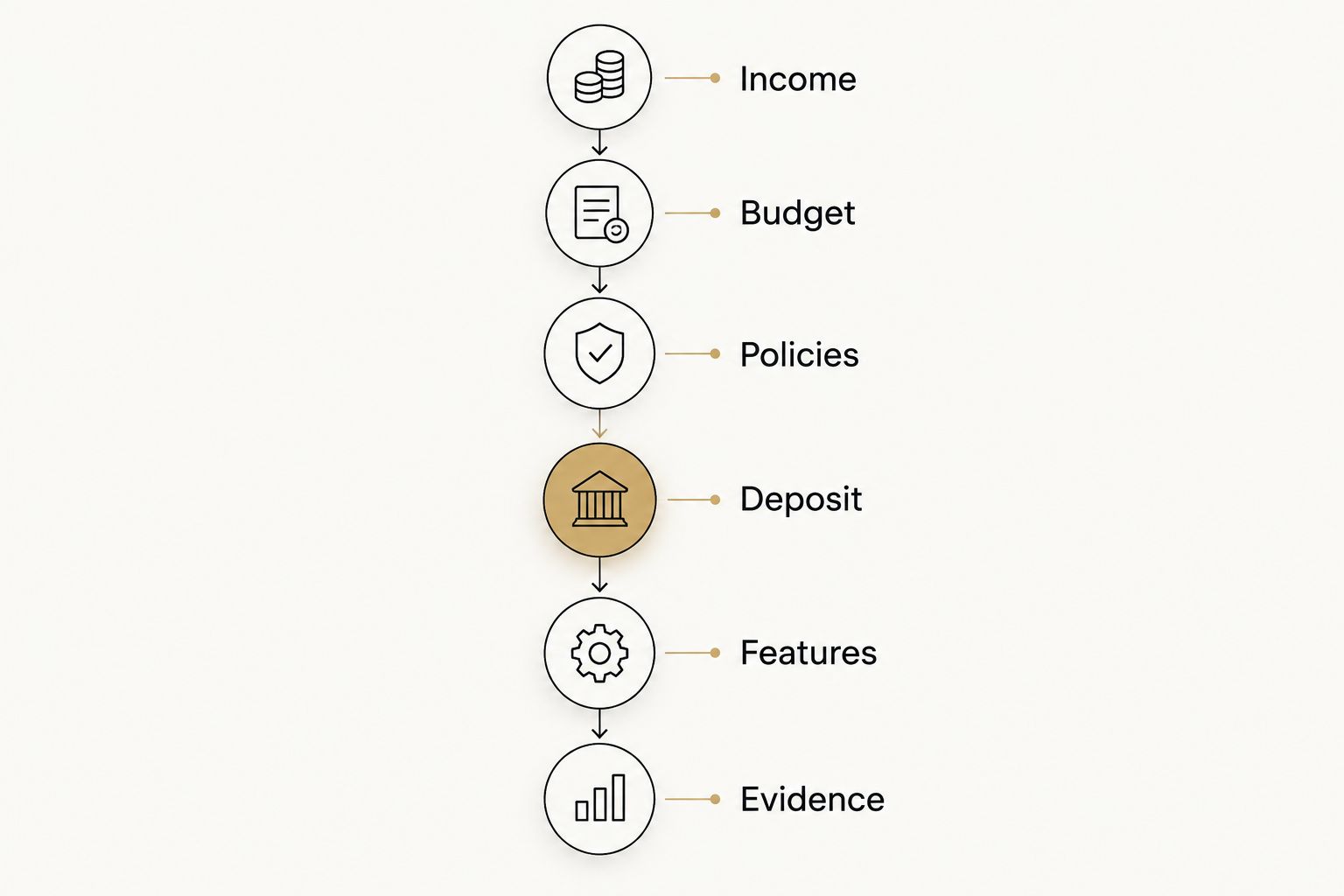
Compare your home loan pathways
These options solve different problems. A direct lender or broker is an application route; a guarantee arrangement or concession addresses a separate eligibility or deposit question. You can use an application route to investigate the other options.
| Option | Best for | Main advantage | Key limitation |
|---|---|---|---|
| Direct lender application | Nurses who have identified a suitable lender | Direct discussion about that lender's requirements | Does not compare other lenders' policies |
| Mortgage Pros mortgage broking | Nurses wanting support comparing and managing an application | Advice and approval support through a broker | Lender approval still applies; ask about lender coverage and remuneration |
| Government guarantee pathway | Eligible borrowers assessing a smaller-deposit purchase | Can address lenders mortgage insurance requirements under scheme rules | Eligibility, property and lender conditions apply |
| Family guarantor arrangement | Borrowers exploring family-supported security | Additional security can address a deposit-related obstacle | Creates financial risk for the guarantor and requires legal consideration |
| Larger deposit before applying | Nurses prioritising a lower LVR | Reduces the amount borrowed relative to property value | Takes additional saving and does not resolve an income shortfall |
Choose the pathway that addresses your actual obstacle. If the issue is income assessment, extra security does not replace the need to demonstrate repayment capacity. If the issue is deposit size, changing loan features does not supply the missing funds.
Ask Mortgage Pros to assess your income structure, deposit position and application priorities before selecting a pathway.
Discuss your nursing income today
Ask about income assessment, deposit pathways and the evidence needed for your home loan application.
Common mistakes nurses make
Treating every extra shift as permanent income
Overtime can strengthen your savings without being a sound foundation for ongoing repayments. Separate the lender's accepted income from the workload you actually want to maintain. Build the repayment budget around sustainable work, not your busiest pay period.
Assuming every medical-professional policy includes nurses
A policy described as being for healthcare or medical professionals does not establish eligibility for every occupation. Check the exact occupation, registration, employment and borrowing requirements. Do not plan your deposit around an unconfirmed insurance waiver.
Changing jobs without checking the application impact
A new nursing role can change your employment evidence, guaranteed hours or probation status. Tell the lender or broker before moving between permanent employment, agency work and contracting during an application. Get the borrowing position reassessed before making a property commitment.
Comparing loans before agreeing on income assumptions
Two borrowing estimates are not comparable if one includes overtime and the other excludes it. Ask for the employment details, earnings and commitments used in each estimate. Resolve those differences before choosing between loan structures.
Confusing approval with a comfortable repayment
Lender approval does not account for every personal preference, including reducing shifts or taking extended leave. Your 2026 home loan decision should preserve room for the changes you already expect. Tell your adviser about those plans before the application is structured.
FAQ
What’s the best home loan for a nurse in Australia?
The best home loan for a nurse fits the borrower’s assessed income, deposit, repayment budget and required features. Compare how lenders treat your employment and earnings before choosing a loan structure.
Can nurses use overtime and shift penalties for a home loan?
Lenders can consider overtime and shift penalties, but treatment depends on their income policies and your supporting evidence. Ask which components are accepted and what history is required before relying on a borrowing estimate.
Can a casual or agency nurse apply for a mortgage?
Casual and agency nurses can apply for a mortgage, subject to lender assessment. Employment history, continuity of income, current work arrangements and financial commitments affect the decision.
Do nurses automatically qualify for an LMI waiver?
No, nursing employment alone does not establish eligibility for a lenders mortgage insurance waiver. Check the lender’s exact occupation and lending criteria before planning your deposit.
Can I apply if I work for more than one hospital?
Yes, you can apply with income from multiple employers. Provide separate employment and income records so the lender can assess each role and the combined position.
Is a mortgage broker better than applying directly to a bank?
A mortgage broker suits borrowers who want help comparing lender requirements, while a direct application suits borrowers who have already identified an appropriate lender. Ask about the broker’s lender coverage, remuneration and the reasons for any recommendation.
Does pre-approval mean I can buy any property?
No, pre-approval does not guarantee finance for every property. The lender must accept the property and confirm that you satisfy the approval conditions before unconditional finance is granted.
One last thing
A higher borrowing limit is not always the better outcome. If the extra capacity depends on shifts you intend to stop working, use the lower, sustainable budget to guide your property search.
Before applying in 2026, write down the roster you want after settlement, not just the roster you work now. Contact Mortgage Pros today to discuss that income pattern and the next steps for your application. This guide provides general information; obtain advice for your circumstances before committing to a loan or property contract.
Related guides
- Best offset home loan accounts
- Best guarantor home loan lenders
- Best first home buyer home loan options