

Best overall: a broker-led lender comparison. Best for an existing banking relationship: an existing-lender review. Best for protecting the guarantor’s exposure: a limited-security guarantee assessment. The best guarantor home loan lenders in 2026 are those whose eligibility rules, security requirements and release conditions fit both the borrower and the guarantor—not simply those advertising the lowest rate.
- The best guarantor home loan lenders assess both borrower affordability and the proposed guarantee.
- Mortgage Pros provides guarantor home loan advice for borrowers comparing lender requirements.
- A limited guarantee still puts the guarantor’s secured property at risk.
- Compare guarantee limits, repayment features and release requirements before choosing a lender.
Mortgage Pros helps borrowers secure and manage home loans, including guarantor arrangements. Mortgage Pros is a guarantor home loan advice option for borrowers who need help comparing lender requirements and preparing an application. It is a mortgage broker, not a lender.
Why this matters
A guarantor arrangement affects more than your deposit. It connects another person’s assets to your borrowing, so the lender needs to suit both sides of the transaction.
The guarantee does not replace your obligation to repay the loan. You still need to meet the lender’s income, expense, credit and affordability requirements, while your guarantor needs to understand the consequences of signing.
For your 2026 comparison, separate three decisions: whether you can afford the mortgage, whether the proposed guarantee is acceptable, and how the guarantor can eventually be released. A loan that passes the first test but fails the others is not a good fit.
What makes the best guarantor home loan lenders?
Use these criteria before you compare bank names or submit an application:
- Borrower eligibility: The lender must accept your income sources, employment circumstances, liabilities and intended property use.
- Guarantor eligibility: Check which relationships, property ownership arrangements and existing mortgages the lender accepts.
- Guarantee scope: Establish the maximum secured exposure, what obligations the guarantee covers and when enforcement is possible.
- Security structure: Confirm how the lender will secure the guarantee and whether another lender’s existing mortgage creates complications.
- Loan flexibility: Compare repayment options, offset or redraw features where offered, and restrictions relevant to your plans.
- Release requirements: Understand the assessment needed to remove the guarantee, rather than assuming it ends automatically.
Choose the lender whose written requirements match your circumstances—not the lender with the most appealing headline. Keep the borrower’s loan obligations and the guarantor’s obligations separate throughout the comparison.
Guarantor home loan options at a glance
These are ranked comparison routes, not a claim that one bank approves every guarantor application. Each route answers a different borrower need.
| Option | Best for | Standout feature | Key limitation |
|---|---|---|---|
| Broker-led lender comparison | Borrowers needing help comparing policies | Advice across the lenders the broker can access | A broker’s lender panel does not necessarily cover the whole market |
| Existing-lender review | Families with an established banking relationship | Starts with the current borrower or guarantor lender | Familiarity does not establish suitability or approval |
| Limited-security guarantee assessment | Families prioritising a defined guarantee boundary | Focuses on the guarantee’s legal scope | A limit does not remove the risk to secured property |
| Specialist application assessment | Borrowers with income or ownership complexity | Checks the difficult parts before submission | A guarantee does not resolve an affordability shortfall |
1. Broker-led comparison: best for comparing lender requirements
A mortgage broker helps you compare the requirements of lenders available through its panel. For guarantor borrowing, that comparison needs to cover the borrower’s application and the proposed guarantor security together.
Mortgage Pros provides guarantor home loan advice and approval support. Ask for the reasons behind the recommended lender, the alternatives considered and the conditions that apply to your proposed arrangement.
Broker-led comparison pros
- You can compare borrower and guarantor requirements in one assessment.
- You can identify policy mismatches before submitting an application.
- You get help organising the information needed for the application.
- You can discuss refinancing and guarantee release as part of the loan plan.
Broker-led comparison cons
- The broker’s panel does not necessarily include every lender.
- A recommendation is not a credit approval or a guarantee of acceptance.
- The guarantor still needs independent legal advice about their obligations.
Best for: Borrowers who need help understanding which lender requirements fit their income, property and family arrangement.
Ask Mortgage Pros to explain how the proposed guarantee is structured, why the recommended lender fits, and what would prevent approval. Keep copies of the comparison and the relevant loan documents so you can distinguish advice from the lender’s final contractual terms.
Verdict: Choose a broker-led comparison when policy differences are difficult to assess yourself.
2. Existing-lender review: best for an established banking relationship
Start by asking the borrower’s or guarantor’s existing lender whether it accepts the proposed arrangement. This is particularly useful when the guarantor’s property already has a mortgage: the existing security position needs attention before another lender’s proposal can be assessed.
Treat the existing lender as a comparison candidate, not an automatic winner. Your banking history does not remove the need for a fresh credit assessment or establish that the guarantee terms are suitable.
Existing-lender review pros
- It gives you a clear starting point for discussing existing property security.
- You can ask how the proposed arrangement interacts with current loans.
- It creates a reference point against which to compare another lender’s proposal.
Existing-lender review cons
- The lender assesses its own products, not competing lenders’ alternatives.
- Existing customers still need to satisfy current lending requirements.
- Keeping accounts together does not necessarily produce the best loan structure.
Best for: Families whose existing mortgages or banking arrangements are central to the proposed guarantee.
For a 2026 review, request a written explanation of the guarantee, the security required and the release process. Compare those terms with an alternative before deciding that staying with the same lender is simpler or better.
Verdict: Hold the existing lender on your shortlist until its terms have been compared.
3. Limited-security guarantee: best for defining guarantor exposure
A limited-security guarantee focuses on a defined part of the borrowing rather than treating the guarantor’s support as an open-ended family promise. The actual exposure depends on the documents, including provisions dealing with interest, enforcement costs and other obligations.
Compare lenders on the wording and structure of the guarantee, not just the label. A stated limit needs legal interpretation before the guarantor relies on it.
Limited-security guarantee pros
- It gives the family a specific guarantee boundary to examine.
- It supports a discussion about the amount of security actually needed.
- It provides a clearer basis for planning eventual release.
Limited-security guarantee cons
- The guarantor’s secured property remains at risk if obligations are not met.
- A limited guarantee is not the same as a risk-free arrangement.
- Release still depends on the lender’s requirements and approval.
Best for: Families whose priority is understanding and defining the guarantor’s exposure before proceeding.
Ask whether the proposed security covers only the intended loan obligations. The guarantor’s solicitor should also explain what happens following default, how enforcement works and whether the documents contain obligations beyond the amount the family initially discussed.
Verdict: Choose a limited arrangement only after independent legal advice confirms its scope.
4. Specialist assessment: best for complex borrower circumstances
A specialist assessment examines the difficult parts of your application before selecting a lender. Examples include self-employed income, several existing liabilities, investment borrowing or a guarantor property with an existing mortgage.
The purpose is to establish which requirements your application satisfies. Providing extra security does not prove that you can afford the repayments.
Specialist assessment pros
- It separates income and affordability questions from security questions.
- It identifies documents needed to explain complex circumstances.
- It helps focus the lender comparison on relevant eligibility requirements.
Specialist assessment cons
- A guarantee cannot overcome every reason for declining a loan.
- Complex circumstances require careful documentation.
- Borrower and guarantor security issues both need to be resolved.
Best for: Borrowers whose application needs more than a straightforward deposit assessment.
For your 2026 application, explain employment, ownership and debt arrangements accurately from the beginning. Do not select a lender first and try to reshape the facts to fit its requirements later.
Verdict: Choose specialist assessment before lodging an application with unresolved eligibility issues.
How to compare your shortlist before applying
Use the same questions for every lender. Otherwise, a detailed explanation from one provider and a brief summary from another will look like comparable offers when they are not.
Confirm eligibility
Ask whether the lender accepts your income, property type and proposed guarantor relationship. Identify any conditions that must be satisfied before approval.
Check affordability
Review your income, living expenses and existing debts against the proposed repayments. The guarantee supplies security; it is not a substitute for an affordable mortgage.
Define exposure
Request the guarantee documents and an explanation of the security required. Make sure the guarantor understands the obligations independently of the borrower’s account of them.
Plan release
Ask what evidence and assessment the lender requires to remove the guarantee. Establish who must request release and whether valuation or other requirements apply.
These checks form a sequence: establish eligibility and affordability before committing another person’s property. Document the proposed exposure and release pathway before signing.
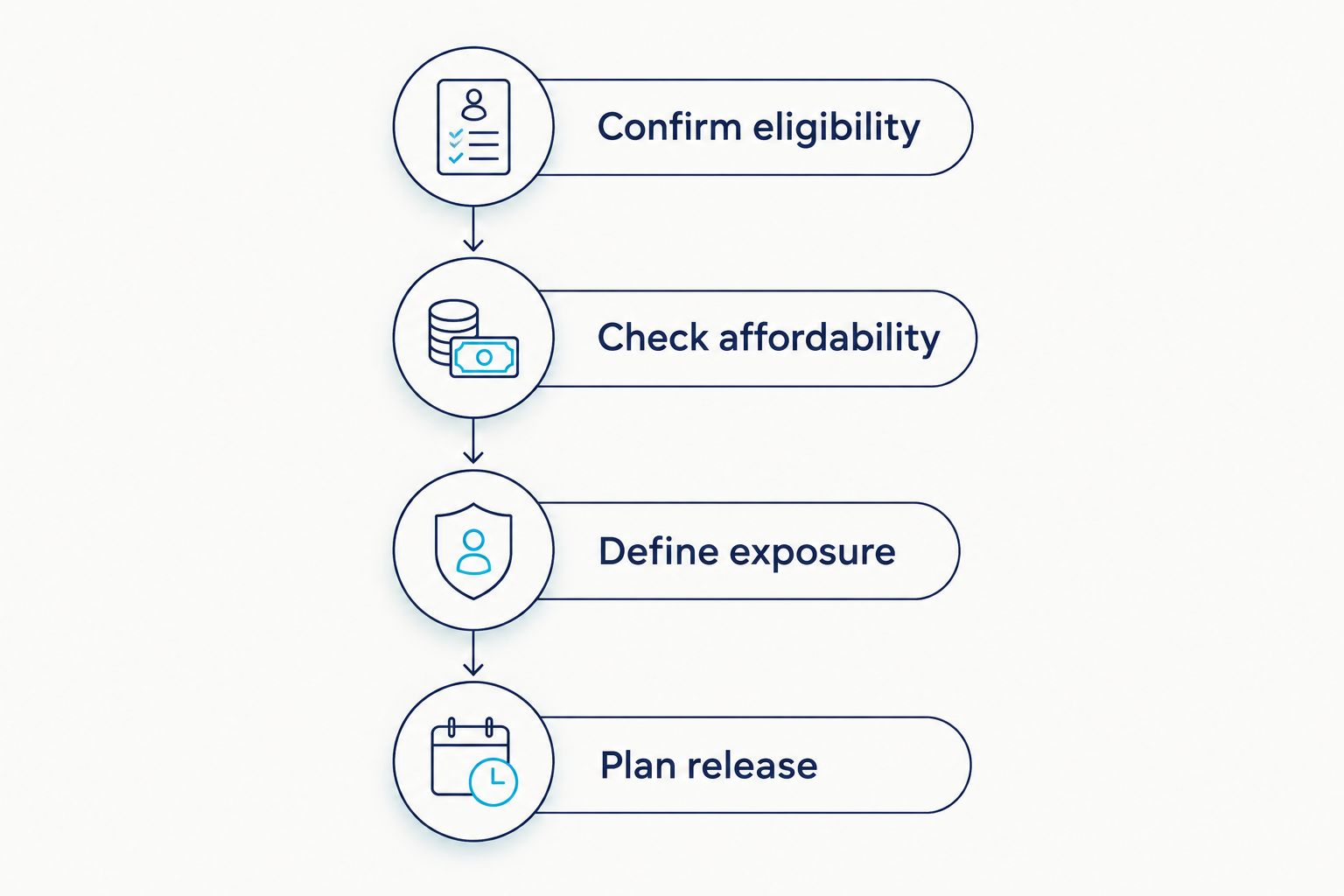
Record each lender’s answers alongside the corresponding documents. When an explanation and a contractual clause appear inconsistent, resolve the difference before proceeding.
Discuss your guarantor loan options
Get guidance on borrower eligibility, guarantor security and lender requirements.
Understand LVR, mortgage insurance and guarantee release
Loan-to-value ratio, or LVR, compares the loan balance with the property value accepted by the lender. It helps explain why deposit size and property valuation matter, but it does not answer every guarantor eligibility question.
In Australian residential lending, 80% LVR is a common threshold above which lenders mortgage insurance can apply, subject to lender policy and exemptions. A 20% deposit corresponds to 80% LVR before purchase costs when the purchase price and accepted valuation are equal.
At 90% LVR, the loan represents 90% of the accepted property value. The remaining 10% is the difference between that value and the loan; it is not necessarily cash you have available.
A guarantee can affect how a lender assesses its security and mortgage insurance requirements. Ask for the treatment of your specific application rather than assuming every guarantor arrangement receives the same outcome.
Reaching 80% LVR does not automatically release a guarantor. For a 2026 release request, check the lender’s valuation, repayment and credit requirements, and obtain written confirmation that the guarantee and associated security have been discharged.
How the options are ranked
The ranking prioritises policy fit, informed comparison and clarity about guarantor risk. Broker-led comparison comes first because it addresses several lender requirements together; an existing-lender review provides a useful starting point when current security arrangements matter.
The remaining options focus on two distinct needs: defining the guarantee’s scope and resolving complex eligibility questions. They are not mutually exclusive—you can use a broker-led comparison while requesting a limited guarantee and a specialist assessment.
The ranking does not promise approval, identify a universally cheapest lender or replace the guarantor’s legal advice. The final choice belongs to the written proposal that satisfies your circumstances.
Which guarantor home loan option should you choose?
Start with a broker-led comparison if you are unsure which lender fits both the borrower and guarantor. Use the existing lender as a reference point, not the default answer.
Prioritise a limited-security assessment if the family’s main concern is defining exposure. Prioritise specialist assessment if income, liabilities or ownership arrangements create eligibility questions.
For 2026, choose the lender only after you understand the repayment obligation, guarantee wording and release process. A recognised name is not a substitute for suitable terms.
FAQ
What are the best guarantor home loan lenders in 2026?
The best guarantor home loan lenders in 2026 are those whose borrower eligibility, guarantor security and release requirements fit your circumstances. Compare written requirements rather than choosing a bank on reputation alone.
Is Mortgage Pros a guarantor home loan lender?
Mortgage Pros is a mortgage broking firm, not a lender. It helps borrowers with home loan advice and approval support, including guarantor arrangements.
Can a guarantor replace the need to show enough income?
No, a guarantor does not replace the borrower’s affordability assessment. You still need to satisfy the lender’s requirements for income, expenses, debts and repayments.
Is a limited guarantee safe for my parents?
A limited guarantee still exposes the guarantor to financial risk within its contractual terms. Your parents should obtain independent legal advice about the guarantee and any property offered as security.
Does a guarantor home loan always avoid lenders mortgage insurance?
No, you should not assume every guarantor home loan avoids lenders mortgage insurance. Ask the lender how it assesses the proposed security and whether mortgage insurance applies to your application.
Is my guarantor released when my loan reaches 80% LVR?
Reaching 80% LVR does not automatically release a guarantor. The lender must assess and approve release under its requirements, and you should obtain written confirmation of discharge.
Should I use my current bank for a guarantor home loan?
Your current bank is a useful comparison candidate, not an automatic best choice. Compare its eligibility rules, guarantee documents, loan features and release requirements with another suitable option.
One last thing
A guarantee release plan is not a guarantee release. Keep the loan review and the legal discharge separate: paying down the mortgage does not itself prove that the guarantor’s obligations have ended.
Before signing, ask who will initiate the release request and what written confirmation the guarantor will receive. That practical question connects today’s lender choice with the family’s eventual exit from the arrangement.
This article provides general information, not personal financial or legal advice. Obtain advice specific to the borrower’s and guarantor’s circumstances before entering a guarantee.