
Yes, dentists can qualify for a home loan without lenders mortgage insurance (LMI) through a lender’s eligible-professional policy, but being a dentist does not guarantee approval. You still need to meet that lender’s professional eligibility, deposit, income, credit and property requirements, and an LMI waiver does not remove your other purchase expenses.
- Dentist home loan LMI waivers are available through eligible-professional lending policies; approval remains subject to lender assessment.
- Mortgage Pros provides home loan advice for dentists seeking help with professional eligibility and their application.
- No LMI does not mean no deposit, no purchase expenses or automatic approval.
- Compare the whole home loan, not just whether the lender waives mortgage insurance.
Can dentists qualify for a home loan with no LMI?
Yes. An eligible dentist can receive an LMI waiver without providing the deposit normally needed to avoid LMI under standard lending rules. The lender must accept both your professional status and the proposed loan under its current policy.
For a 2026 application, separate professional eligibility from borrowing capacity. A waiver addresses mortgage insurance; it does not establish how much you can repay or whether the property meets the lender’s requirements.
Start with the home loan lenders for dentists guide to frame the lender-selection questions. Then confirm the policy that applies to your own application rather than relying on a profession-wide claim.
| Pathway | Best for | Main benefit | Main limitation |
|---|---|---|---|
| Dentist professional-policy waiver | Eligible dentists seeking to borrow above standard no-LMI limits | Removes the LMI requirement when the application satisfies the policy | Professional eligibility does not replace income, credit or property assessment |
| Standard lending without LMI | Borrowers with enough deposit or equity to meet standard lending requirements | Does not depend on a dentist-specific concession | Requires more deposit or equity than a higher-LVR waiver pathway |
Neither pathway wins automatically. Choose the loan that suits your repayment budget, cash reserves and intended use, not simply the pathway with the most attractive headline.
Why this matters
LMI protects the lender if a borrower defaults and the property sale does not cover the outstanding loan. It does not protect you against missed repayments. A waiver removes an insurance requirement, not your responsibility for the debt.
Under standard Australian lending arrangements, LMI commonly applies when borrowing exceeds 80% of the property’s assessed value. A 20% deposit generally brings the purchase loan to that threshold, before allowing for purchase expenses or differences between the purchase price and lender valuation.
Those are general lending benchmarks, not a promise about a dentist waiver. In 2026, ask the lender to confirm the maximum loan-to-value ratio (LVR) available for your profession, property and borrowing purpose.
How does a dentist LMI waiver work?
A dentist LMI waiver is a lender-policy concession for an eligible professional borrower. The lender assesses your application against that concession as well as its usual credit requirements.
The distinction matters because professional eligibility and loan approval answer different questions:
- Professional eligibility: Does your occupation, registration and employment position fit the lender’s policy?
- Loan approval: Can you service the requested debt, and does the security property meet the lender’s requirements?
A positive answer to the first question does not settle the second. Ask for both to be assessed before treating a proposed purchase budget as workable.
What does the waiver leave unchanged?
You still repay the amount borrowed and the interest charged under the loan contract. You also need funds for applicable purchase and settlement expenses, even when mortgage insurance is not required.
Borrowing more also leaves you with less equity at the outset than borrowing less against the same property. That is the trade-off: a waiver can reduce the deposit barrier, but it does not reduce the debt you choose to take on.
How much deposit does a dentist need without LMI?
There is no single dentist deposit requirement that applies across lenders. The answer depends on the approved LVR, lender valuation, property and the conditions attached to the professional policy.
LVR expresses your proposed loan as a percentage of the property’s assessed value:
LVR = loan amount ÷ lender-assessed property value × 100%.
The standard 80% LVR benchmark helps explain why a 20% deposit often avoids LMI outside professional concessions. It is not the maximum borrowing limit for every dentist policy, and it is not a complete settlement budget.
Before choosing a purchase limit, ask for these figures to be shown separately:
- The deposit required under the proposed lending policy.
- Your contribution towards applicable purchase and settlement expenses.
- The cash you intend to retain after settlement.
Do not commit every available dollar to the deposit without checking the other obligations. A loan that qualifies without LMI still needs to leave you able to meet repayments and ordinary living expenses.
Why dentist LMI waiver eligibility varies
Lenders set their own professional-policy conditions. Your 2026 assessment needs to address the actual application, not just your job title.
- Professional status: Confirm that your dental occupation and registration meet the lender’s definition of an eligible professional.
- Income evidence: Establish whether the lender will assess salary, contracting receipts or business income, and which documents it requires.
- Existing commitments: Credit cards, other loans and ongoing financial obligations form part of the borrowing assessment.
- Deposit and LVR: The requested borrowing must fit the applicable policy and the lender’s valuation.
- Property and purpose: Confirm that the property and intended owner-occupied or investment use are acceptable.
- Application structure: Check how joint applicants, business ownership and other relevant arrangements affect eligibility.
Request the policy conditions before submitting a full application. Discovering that a profession concession does not fit your circumstances after selecting a property creates an avoidable financing problem.
How do you check whether you qualify?
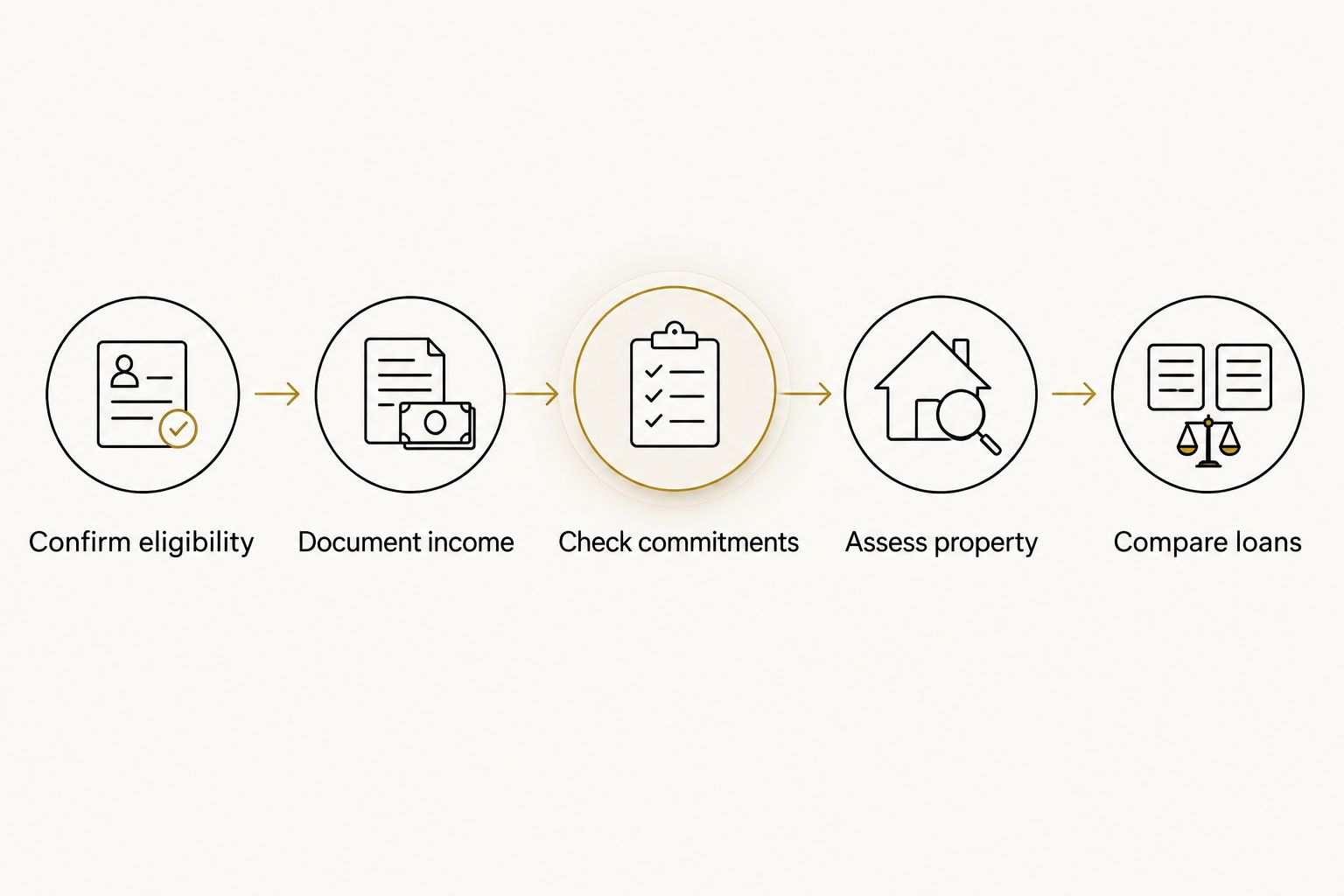
Use the following sequence to turn a general waiver enquiry into a clear lending assessment. Complete the checks before relying on an advertised professional benefit.
1. Confirm eligibility
Give your broker your exact occupation, registration details and current work arrangement. Explain whether you are employed, contracting, self-employed or working across different arrangements.
Ask which lender policies accept those circumstances. Do not assume that a concession described for medical professionals automatically includes every dental occupation.
2. Document income
Collect the income evidence relevant to your work structure. An employed dentist and a practice owner need different evidence to explain how their earnings support repayments.
Ask which documents the proposed lender requires before assembling the application. Where income comes through a business, explain the ownership structure and distinguish business revenue from personal earnings.
3. Check commitments
List existing debts, credit limits and regular expenses accurately. Include obligations connected with your practice where they are relevant to your personal borrowing position.
A professional concession does not cancel those commitments. The lender still needs a complete picture of the financial obligations that sit alongside the proposed home loan.
4. Assess property
Confirm the intended use and property details with the lender or broker. The lender’s security assessment and valuation matter separately from your professional eligibility.
Do not treat a favourable borrowing discussion as confirmation that every property will be accepted. Check the conditions attached to any pre-approval before making a purchase commitment.
5. Compare loans
Compare the repayment structure, interest-rate terms, fees and features alongside the LMI position. Ask what changes if you contribute a larger deposit or choose a different loan structure.
The result should be a suitable loan application, not simply an insurance exemption. Keep a written record of the outstanding conditions so you know what remains unresolved.
Mortgage Pros provides home loan advice for dentists and other medical professionals. Mortgage Pros is best for dentists seeking mortgage-broking support with their home loan application. The lender makes the approval decision, and specialist support does not remove its eligibility or credit requirements.
Check your dentist home loan eligibility
Discuss your professional status, income and deposit before choosing a home loan pathway.
Can self-employed dentists qualify for an LMI waiver?
Self-employment does not establish or rule out eligibility on its own. A self-employed dentist needs a lender that accepts the professional circumstances and can assess the income supporting the application.
Prepare to explain how the practice operates, how you receive income and which liabilities affect your position. Tax returns, financial statements and other supporting records help the lender assess business-derived earnings; the required documents depend on its policy.
Avoid presenting total practice turnover as the income available for personal mortgage repayments. Business expenses and the ownership structure matter when explaining what you actually earn.
Does a dentist LMI waiver mean no deposit?
No. An LMI waiver and a no-deposit loan are different arrangements. The waiver removes an insurance requirement under a qualifying policy; it does not itself supply your deposit or settlement funds.
Ask the broker to identify exactly where your contribution comes from and what evidence the lender needs. If another source of support is involved, have that assessed separately rather than assuming it forms part of the professional waiver.
Is a no-LMI loan better than saving a larger deposit?
A no-LMI loan is not automatically better than a larger deposit. A qualifying waiver can let you proceed with less deposit than standard no-LMI lending, while a larger contribution reduces the amount borrowed against the same property.
For your 2026 decision, compare both options using your current income, expenses and intended cash reserve. Avoid basing the choice on an assumed future property gain or salary increase.
| Decision | Best for | Advantage | Trade-off |
|---|---|---|---|
| Apply using an eligible waiver | Dentists whose present finances support the proposed borrowing | Allows assessment without waiting to meet standard no-LMI deposit requirements | A smaller contribution means a larger loan against the same property |
| Build a larger deposit | Borrowers prioritising a smaller loan | Reduces borrowing when the property value is unchanged | Delays the purchase while additional funds are saved |
Compare affordability first and the waiver second. Removing LMI does not make an otherwise unsuitable repayment commitment suitable.
What should you ask before applying in 2026?
Ask questions that produce an application-specific answer rather than a general statement about dentists:
- Does my exact professional status meet this lender’s waiver policy?
- What LVR applies to my property and intended loan purpose?
- Which parts of my income will the lender accept?
- What documents or conditions remain outstanding?
- How much cash must I contribute at settlement?
- Does the alternative with a larger deposit better suit my repayment budget?
Keep the answers with your application records. A useful assessment states what is accepted, what is conditional and what still needs confirmation.
FAQ
Can dentists get a home loan without paying LMI?
Yes, eligible dentists can qualify for an LMI waiver under a lender’s professional lending policy. Approval still depends on the lender accepting the borrower, income, deposit and property.
Do all dentists automatically qualify for an LMI waiver?
No, being a dentist does not automatically qualify you for an LMI waiver. The lender must confirm that your professional circumstances and proposed loan meet its current conditions.
Do I need a 20% deposit to avoid LMI as a dentist?
A 20% deposit is the usual standard-lending benchmark, not a universal requirement for an eligible dentist waiver. Confirm the lender’s approved LVR and allow separately for purchase expenses.
Can a self-employed dentist apply for a no-LMI home loan?
A self-employed dentist can seek assessment under a professional waiver policy. The lender must accept the professional circumstances and be satisfied with the evidence supporting business-derived income.
Does an LMI waiver protect me if I cannot make repayments?
No, an LMI waiver does not provide repayment protection. LMI protects the lender, and removing that requirement does not change your responsibility to repay the loan.
Can I assume my pre-approval includes the dentist LMI waiver?
No, confirm that the proposed LMI treatment is included in the assessment and check all remaining conditions. Pre-approval does not replace the lender’s final assessment of the application and property.
One last thing
A lender valuation below the purchase price can change your required cash contribution even when a dentist waiver is available. LVR uses the lender’s assessed property value, so an agreed purchase price alone does not settle the borrowing calculation.
Before committing, ask how a valuation shortfall would affect your loan and available funds. Contact Mortgage Pros today to discuss your dentist home loan circumstances and the checks needed before applying.
This article provides general information, not personal financial advice. Confirm current lender requirements and obtain advice relevant to your circumstances before making a borrowing decision.
Related guides
- How self-employed dentist income is assessed for a home loan
- No LMI versus saving a bigger deposit for doctors
- First Home Super Saver Scheme to deposit workflow