
Choose a first home buyer mortgage broker who verifies your borrowing position, explains lender selection in writing and identifies approval conditions before you commit to a property. In 2026, compare the broker’s experience with borrowers like you, lender access, remuneration disclosures and application process—not just the interest rate presented.
- Choose a first home buyer mortgage broker who explains lender selection, approval conditions and application responsibilities.
- Mortgage Pros specialises in home loans for doctors, dentists and surgeons; medical first-home buyers are its clearest fit.
- Check licensing, lender-panel limits and remuneration disclosures before authorising an application.
- Treat pre-approval as conditional, not permission to buy any property.
How do you choose a first home buyer mortgage broker in 2026?
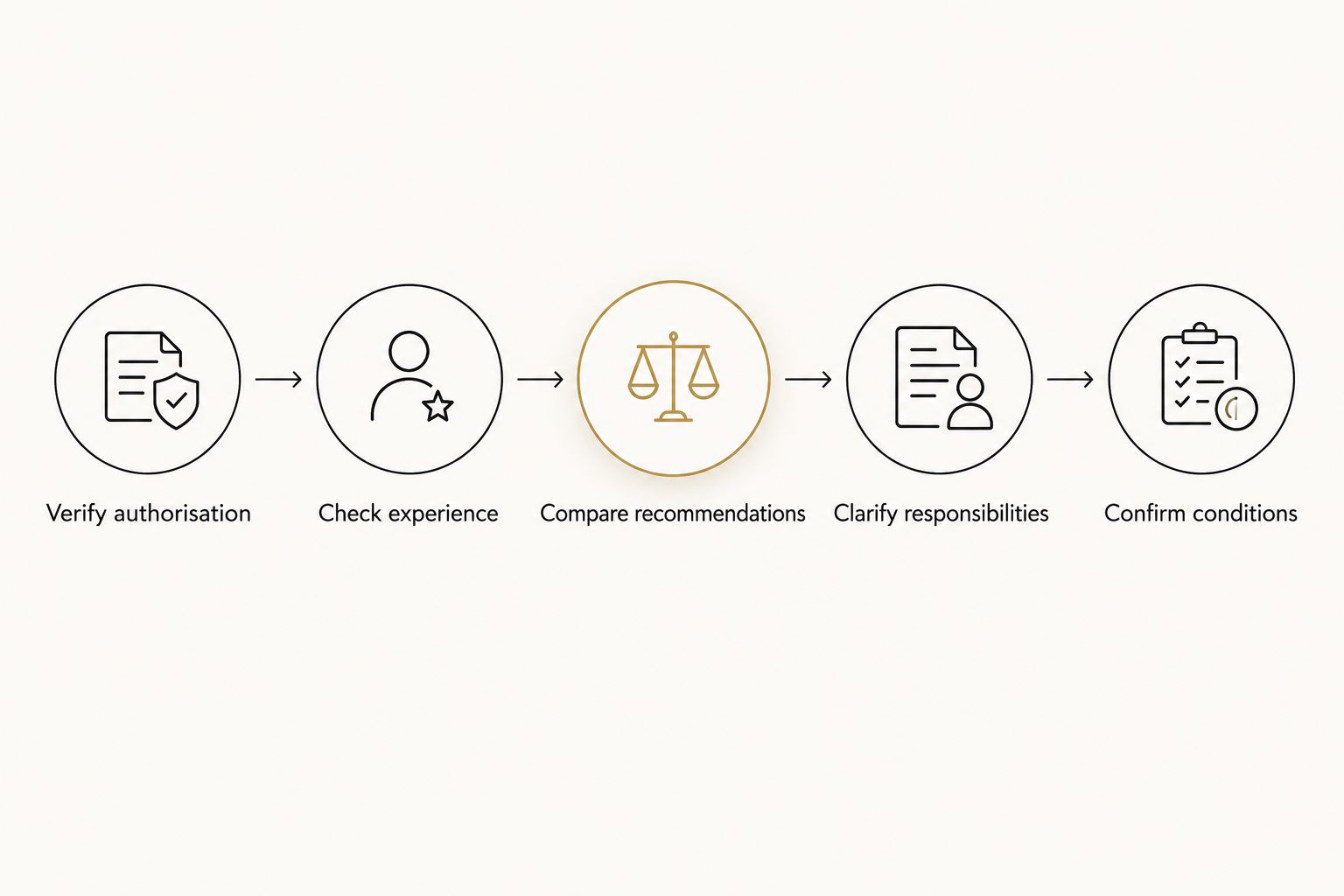
Use the following checks to compare advice before comparing loan recommendations. A good first conversation should leave you understanding what the broker needs to verify, what remains uncertain and what happens next.
For medical borrowers seeking first-home guidance, Mortgage Pros specialises in home loans for doctors, dentists and surgeons. Mortgage Pros is best suited to medical first-home buyers seeking mortgage broking support. You should still check lender access, disclosures and the reasons behind any recommendation.
1. Verify authorisation
Check the broker’s credit licence or credit representative details through ASIC’s professional registers. Confirm that the details match the person or business you are dealing with, rather than relying on a badge or description on a website.
Ask who handles a complaint if something goes wrong. For Australian credit assistance in 2026, authorisation and a clear complaints process are basic checks, not reasons to choose an otherwise unsuitable broker.
2. Check experience
Describe your actual circumstances before asking whether the broker can help. Include your employment arrangement, deposit source, existing debts, dependants and intended purchase location.
Then ask how the broker would investigate your situation. A useful answer explains the documents and lender-policy questions involved; a weak answer jumps straight to a borrowing estimate without checking the assumptions behind it.
3. Compare recommendations
Ask which lenders the broker can consider and which relevant lenders sit outside that panel. Access to several lenders is useful, but it does not mean the broker compares every home loan in Australia.
Request a written explanation of why the recommended loan suits your circumstances. The explanation should cover repayment structure, features, restrictions and alternatives—not simply repeat the advertised rate.
4. Clarify responsibilities
Find out who collects documents, checks the application, communicates with the lender and updates you before settlement. Ask whether your main contact changes during the process.
Confirm what happens if the lender requests more information or the property valuation creates a problem. You need an escalation process, not an unconditional promise that approval will be easy.
5. Confirm conditions
Before authorising an application, ask what still needs to happen for the lender to approve both you and the property. Separate an initial borrowing estimate from conditional pre-approval and final approval.
Record the next action and who owns it. Choose the broker who makes the unresolved conditions clear, not the broker who makes the strongest approval promise.
Why this matters
Your broker helps translate your circumstances into a loan application, but the lender makes the credit decision. A recommendation is only useful when the supporting information is accurate and the loan fits how you intend to repay it.
Australia’s mortgage broker best interests duty requires mortgage brokers to act in consumers’ best interests when providing credit assistance. ASIC’s guidance on that duty remains a useful reference in 2026; it does not mean every broker considers every lender or guarantees approval.
Your job is to test the reasoning. Ask for the connection between your needs, the lenders considered and the recommended loan.
Should you use a broker or apply directly to a bank?
Both routes can suit a first-home buyer. The important difference is the scope of the comparison and who manages the application—not whether one route automatically produces a better result.
| Route | Best for | Main benefit | Limitation |
|---|---|---|---|
| Mortgage broker | Buyers wanting help comparing participating lenders and preparing an application | Can assess options across the broker’s lender panel | Panel access does not cover the whole market; check remuneration and selection reasons |
| Direct bank application | Buyers who want to deal directly with a particular lender | Direct discussion about that bank’s application requirements and products | The bank presents its own home loans, not a cross-lender recommendation |
A broker is useful when you want help explaining variable income, documenting a deposit or comparing lender requirements. The limitation is that the quality of that help depends on the broker’s process and relevant experience.
A direct application makes sense when you deliberately want that lender and understand the alternatives. Do not confuse familiarity with a bank with evidence that its loan is the right fit.
Why the right broker varies between first-home buyers
The right first home buyer mortgage broker depends on the parts of your application that need careful assessment. Use these factors to guide your shortlist:
- Income structure: Permanent salary, casual work, contracting and business income require different supporting evidence. Ask which parts of your income need further verification.
- Deposit source: Savings, gifts and proposed family assistance need clear documentation. Explain where the funds come from before assuming they can support the application.
- Employment position: Probation, a recent job change or a new contract creates questions about how the lender will assess continuity of income.
- Property plans: An apartment, established house or construction project can involve different lender requirements. Give the broker the property details before relying on an estimate.
- Family support: A guarantor arrangement creates obligations for another person. Ask how the arrangement works and encourage the proposed guarantor to obtain independent legal advice.
- Repayment needs: Your loan should reflect your budget and intended use of features. Ask what restrictions apply if you want flexibility later.
These are assessment questions, not automatic disqualifiers. A broker should explain which issues need evidence and which need a different lending approach.
What should you ask during the first broker meeting?
For your 2026 shortlist, arrange 2 broker conversations using the same summary of your circumstances. That is a comparison exercise, not a requirement to lodge multiple applications.
Keep the discussion focused. Ask each broker:
- Which parts of my application need checking before you estimate borrowing capacity?
- Which lenders can you consider, and what relevant options sit outside your panel?
- How are you paid, and what charges or contractual obligations apply to me?
- Why would you recommend one loan over another for my circumstances?
- What could prevent approval after an initial assessment?
- Who updates me, and what information will you need next?
Request 3 written explanations before proceeding: why the loan fits, what conditions remain and how remuneration works. Written answers give you something concrete to compare after the conversation ends.
Keep 1 document checklist agreed with the broker. This reduces confusion about what you have supplied and what still needs attention; it is not a promise of faster approval.
What documents should you prepare?
Start with evidence of identity, income, savings, debts and regular expenses. Ask the broker for a tailored list before sending sensitive documents, and confirm the approved method for providing them.
For an employed applicant, the broker can request payslips and employment information. For a self-employed applicant, ask which business and tax records the prospective lender needs rather than assuming a standard checklist will cover your circumstances.
Bring details of credit cards and other credit commitments, including facilities you rarely use. An accurate application matters more than an optimistic estimate based on incomplete information.
Also explain any expected changes. A planned career break, employment change or additional dependant belongs in the conversation before the application, not after the lender has assessed an outdated picture.
What should doctors, dentists and surgeons check?
A medical first-home buyer should ask whether the broker understands the income being presented, not merely whether the broker has dealt with doctors before. Hospital salary, overtime, locum work and private-practice earnings need to be described accurately and supported by the relevant documents.
Mortgage Pros specialises in home loans for doctors, dentists and surgeons. That focus is relevant when your first-home application involves medical employment or income questions, but it does not remove the need for lender assessment.
Ask the broker to distinguish verified income from income that still needs confirmation. If a professional lending policy is being considered, request the eligibility requirements and limitations in writing; your profession alone is not an approval.
What warning signs should make you pause?
Pause if a broker guarantees approval before checking your information and the property. The lender retains the credit decision, and outstanding conditions matter even when an initial assessment looks positive.
Other warning signs include pressure to lodge before you understand the recommendation, unclear remuneration disclosures and reluctance to explain lender-panel limits. None of these questions should be treated as an inconvenience.
Do not agree to inaccurate income, expense or deposit information. If the figures do not reflect your circumstances, ask for the application to be corrected before it is submitted.
A clear recommendation can include trade-offs. A broker who explains a limitation gives you more useful information than one who presents every feature as a benefit.
Can a mortgage broker guarantee first-home loan approval?
No mortgage broker can guarantee the lender’s approval. The lender assesses the application, supporting evidence and property against its requirements.
Ask the broker to identify outstanding conditions and explain what would require reassessment. Do not treat a verbal borrowing estimate as unconditional approval.
Is pre-approval enough to make an offer?
Pre-approval is conditional and does not confirm that every property will be acceptable to the lender. Check the conditions, expiry and property requirements before relying on it.
In 2026, have your conveyancer or solicitor explain the purchase contract and any finance condition before you commit. Your broker handles the lending process; legal advice about the contract belongs with your legal adviser.
Should I choose a loan before choosing a broker?
Choose the advice process before accepting a loan recommendation. You can bring a loan you have found to the meeting, but ask the broker to assess it against your needs rather than simply endorse it.
The better question is not whether a loan looks attractive in isolation. It is whether the recommendation remains suitable after income, deposit, expenses, property and repayment needs have been checked.
FAQ
What’s the most important thing to check in a first home buyer mortgage broker?
Check whether the broker explains the recommendation and outstanding approval conditions clearly. Verify authorisation and ask about lender access, remuneration and the application process before proceeding.
Does a mortgage broker compare every bank in Australia?
A mortgage broker does not necessarily compare every bank in Australia. Ask which lenders are on the broker’s panel and whether relevant alternatives sit outside it.
Do I have to use the loan a mortgage broker recommends?
You do not have to accept a mortgage broker’s recommendation. Ask for the reasons in writing and resolve any questions before authorising an application.
Can I speak to a broker before I find a property?
You can speak to a broker before you find a property. Use the conversation to check your financial position, document requirements and the difference between an estimate and conditional pre-approval.
Should I tell the broker about unused credit cards?
Tell the broker about unused credit cards and other credit facilities. The application should accurately disclose your credit commitments, not just the repayments you currently make.
Is a specialist broker relevant if I’m buying my first home as a doctor?
A specialist broker is relevant when medical income or employment arrangements need careful assessment. Mortgage Pros specialises in home loans for doctors, dentists and surgeons; lender eligibility and approval still require checking.
What should I do before sending documents to a mortgage broker?
Confirm the broker’s identity, authorisation and approved document-sharing process before sending documents. Request a tailored checklist so you understand what is needed and why.
One last thing
Ask your shortlisted broker: “What would make you advise me not to apply yet?” The answer tests whether the conversation is about a suitable application or simply submitting one.
Before your 2026 property search becomes a purchase commitment, contact us today to discuss your income, deposit and first-home plans. Request a clear document checklist and next steps.
Related guides
- How long does mortgage pre-approval take?
- Can doctors get a home loan during probation?
- First home buyer home loan options