
Switching to a fixed rate in 2026 is worth considering when predictable repayments matter more to you than repayment flexibility, and you expect to keep the loan through the fixed period. Break costs, restrictions on extra repayments and reduced offset access can outweigh that certainty, so compare the full loan terms rather than the interest rate alone.
- Is it worth switching to a fixed rate? Choose repayment certainty only when the restrictions fit your plans.
- Fixed-rate home loans protect against rate increases during the fixed period, but do not automatically deliver savings.
- Check break costs, extra repayment limits and offset access before switching.
- Mortgage Pros helps home loan borrowers assess refinancing, including medical professionals with changing income arrangements.
Is it worth switching to a fixed rate in 2026?
Fixing is a budgeting decision, not a reliable way to beat future interest rates. A fixed rate gives you certainty about the interest rate applying during an agreed period. Whether that certainty is worthwhile depends on what you give up and how you expect to use the loan.
If you want help checking your existing loan against a fixed alternative, contact Mortgage Pros before authorising a switch.
| Loan structure | Best for | Main benefit | Main drawback |
|---|---|---|---|
| Fixed rate | Borrowers prioritising predictable repayments | The fixed portion's rate stays unchanged during the agreed period | Early changes can trigger break costs; features depend on the contract |
| Variable rate | Borrowers prioritising flexibility | Often provides more scope for extra repayments and offset features | The lender can change the interest rate |
| Split loan | Borrowers wanting certainty alongside flexibility | Combines a fixed portion with a variable portion | Only part of the balance is protected from variable-rate changes |
None of these structures is automatically cheaper. Compare them using the same remaining loan term, repayment type and intended repayment behaviour.
Why this matters
A fixed loan can make household budgeting easier, but the wrong fixed period can clash with a property sale, refinance or plan to reduce debt quickly. The practical question is whether the contract supports your next move.
For a doctor moving between hospital employment, locum work and private practice, income timing can also affect how useful repayment flexibility becomes. A stable required repayment helps with planning; access to surplus cash serves a different purpose. Assess both needs separately.
Fixed rate: best for repayment certainty
A fixed-rate home loan suits borrowers who want a known interest rate for an agreed period and do not expect to make substantial changes to the loan during that time. It protects the fixed portion from interest-rate increases during that period.
The trade-off is flexibility. Depending on the lender and product, you face limits on additional repayments, restricted offset features or a break cost if you repay or change the loan early. Read the actual contract rather than assuming all fixed loans work alike.
Fixing also means you do not automatically benefit if variable rates fall. That does not make the decision wrong: you chose certainty. It does mean you should accept that outcome before signing, rather than judge the decision only against future rate movements.
Choose a fixed rate when you value the agreed repayment structure and can live with the restrictions. Do not fix solely because you expect rates to move in a particular direction.
Variable rate: best for repayment flexibility
A variable-rate home loan suits borrowers who expect to make extra repayments, use an offset account or change their borrowing arrangements. Those features remain product-specific, so confirm what the proposed loan actually includes.
The drawback is repayment uncertainty. Your lender can change the variable interest rate, which can affect your required repayments and household budget. Flexibility is useful only if you can also manage that exposure.
If your 2026 plans include selling, refinancing or directing irregular earnings towards the mortgage, test those plans against a fixed contract before switching. A rate that looks attractive on paper is not enough if it obstructs the way you intend to manage your debt.
Keep flexibility central when your likely loan changes matter more than a fixed repayment schedule. Compare features you will use, not a longer list of features you will ignore.
Split loan: best for balancing competing needs
A split loan divides your borrowing into fixed and variable portions. The fixed portion provides rate certainty, while the variable portion can provide flexibility, subject to its own conditions.
This structure does not remove the disadvantages of either loan type. Variable-rate changes still affect the variable portion, and restrictions still apply to the fixed portion. There is no universally correct split.
Start with your expected cash use. If you intend to hold savings in an offset account or make additional repayments, check which portion supports those actions and whether its balance suits that purpose. Avoid choosing a split simply because it sounds like a compromise.
Consider a split when you can explain the job each portion will do. If you cannot, clarify your priorities before deciding on the structure.
Why the value of switching varies
The same fixed offer can suit one borrower and be unsuitable for another. These factors change the decision:
- Your planned ownership period: A sale during the fixed period can require early repayment and trigger a break-cost assessment.
- Your current loan contract: Leaving an existing fixed loan requires different checks from changing a variable loan with the same lender.
- Your savings and repayment habits: Offset access and additional repayment rules matter more when you actively use them.
- Your expected borrowing changes: Renovations, equity access or refinancing can conflict with fixed-loan restrictions.
- Your tolerance for repayment changes: Predictability has practical value when your household budget has limited room for movement.
- Your income pattern: Irregular earnings can make access to cash and flexible debt reduction particularly relevant.
In 2026, use these factors to assess the offer in front of you. A headline rate cannot tell you whether a loan fits your plans.
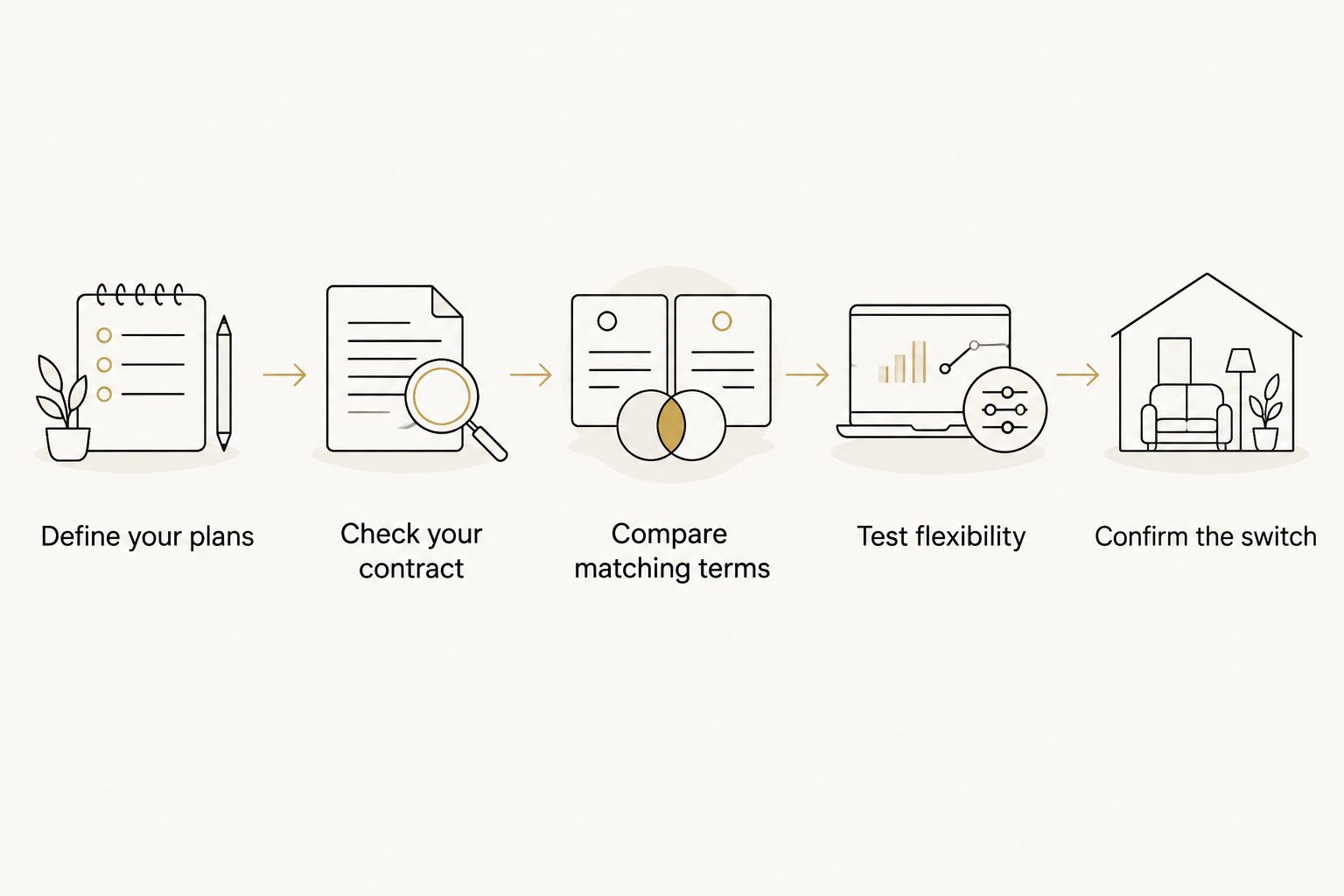
How do you check whether switching makes sense?
1. Define your plans
Write down what you expect to do with the property and loan during the proposed fixed period. Include a possible sale, renovations, investment purchase, career change or move into private practice.
Separate firm commitments from possibilities. You do not need certainty about every future event, but you do need to recognise plans that would require changing or repaying the loan.
2. Check your contract
Ask your current lender about the process for fixing your existing loan. Confirm whether this is a rate change within the existing facility or a move into a different product, and request the relevant terms in writing.
If you are already fixed, obtain a current break-cost quote before comparing alternatives. Do not rely on an old quote: the amount can change with the remaining fixed period and relevant market rates.
3. Compare matching terms
Compare the existing loan and proposed fixed loan using the same outstanding balance, remaining term and repayment type. Include applicable switching costs and the features you actually use.
A lower required repayment does not prove that a loan is cheaper if the comparison extends the repayment term. Ask for the interest and repayment implications to be shown on matching assumptions.
4. Test flexibility
Check the rules for additional repayments, offset accounts, redraw, selling and refinancing. Ask what happens if you want to repay the loan before the fixed period ends.
For medical borrowers, include expected changes in earnings and cash needs. A future practice commitment or irregular locum income is a reason to examine flexibility, not an automatic reason to choose a particular rate type.
5. Confirm the switch
Before accepting, confirm when the fixed rate becomes effective and whether the quoted rate is secured before that date. Ask about any rate-lock conditions, relevant charges and what happens when the fixed period expires.
Keep the written offer and your comparison together. Your decision should remain understandable without relying on a verbal promise or a prediction about the next rate announcement.
What should doctors check before fixing a home loan?
Doctors should assess the rate structure separately from any profession-specific loan terms. Being eligible for a medical lending arrangement does not establish whether fixing is the right choice.
If you already hold a doctor home loan, ask which existing terms remain unchanged when you fix or refinance. Confirm the treatment of your current loan features and any conditions attached to the proposed arrangement rather than assuming they transfer automatically.
Mortgage Pros is best suited to medical borrowers seeking home loan advice on fixing or refinancing. The firm provides mortgage broking support for doctors, dentists and surgeons, alongside other borrowers. Advice helps you assess the structure; the lender's written terms still govern the loan, and approval is not guaranteed.
Bring your current loan statement, proposed fixed offer and a clear outline of your employment or practice plans to the discussion. Relevant information is more useful than trying to predict the market.
Review your fixed-rate options
Discuss your current loan, repayment needs and refinancing plans before committing to a fixed period.
Can I fix my rate without changing lenders?
You can ask your existing lender about fixing an eligible variable loan without moving to another lender. The available products, process and conditions depend on your lender and current contract.
Compare that offer with suitable alternatives on matching terms. Staying avoids the need to move lenders, but convenience alone does not establish that the offered structure fits your needs. Request written details before accepting a change.
Should I wait for rates to fall before fixing in 2026?
Waiting for rates to fall is a market-timing decision, not a guaranteed saving strategy. Fixed offers reflect lenders' funding conditions and pricing decisions; they do not simply follow the cash rate in a predictable sequence.
Make the decision using repayments you can afford and restrictions you accept today. If fixing only looks sensible under one forecast, the decision depends on that forecast being right. Choose a loan you can manage without needing a particular rate outcome.
What happens when my fixed period ends?
Your loan contract sets out what happens when the fixed period expires. It can provide for a move to a variable rate unless you arrange another eligible option with the lender.
Review the next step before expiry rather than treating the original fixed decision as permanent. Compare the proposed ongoing rate, your remaining term and your current plans, including whether you now need different features or repayment flexibility.
FAQ
Is it worth switching to a fixed rate in 2026?
Switching to a fixed rate in 2026 is worth considering when repayment certainty matters more than flexibility. Check break costs, extra repayment restrictions and offset access before committing.
Will a fixed-rate home loan save me money?
A fixed-rate home loan does not guarantee savings. Your outcome depends on the agreed rate, subsequent variable-rate movements, applicable costs and how you use the loan.
Can I make extra repayments on a fixed home loan?
Extra repayments depend on your fixed-loan contract. Ask for the permitted amount, how the lender measures it and the consequences of exceeding it.
Can I use an offset account with a fixed rate?
Offset access depends on the fixed-loan product. Confirm whether an offset is supported and how it applies rather than assuming it works like your existing variable loan.
Can I switch out of a fixed rate early?
Leaving a fixed rate early can trigger break costs and other applicable charges. Request a current written payout or break-cost quote before deciding to change the loan.
Is a split loan better than fixing everything?
A split loan suits borrowers who want a fixed portion alongside variable-loan flexibility. It is not automatically better: restrictions remain on the fixed portion, while the variable portion stays exposed to rate changes.
Can Mortgage Pros help me compare fixed-rate home loans?
Mortgage Pros provides home loan and refinancing advice, including support for medical borrowers. Discuss your existing contract, repayment priorities and planned loan changes before choosing a structure.
One last thing
Before signing a fixed offer in 2026, ask: What would happen if I sold the property, repaid extra or needed to refinance during this period? The answer can matter more than a small difference between advertised rates.
Request the answer in writing and keep it with your loan documents. Contact us today to discuss your circumstances before making the change. This article provides general information, not a personal recommendation to fix, refinance or select a particular loan.
Related guides
- Is refinancing worth it?
- Fixed-rate home loan lenders
- Offset home loan accounts
- Refinancing a doctor home loan to a standard loan