
The best green home loan lenders to shortlist in 2026 are Bank Australia for a dedicated clean-energy mortgage comparison and Commonwealth Bank for comparing a green home offer with a mainstream mortgage. Neither is an automatic winner: your property’s documented eligibility, borrowing position and overall loan structure should decide the result.
- Best green home loan lenders shortlist: compare Bank Australia and Commonwealth Bank against a suitable standard mortgage.
- Bank Australia merits consideration for its Clean Energy Home Loan; confirm the property evidence required.
- Commonwealth Bank merits consideration for its Green Home Offer; compare the complete mortgage structure.
- Mortgage Pros suits Australian borrowers seeking mortgage-broking support with home loans and refinancing.
Why this matters
A green home loan links mortgage eligibility or benefits to a property’s environmental performance. That does not make it the right mortgage for every energy-efficient home. You still need an affordable repayment structure, suitable features and an application that meets the lender’s credit criteria.
Mortgage Pros helps Australian borrowers with home loans and refinancing. Start with your borrowing needs, then assess whether a green mortgage improves the result rather than allowing the label to drive your decision.
Keep property eligibility and borrower approval separate. An energy-efficient house does not establish your income, deposit, credit history or ability to repay.
What makes the best green home loan lenders?
Use these five criteria before choosing a lender:
- Property eligibility: Obtain the lender’s written requirements and identify the evidence your particular home needs.
- Borrower suitability: Check how the lender assesses your employment, income, existing debts and intended property use.
- Overall borrowing cost: Compare interest, fees and switching expenses across the same loan amount and remaining term.
- Useful features: Assess offset, redraw, extra repayments and fixed or variable options against how you manage money.
- Practical documentation: Establish who supplies the energy assessment, when it is required and whether further evidence is needed after construction.
For a 2026 application, request the lender’s dated eligibility document and loan disclosure documents. A general description of an environmentally friendly property is not a substitute for the evidence required by the lender.
Green home loan shortlist at a glance
These are distinct starting points for comparison, not a claim that either lender wins for every borrower. The standard mortgage is a control option, not a third green lender.
| Option | Best for | Standout comparison point | Key limitation |
|---|---|---|---|
| Bank Australia | Borrowers investigating a dedicated clean-energy mortgage | Clean Energy Home Loan | Your property and borrowing position must satisfy the applicable requirements |
| Commonwealth Bank | Borrowers comparing a green offer within a mainstream bank relationship | Green Home Offer | A green benefit does not establish the best overall mortgage fit |
| Suitable standard mortgage | Borrowers testing whether a green option delivers a better result | A baseline without relying on a green designation | Does not necessarily recognise the property’s energy performance |
1. Bank Australia: best for a dedicated clean-energy comparison
Bank Australia’s Clean Energy Home Loan provides a clear starting point when you want to investigate a mortgage explicitly associated with an energy-efficient home. Treat the product’s eligibility rules as the first screening step, before spending time on an application.
Best for: borrowers with property energy documentation who want to assess a dedicated clean-energy mortgage.
Ask which assessment pathway applies to your property: an established dwelling, a newly completed home and a proposed build need different supporting documents. Give the lender the actual certificate or assessment rather than describing the property as sustainable.
Bank Australia pros:
- A named clean-energy mortgage makes the purpose of your enquiry clear.
- Property eligibility can be assessed alongside your borrowing requirements.
- Provides a specific green option to compare with a conventional mortgage.
Bank Australia cons:
- The clean-energy designation does not establish that your particular property qualifies.
- Property eligibility does not resolve borrowing capacity or demonstrate that the loan structure suits you.
Before choosing Bank Australia, request a written explanation of the applicable property requirements, loan features and conditions attached to any green benefit. Compare the resulting proposal with a suitable standard mortgage using consistent assumptions.
Verdict: Hold until the property evidence and full mortgage comparison support proceeding.
2. Commonwealth Bank: best for a mainstream-bank green comparison
Commonwealth Bank’s Green Home Offer is another named option to investigate when comparing finance for an energy-efficient property. It is particularly relevant to a comparison that already includes a Commonwealth Bank mortgage, because you can ask how the green offer changes the underlying proposal.
Best for: borrowers who want to assess a green offer alongside a mainstream bank mortgage.
Existing customers should still compare alternatives. Keeping banking arrangements together is a preference, not evidence that a mortgage delivers the best outcome.
Commonwealth Bank pros:
- A named Green Home Offer gives you a specific eligibility enquiry to make.
- Lets you examine the green benefit separately from the underlying mortgage structure.
- Provides a second lender proposal for testing your first shortlist choice.
Commonwealth Bank cons:
- A familiar banking relationship does not establish competitive overall borrowing costs.
- You must establish which mortgage arrangements and property evidence meet the offer’s requirements.
Ask for the proposed mortgage terms and the green conditions together. If a feature you need is missing, include that trade-off in your decision rather than comparing only the green component.
Verdict: Hold until the complete proposal beats or better suits you than the alternatives.
How this shortlist is ranked
The ranking separates two comparison purposes: a dedicated clean-energy mortgage enquiry and a green-offer enquiry within a mainstream bank comparison. It does not rank lenders by approval speed, customer satisfaction or borrowing cost.
Your final order should follow the five criteria above. A lender that cannot accept your property evidence is not your best green home loan lender, regardless of how appealing the product sounds.
Check your property evidence before applying
Energy efficiency is measurable, but different assessments measure different things. Ask which document the lender accepts and whether it covers the exact dwelling being financed.
The Australian Government’s Nationwide House Energy Rating Scheme, or NatHERS, uses a thermal performance scale from 0 stars to 10 stars. It assesses the home’s design and expected heating and cooling needs; it is not a prediction of your household’s actual electricity bill.
For example, a 7-star thermal rating is a specific assessment result, not a universal green mortgage approval. Solar panels, appliances and household behaviour are separate considerations from the building’s thermal performance.
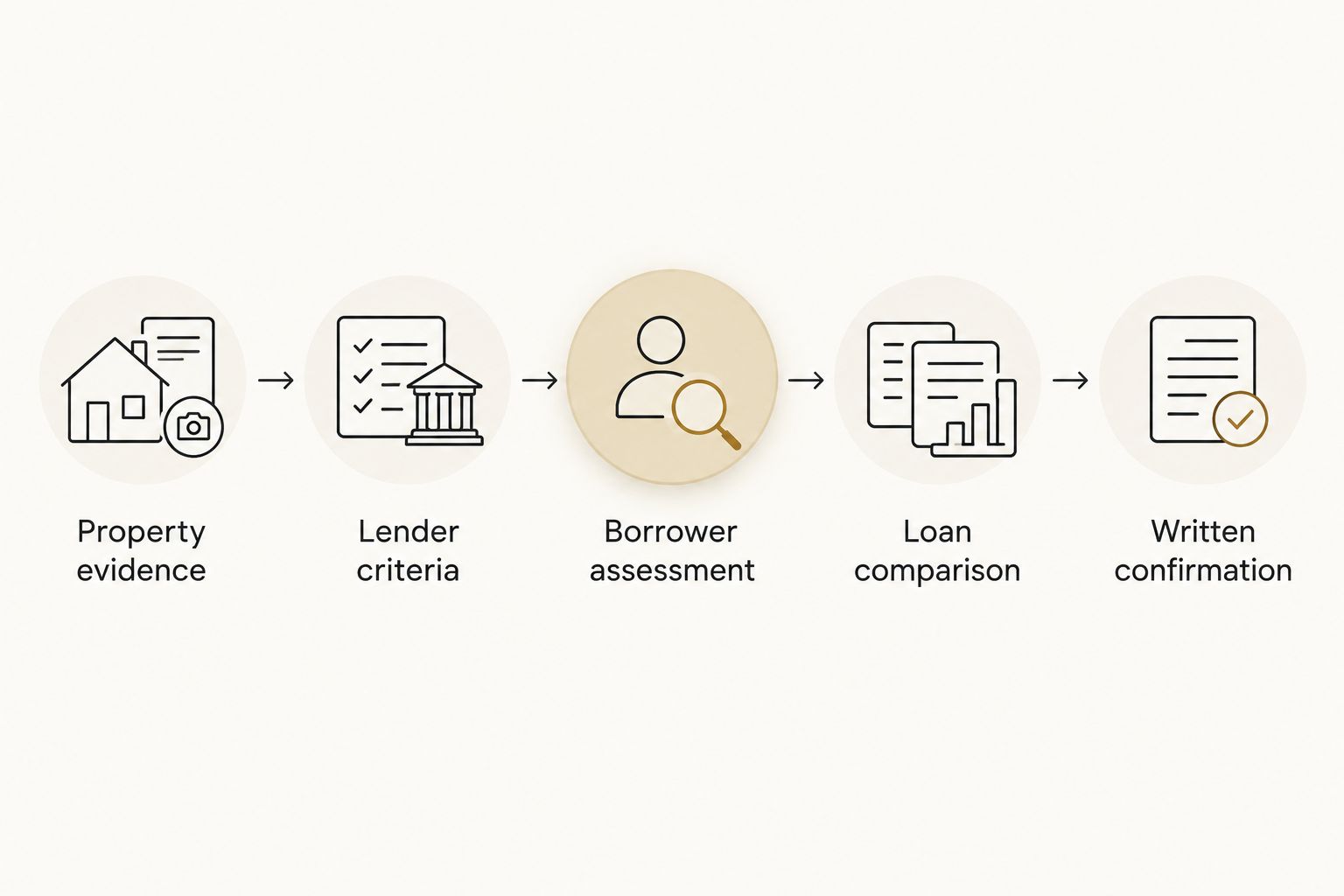
Use this sequence for your 2026 comparison:
- Property evidence: Collect the assessment, certificate or building documents you already hold.
- Lender criteria: Request the exact green eligibility requirements applicable to your application.
- Borrower assessment: Check income, debts, deposit and property use against lending requirements.
- Loan comparison: Compare the eligible green proposal with a suitable conventional loan.
- Written confirmation: Resolve outstanding conditions before committing to the mortgage.
An assessment prepared for a building approval is not automatically the document a lender requires. Confirm the accepted format before commissioning additional work or assuming an existing report is enough.
Compare the whole mortgage, not just the green benefit
A green designation answers only part of your borrowing question. Your comparison also needs to reflect how you will use the loan and how long you expect to keep it.
Keep the loan assumptions consistent
Use the same borrowing amount, repayment type and remaining term when comparing proposals. Extending the term can reduce the regular repayment while increasing the period over which interest is paid.
Separate the lender’s assessment of affordability from your own household budget. Leave room for ongoing property expenses rather than treating the approved borrowing amount as a spending target.
Check the features you will actually use
An offset account reduces the loan balance on which interest is calculated, subject to the account and loan terms. Redraw provides access to eligible extra repayments under the lender’s rules; it is not the same arrangement.
If you expect to hold substantial savings, assess the mortgage with that behaviour included. If you do not expect to use a feature, do not assume its inclusion improves your result.
Include switching and renovation decisions
For refinancing, account for discharge expenses, establishment expenses and any applicable fixed-rate break costs. Obtain figures for your circumstances rather than assuming the green benefit outweighs the cost of moving.
For renovations, distinguish the mortgage from funding for individual improvements. Financing solar panels or insulation does not, by itself, establish that the entire mortgage qualifies for green treatment.
What doctors and other medical borrowers should check
Medical borrowers need the same property evidence as other applicants, alongside a clear explanation of their income. A green mortgage condition and an occupation-related lending policy answer different questions.
For your 2026 comparison, identify the income components the lender will assess. Hospital salary, overtime, on-call payments, locum earnings and private-practice income should be clearly documented where relevant to your application.
Do not assume a green benefit combines with an occupation-related concession. Ask for written confirmation of the proposed combination and compare it with the alternative structure.
Mortgage Pros can help you assess home loans and refinancing in the context of your borrowing needs. Bring your income documents and property energy evidence to the same discussion so both parts of the application are considered together.
Compare your home loan options
Discuss your property evidence, borrowing needs and refinancing plans with Mortgage Pros.
Which green home loan lender should you choose?
Start with Bank Australia if your priority is investigating a dedicated clean-energy mortgage. Start with Commonwealth Bank if your comparison already includes a mainstream bank mortgage and its Green Home Offer. Request the written requirements from each before choosing.
Keep a suitable standard mortgage in the comparison. If the green option does not improve the overall result or fit your needs, the label is not a reason to proceed.
For a 2026 decision, choose the proposal you can explain clearly: why the property qualifies, why the repayments fit and why the structure suits your plans. If any of those answers is unclear, resolve it before submitting an application.
FAQ
What are the best green home loan lenders in Australia?
Bank Australia and Commonwealth Bank are useful starting points for comparing a dedicated clean-energy mortgage and a mainstream bank green offer. Your best choice depends on documented property eligibility, borrower approval, overall borrowing costs and loan features.
Is Bank Australia better than Commonwealth Bank for a green home loan?
Neither lender is automatically better for every borrower. Compare the applicable property requirements and complete mortgage proposals using the same borrowing amount, repayment type and loan term.
Does having solar panels qualify my home for a green mortgage?
Solar panels alone do not establish green mortgage eligibility. Ask the lender which property standards and assessment documents apply to the proposed loan.
Can I refinance an existing home into a green home loan?
Refinancing into a green home loan requires an eligible property and an approved borrowing application. Compare switching expenses and the new mortgage structure with keeping your existing loan.
Does a seven-star NatHERS rating guarantee a green home loan?
A seven-star NatHERS rating does not guarantee a green home loan. The lender must accept the property evidence, and you must separately satisfy its credit requirements.
Can doctors combine a green home loan with medical lending benefits?
Doctors need written confirmation that any proposed green benefit and occupation-related lending concession can be combined. Do not assume separate policies apply together to the same application.
Should I choose a green mortgage instead of a standard home loan?
Choose a green mortgage only when the complete proposal suits your circumstances better than the alternatives. A standard mortgage remains a useful benchmark for comparing borrowing costs, features and eligibility.
One last thing
Your household electricity bill is not a substitute for a property energy assessment. Low consumption reflects how you use the home as well as the building itself, while lender eligibility depends on the evidence its policy accepts.
Before ordering a new report, ask which existing documents are acceptable. Then contact Mortgage Pros today to discuss your home loan comparison and the next application steps.
Related guides
- Is refinancing worth it?
- Compare offset home loan accounts
- Can I top up my home loan to fund renovations?