

Instead of manually checking when your fixed home loan ends, set calendar reminders that prompt a loan review before expiry. You can automate the reminders—not the refinance approval or settlement—so you have a clear process for reviewing the reversion rate and arranging your next loan settings.
- A fixed rate reversion refinance needs lender approval; calendar reminders automate the review, not the loan switch.
- Mortgage Pros suits borrowers seeking broker support to compare refinancing with their current lender’s options.
- Confirm your fixed expiry date, reversion terms and settlement instructions before authorising a change.
- Keep reminders active until the lender confirms the agreed loan change has taken effect.
Why this matters
When your fixed period expires, your loan moves to the arrangements specified in your contract unless you arrange something else. The reversion rate is not necessarily the most suitable option, but refinancing is not automatically the answer either. Compare the actual alternatives before deciding.
For your 2026 review, separate the reminder system from the lending decision. A calendar can tell you when to act; it cannot assess borrowing capacity, obtain approval or discharge your existing mortgage. Start with whether refinancing is worth it, then build the review process below.
Mortgage Pros is best suited to home loan borrowers who want broker support with refinancing and loan reviews. Broker support does not remove lender assessment or guarantee a settlement date.
Before you start
- Collect your loan records. Have the fixed-rate expiry notice or contract, a recent statement, your current balance and repayment details. Obtain access to secure lender messaging and a calendar you check regularly.
- Prepare your assessment documents. Gather income evidence, liabilities and living expenses. For a doctor home loan review, identify salary, overtime, on-call earnings, locum work or private-practice income separately so you can ask what evidence each lender requires.
- Check the timing trap. Starting a review before expiry is different from settling before expiry. An early payout can trigger fixed-rate break costs; obtain a dated payout estimate and confirm the proposed settlement date before authorising discharge.
Do not assume that an application submitted before the fixed period ends preserves a particular offer. Ask the lender or broker which terms apply, what remains conditional and when any offer expires.
Loan record and expiry details
Your first configuration unit is a single loan record. Use a secure document or task system, not scattered screenshots and email threads. Keep passwords, identity documents and full account details out of calendar entries.
- Confirm the expiry date. Read the lender’s notice and check it against your loan records. Ask the lender to resolve any discrepancy in writing.
- Confirm the fallback. Ask which interest rate, repayment amount, repayment frequency and loan features will apply if you give no further instructions. Record the date of that confirmation because variable terms can change.
- Separate each split. Record the balance, fixed expiry and remaining term for every fixed portion. A variable portion does not necessarily follow the same timetable.
- Record the decision owner. Nominate who will collect documents, speak with the broker and approve instructions. Joint borrowers should agree on the intended outcome before an application proceeds.
- Record your objective. Specify whether you want repayment certainty, flexibility, an offset facility or another clearly defined feature. Keep the objective separate from the lender’s proposed solution.
Expected result: you have a confirmed expiry date, a documented fallback and a named person responsible for the review. An unverified date is not a reliable reminder trigger.
Calendar reminders and review milestones
Use Google Calendar on the web to create dated review events. The following intervals are a suggested planning schedule, not lender processing estimates or a guarantee that refinancing will finish before expiry.
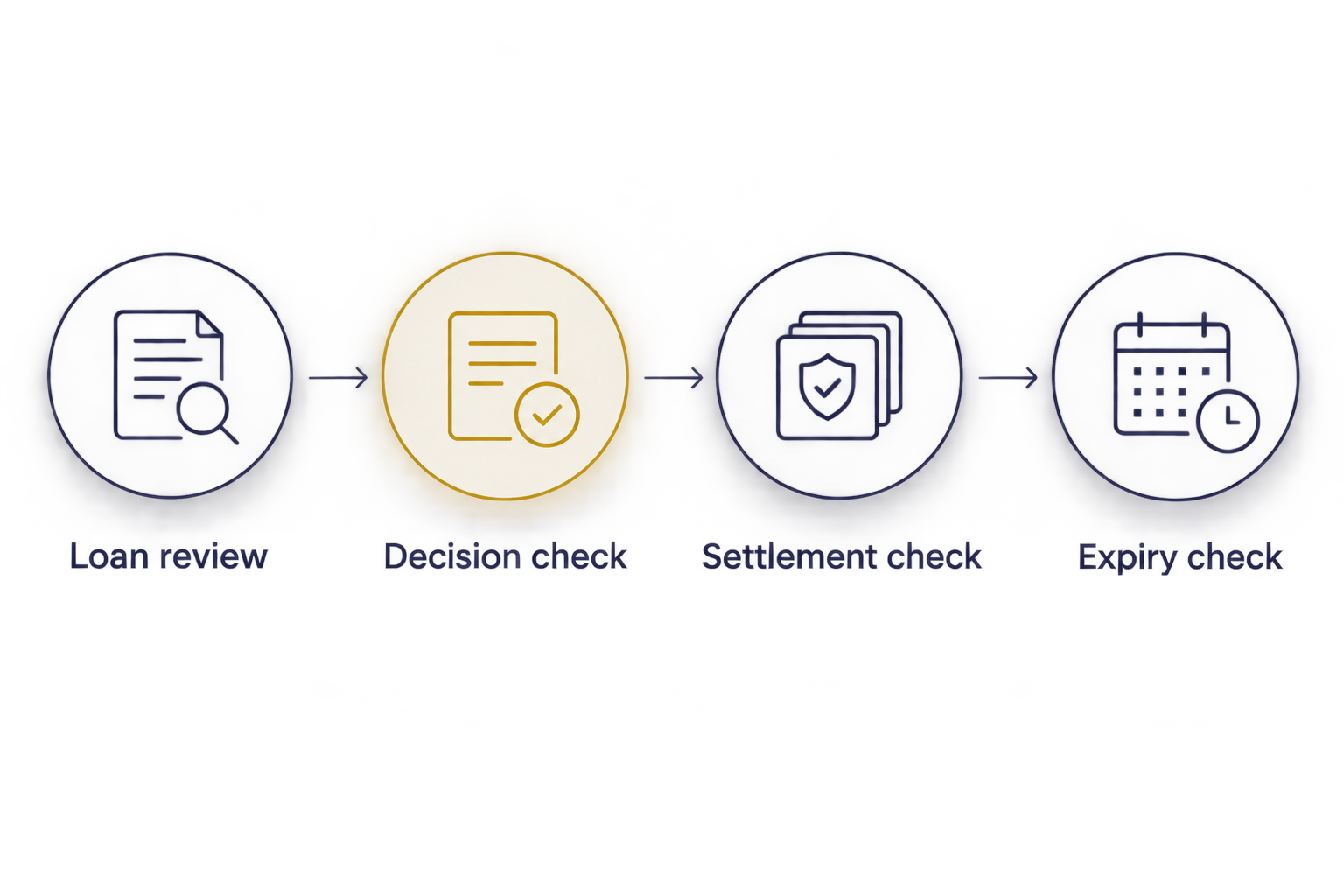
- Select Create, then Event. In Add title, enter Loan review. Set the event for 90 days before expiry, choose a time you can act and select Save.
- Create a second event titled Decision check for 60 days before expiry. Use it to check the current lender’s proposal against any refinance option and identify outstanding documents.
- Create a third event titled Settlement check for 30 days before expiry. Use it to confirm application status, remaining conditions and the intended effective date with the relevant lender or broker.
- Create an event titled Expiry check on the fixed-rate expiry date. Check that the agreed change has happened or confirm what applies while settlement remains outstanding.
- Open each event and confirm its notification settings. Check calendar notification permissions on the device you actually use; an event without a working alert is only a diary entry.
Expected result: your calendar contains four visible milestones tied to the verified expiry date. For a 2026 expiry that is already inside this schedule, start the review now rather than waiting for the next milestone.
Keep each event useful: include the next action, the person responsible and a reference to your secure loan record. Do not attach sensitive financial documents to a shared calendar invitation.
Loan comparison and approval instructions
At the first reminder, request your current lender’s post-fixed options and compare them with suitable refinance alternatives. Use the same balance and remaining loan term wherever possible so the comparison does not confuse a longer repayment period with a better outcome.
| Option | Best for | Main benefit | Main drawback | What to verify |
|---|---|---|---|---|
| Reprice with your current lender | Borrowers whose existing loan still meets their needs | Changes pricing without switching lenders | Does not establish that the offer is competitive | Effective date, features and written terms |
| Refix with your current lender | Borrowers prioritising repayment certainty | Fixes the rate for an agreed period | Restricts flexibility under the fixed-loan terms | Break provisions and repayment restrictions |
| Refinance to another lender | Borrowers with a suitable alternative after assessment | Allows a change of lender and loan structure | Requires assessment and settlement coordination | Approval conditions, switching costs and timing |
| Accept the contractual reversion | Borrowers deliberately retaining the fallback arrangement | Avoids arranging an immediate loan switch | Leaves the contractual fallback in place | Actual rate, repayments and ongoing suitability |
- Request written proposals. Record the rate, fees, features, remaining term and conditions for each serious option. Do not compare a personalised proposal with an unconfirmed advertised headline alone.
- Check affordability. Review the expected repayments against your household budget. Tell the assessor about changed income, debts, dependants or employment arrangements.
- Check switching implications. Ask about break costs, discharge requirements, establishment costs and any lenders mortgage insurance implications. Obtain advice on tax questions rather than assuming refinancing preserves the treatment of every loan portion.
- Choose and authorise. Give clear instructions only after you understand the conditions. Record the intended settlement or variation date and who is responsible for confirming it.
Expected result: you have a documented decision, not merely an application in progress. Before arranging an early payout, read about refinancing before your fixed-rate term ends.
For a 2026 doctor home loan review, ask how the proposed lender assesses your current income mix. Mortgage Pros can assist with home loan advice, but the lender determines what income it accepts and whether the application meets its requirements.
Arrange your fixed-rate expiry review
Discuss your expiry date, current loan and refinancing objectives with Mortgage Pros.
Settlement confirmation and repayment checks
Do not turn off the reminders when you sign documents. Signing, approval and settlement are different milestones, and a proposed change is not evidence that your account has changed.
- Confirm completion. Obtain confirmation that the refinance has settled or the existing lender’s variation has taken effect. Check the effective date against your instructions.
- Check the account. Verify the applied interest rate, repayment amount, repayment frequency and remaining term. Check each affected split rather than relying on the overall account balance.
- Check linked arrangements. Confirm offset links, direct-debit instructions and any repayment instructions affected by the change. Do not cancel existing payment arrangements until the lender confirms what is required.
- Replace the old milestones. Remove redundant reminders only after verification. If you enter another fixed period, create the next expiry review immediately.
Expected result: the loan account reflects the agreed arrangement and your repayment instructions match it. Save the completion confirmation with your 2026 loan records so a later query has a clear reference point.
Review the loan whenever your circumstances change
A fixed-expiry calendar is useful, but it does not capture every reason to reassess a loan. Add a second workflow for changes to income, employment, ownership or household finances.
Create a calendar task titled Update loan review whenever a relevant change occurs. Record the change in your secure loan file, notify the broker or lender handling any active application, and ask whether the existing recommendation or approval needs reassessment.
For medical borrowers, moving from hospital employment into locum work or private practice changes the evidence available for assessment. Do not assume an earlier borrowing estimate remains valid after that move.
Best for: borrowers whose circumstances change before fixed expiry. The benefit is an earlier review of suitability; the limitation is that the trigger depends on you reporting the change. Keep the scheduled expiry reminders as a separate safeguard.
Troubleshooting
The reminder did not appear
Check that the event sits in a visible calendar and that notifications are enabled for both the calendar and device. Create a test event and confirm the alert arrives before relying on the expiry schedule.
The refinance is not ready at expiry
Ask the current lender what rate and repayments apply while the refinance remains incomplete. Obtain an updated status and outstanding-condition list from the incoming lender or broker; an application alone does not stop contractual reversion.
The payout estimate includes a break cost
Check the payout date used in the estimate. Ask for an updated calculation for the intended settlement date and compare the implications before authorising discharge. Do not assume that starting the application early requires settling early.
Approval is delayed by income evidence
Ask for a precise list of outstanding documents and identify which income component needs clarification. Supply accurate, current evidence through the requested secure channel. Do not change or omit information to make it fit an earlier application.
The new repayment differs from your expectation
Check the balance, remaining term, repayment frequency and any capitalised costs against the final documents. Ask the lender to explain the difference before changing your payment instructions or assuming the account is incorrect.
Customize your workflow
Keep the process proportionate. One fixed split needs a simpler record than several loans with different expiry dates, but each fixed portion still needs its own confirmed deadline.
For your next 2026 review, add a short completion checklist covering the lender confirmation, first repayment and linked accounts. Measure success by the verified loan outcome, not by how many reminders you created.
Mortgage Pros can help you review refinancing alongside existing-lender options. Contact us today with your expiry notice and current statement to discuss the next step; do not send identity documents through an unsecured enquiry message.
FAQ
Can I automatically stop my fixed home loan reverting?
A calendar reminder cannot stop contractual reversion. You need an agreed lender variation or a completed refinance, with the effective date confirmed.
When should I start a fixed rate reversion refinance?
A suggested planning point is 90 days before fixed expiry, not a guaranteed processing timeframe. Start immediately if your expiry is closer, and ask what timing is realistic for your application.
Do I have to refinance when my fixed rate ends?
No, refinancing is only one option. Compare your current lender’s repricing or refixing proposal with the contractual reversion and suitable external alternatives.
Can I apply before my fixed period ends without settling early?
You can begin a refinance review before fixed expiry and discuss a later settlement date. Confirm approval validity, payout requirements and any break costs before authorising the timing.
Does submitting a refinance application stop my reversion rate?
No, submitting an application does not change your existing loan contract. Confirm what applies until settlement or an agreed variation takes effect.
What should doctors prepare for a refinance review?
Doctors should prepare current loan records, income evidence, liabilities and living expenses. Identify salary, overtime, on-call, locum and private-practice income separately, then confirm the lender’s documentation requirements.
What should I check after my refinance settles?
Check the effective date, applied rate, repayments, remaining term and linked account arrangements. Keep the review open until the lender confirms completion and the account reflects the agreed terms.
One last thing
A lower required repayment does not, by itself, prove a refinance improves your position: extending the loan term also changes the repayment calculation. Ask for a comparison using your existing remaining term before agreeing to a longer one. Bring that question to your loan review, then confirm the final structure in writing.
Related guides
- Refinancing a doctor home loan to a standard loan
- Split home loan to rate protection: complete workflow
- How much does it cost to break a fixed-rate loan?