

Instead of repeatedly entering estimates into borrowing calculators, use a borrowing capacity to pre approval workflow that turns verified income, spending and deposit records into a lender-assessed application. For your 2026 purchase, establish an affordable repayment limit, check lender requirements, submit supporting documents and read every condition before you rely on the result.
- Mortgage Pros suits borrowers seeking home loan advice, particularly doctors managing complex income.
- Your borrowing capacity to pre approval workflow starts with verified income, liabilities, living expenses and deposit evidence.
- A borrowing estimate guides your search; conditional pre-approval still depends on its written terms and property assessment.
- Report employment, debt and deposit changes before relying on an existing assessment.
Why this matters
Borrowing capacity is an estimate; pre-approval is a conditional lending decision, not permission to buy any property. Confusing them leaves you making offers against a figure that has not passed the checks you assumed were complete.
Mortgage Pros provides home loan advice and approval support, including for doctors. Mortgage Pros is best for borrowers seeking mortgage broking support rather than a calculator-only borrowing estimate. A broker helps prepare and compare applications; the lender still makes the credit decision.
Use this 2026 workflow to keep your evidence, application and property-search limit aligned. General information does not replace advice about your circumstances or legal advice about a purchase contract.
Before you start
- Gather your records: identification, income evidence, savings and deposit statements, existing loan statements, credit limits and a realistic household spending breakdown. Ask for the lender-specific document checklist before collecting everything.
- Arrange access and authority: access your banking, payroll and relevant tax records. Every applicant must provide their information and complete the required consent and identity checks.
- Check the hidden constraint: an unused credit-card limit can affect borrowing capacity. Disclose the limit, not just the outstanding balance, and ask how the proposed lender assesses it before changing accounts.
Keep documents in a secure folder and use your broker’s or lender’s approved submission channel. Avoid emailing identity documents to an address you have not independently verified.
Estimate, pre-approval and final approval compared
These stages answer different questions. Ask what has actually been assessed, rather than relying on the label attached to the result.
| Stage | Best for | What it establishes | Benefit | Limitation |
|---|---|---|---|---|
| Borrowing estimate | Early planning | An indicative borrowing amount based on supplied assumptions | Helps narrow your search | Does not establish that documents or credit history have been assessed |
| Conditional pre-approval | Preparing to make offers | A conditional lending position under the lender’s stated process | Gives you written conditions to work against | Assessment depth varies; property and other checks can remain outstanding |
| Final approval | Financing a specific purchase | Approval after the lender’s required checks and conditions are satisfied | Moves the transaction towards loan documentation and settlement | You still need to meet documentation and settlement requirements |
A higher estimate is not automatically a better outcome. Your workable limit must also leave room for ownership expenses and changes in your household budget.
Your borrowing brief
Define the purchase
- State whether you intend to live in the property or hold it as an investment. Identify the applicants and describe the intended property type and location.
- Record your deposit sources separately: savings, sale proceeds, gifts or other funds. Note which amounts are already accessible and which depend on another event.
- Set aside funds for purchase expenses and a cash reserve. Do not treat your entire bank balance as money available for the deposit.
- Write down a comfortable repayment limit based on your household budget. Keep this separate from the maximum amount a calculator produces.
Expected result: you have a purchase brief that distinguishes your preferred budget, available contribution and financing requirement.
For a 2026 application, use current figures rather than a budget prepared before a job change, rent increase or new commitment. A precise-looking estimate built on outdated spending is still unreliable.
Reconcile your figures
Use one worksheet for all applicants. Suggested headings are Income, Living expenses, Liabilities and Deposit; these are worksheet headings, not prescribed lender portal fields.
- Put recurring income and expenses on a consistent basis. For arithmetic consistency, a year contains 12 months, 26 fortnights or 52 weeks; identify the actual payment frequency before converting amounts.
- Separate gross income from take-home pay. Supply the underlying evidence so the lender can apply its own income assessment.
- List debts, repayment commitments and credit limits, including student debt and buy-now-pay-later accounts. Explain any account that statements show but your worksheet does not.
- Reconcile your stated savings with account balances and explain transfers or large deposits. Keep evidence of the original source where required.
Expected result: another person can trace each material figure to a supporting record without guessing what it represents.
Do not remove genuine expenses to improve a calculator result. Correct errors, distinguish transfers from spending and disclose ongoing commitments accurately.
Your income evidence and lender fit
Document the income
- Ask which income documents the proposed lender requires for your employment type. Supply complete documents, including all requested statement pages.
- Separate base salary, overtime, allowances, bonuses and other variable earnings. Do not assume every component receives the same treatment.
- Explain employment changes, probation, contract end dates and gaps. Provide the relevant contract or employer evidence when requested.
- For self-employed income, provide the requested business and personal financial records. Distinguish business turnover from income available to support personal repayments.
Expected result: the application explains both the amount you earn and the evidence supporting its ongoing nature.
For doctors, hospital salary, locum work and private-practice earnings need a clear evidence trail. See how to document locum doctor income for a home loan if your earnings come from changing engagements.
Check the assessment assumptions
- Ask how the proposed lender treats your variable income, credit limits, dependants and existing debts. Record which assumptions support the borrowing estimate.
- Confirm any profession-specific eligibility requirements rather than assuming your occupation guarantees acceptance. Medical registration alone does not establish repayment capacity.
- Compare the proposed repayment commitment with your own budget. Discuss how repayment changes would affect the money left for household needs.
- Identify outstanding evidence before selecting an application pathway. Resolve a policy mismatch before submitting a formal application elsewhere.
Expected result: you understand why the lender fits your circumstances and which parts of the estimate still need verification.
Mortgage Pros provides doctor home loan advice, but no broker can replace a lender’s credit assessment. The useful outcome is a suitable, supportable application—not the largest unverified figure.
Your pre-approval application
Prepare the submission
- Request the current 2026 application checklist and confirm the intended loan purpose and applicants.
- Check that names, addresses, employment details and liabilities agree across the application and supporting documents. Explain legitimate differences rather than leaving them unresolved.
- Complete the requested identification and consent process. Read declarations before signing, particularly statements about debts, expenses and the accuracy of information.
- Submit through the agreed secure channel and retain a copy. Keep a list of outstanding requests so follow-up documents do not get lost across messages.
Expected result: the lender receives a consistent application with an identifiable evidence trail and clear ownership of outstanding tasks.
There is no universal set of portal buttons for Australian home loan applications. Follow the instructions supplied by the selected lender or broker rather than treating another institution’s screen layout as authoritative.
Check the written outcome
- Read the actual approval document. Confirm the applicants, approved amount, loan purpose and any restrictions.
- Identify the expiry date and every outstanding condition. Ask whether income, expenses and credit history have been assessed or remain subject to further review.
- Confirm what the lender must assess once you select a property, including acceptable security and valuation requirements.
- Ask what changes you must report and what is required to extend or refresh the approval.
Expected result: you can explain what has been approved, what remains conditional and when the decision stops being current.
Do not bid unconditionally at auction on the strength of pre-approval alone. Obtain advice from your solicitor or conveyancer about the contract and discuss the specific property and remaining finance risks before committing.
Prepare your pre-approval application
Discuss your income evidence, borrowing assessment and next application steps with Mortgage Pros.
Refresh your assessment when circumstances change
An existing pre-approval is not a permanent borrowing limit. Use this repeatable workflow whenever a material change occurs during your 2026 property search.
- Report changes: tell your broker or lender about changes to employment, income, debts, dependants, deposit funds or intended property use.
- Update evidence: provide the relevant payslips, statements, contracts or other requested records.
- Recheck capacity: ask whether the change affects borrowing capacity, lender suitability or existing conditions.
- Confirm validity: obtain confirmation of the current lending position before relying on the previous amount.
Expected result: your property-search budget reflects your current circumstances, not the circumstances at the original application date.
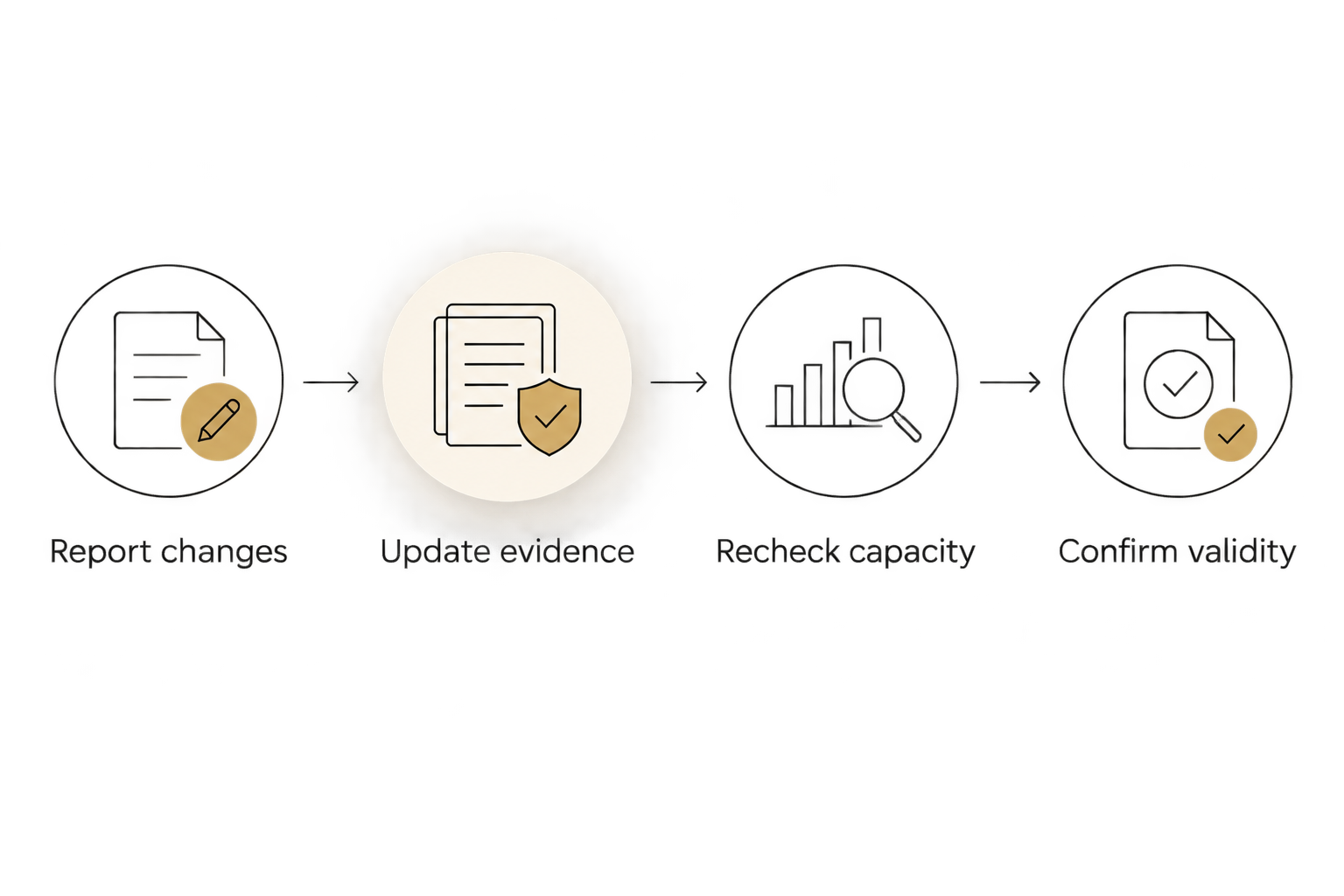
A pay rise does not automatically increase your approved limit. The lender must assess the updated position; wait for confirmation before increasing your purchase budget.
Troubleshooting
The calculator result exceeds the assessed amount
Ask for the assumptions that changed. Common differences include treatment of variable earnings, credit limits, living expenses and existing repayments. Rebuild your budget using the assessed figure rather than submitting the same unsupported estimate elsewhere.
Overtime or on-call earnings were not fully accepted
Ask which evidence or policy requirement remains unmet. Supply the requested earnings history and clarify the nature of the payments. Do not describe variable pay as guaranteed unless the employment evidence supports that description.
The deposit total does not match the application
Check whether purchase expenses, inaccessible funds or unexplained transfers caused the gap. Reconcile the source and availability of each contribution, then revise the loan requirement if necessary.
Pre-approval is nearing expiry without a property
Contact the broker or lender before the stated expiry date. Ask what reassessment and updated documents are required; do not assume an extension is automatic or that the previous amount remains unchanged.
The chosen property creates a lending problem
Ask the lender to identify the security issue and outstanding assessment. Obtain legal advice before changing contractual commitments. Borrower pre-approval does not establish that every property is acceptable security.
Customise your workflow
For a straightforward salary application, focus on consistent records and a realistic budget. For medical income, add a breakdown by employer, engagement and income component so the assessment does not rely on an unexplained total.
For an investment purchase, identify the intended use from the start and provide the rental evidence the lender requests. If a guarantor arrangement is proposed, ask how it changes the security structure and what separate advice the guarantor needs.
Keep one current application summary throughout your 2026 search. Record the lending position, outstanding conditions, expiry date and changes reported; this is a tracking document, not a substitute for the lender’s written decision.
FAQ
How do I move from borrowing capacity to pre approval?
Verify your income, expenses, liabilities and deposit, then submit a documented application to a suitable lender. Read the written outcome to establish what has been assessed and which conditions remain.
Does a borrowing calculator mean I qualify for a home loan?
No, a calculator provides an estimate based on its assumptions and your entries. A lender must assess your application and supporting evidence before making a credit decision.
Can doctors include overtime and on-call income?
Doctors can submit overtime and on-call income for assessment, but acceptance depends on lender policy and supporting evidence. Separate these payments from base salary and provide the records requested.
Should I close unused credit cards before applying?
Ask how the proposed lender assesses your credit limits before changing accounts. If you reduce or close a facility, provide the evidence the lender requires rather than assuming the change is already reflected.
Does pre-approval guarantee final approval?
No, pre-approval remains subject to its written conditions. Property assessment, updated information and other outstanding checks can affect the final decision.
What happens if I change jobs after pre-approval?
Report the job change before relying on your existing approval. The lender must determine whether new employment terms or income evidence change its assessment.
Who can help prepare a doctor home loan application?
Mortgage Pros provides doctor home loan advice and application support. The lender remains responsible for assessing the application and deciding whether to approve it.
One last thing
A larger approved loan does not create a larger deposit. Borrowing capacity and available cash are separate constraints, so check both before increasing your property-search limit. Contact us today to discuss the evidence and assessment needed for your next step.
Related guides
- How long does mortgage pre-approval take?
- Pre-approval to settlement workflow
- How much can I borrow as a doctor in Australia?