

Best overall for eligible first-home buyers: a government-guaranteed home loan. Best for eligible doctors: a professional loan with a lenders mortgage insurance waiver. Best for borrowers with limited savings and suitable family support: a guarantor home loan. The best low deposit home loan options in 2026 depend on your eligibility, repayment capacity and who carries the risk—not just your deposit size.
- The best low deposit home loan options start with eligibility, repayment capacity and protection against unnecessary mortgage insurance.
- Government-guaranteed home loans suit eligible buyers seeking a smaller deposit without lenders mortgage insurance.
- Professional LMI waivers deserve an early eligibility check for doctors.
- Guarantor loans put a family member’s security at risk; shared equity gives another party an ownership interest.
- Mortgage Pros helps individual borrowers compare home loan pathways and prepare for lender assessment.
Why this matters
A small deposit creates two separate problems: meeting the lender’s security requirements and proving you can repay the loan. A guarantee or insurance waiver addresses the first problem. It does not remove the second.
For your 2026 purchase, compare the route to approval with the obligations you keep after settlement. Mortgage insurance, a family guarantee and shared ownership are different arrangements, even when each helps you buy with less cash.
Mortgage Pros is best suited to individual borrowers who want mortgage broking advice and approval support when comparing low deposit home loan options. Start with your circumstances, then assess the loan—not the other way round.
What makes the best low deposit home loan options?
Use these criteria before choosing a pathway:
- Eligibility: Check buyer status, occupation, income, property requirements and any scheme conditions before building your purchase plan around an option.
- Upfront cash: Separate the deposit from purchase expenses. A deposit requirement is not your complete savings target.
- Mortgage insurance: Identify whether lenders mortgage insurance applies, is waived or is replaced by a guarantee arrangement.
- Repayment capacity: Compare the borrowing amount against your income, existing debts and ongoing household spending.
- Risk allocation: Establish whether the extra risk sits with you, a guarantor or a shared-equity partner.
- Exit flexibility: Understand what happens when you refinance, sell, release a guarantor or buy back an equity share.
A low deposit loan is useful only if it also fits your household budget. Approval is not evidence that the repayments leave enough room for your other priorities.
Low deposit home loan options at a glance
| Option | Best for | Standout feature | Key limitation |
|---|---|---|---|
| Government-guaranteed home loan | Eligible first-home buyers | A smaller deposit without LMI under the scheme | Buyer, property and lender requirements apply |
| Professional loan with an LMI waiver | Eligible doctors and other qualifying professionals | Occupation-based access to an LMI waiver | Professional status alone does not guarantee approval |
| Guarantor home loan | Borrowers with suitable family support | Additional security can reduce the deposit barrier | The guarantor takes on a financial obligation |
| Standard low deposit loan with LMI | Borrowers outside guarantee or waiver eligibility | Does not depend on a government guarantee or family security | LMI protects the lender, not the borrower |
| Shared-equity arrangement | Eligible buyers comfortable with shared ownership | An equity contribution reduces the amount you fund | Another party holds an interest in the property |
These are financing pathways, not interchangeable loan products. In 2026, compare the actual lender terms and scheme rules attached to your application rather than assuming every loan within a category works identically.
1. Government-guaranteed loan: best for eligible first-home buyers
A government-guaranteed home loan lets an eligible buyer purchase with a smaller deposit while the government guarantees part of the lending exposure. Under the Australian Government 5% Deposit Scheme, eligible first-home buyers can buy with a deposit of at least 5% without paying lenders mortgage insurance.
The guarantee supports the lender; it is not a cash payment to you. You remain responsible for the home loan and must pass the participating lender’s credit assessment.
Government-guaranteed loan pros:
- Avoids LMI when you meet the scheme requirements.
- Provides a defined pathway for eligible low deposit buyers.
- Does not require a family member to offer property as security.
Government-guaranteed loan cons:
- Scheme eligibility does not replace lender approval.
- Participating lender and property requirements limit your choices.
- A smaller deposit leaves you borrowing more of the purchase amount.
Best for: Eligible first-home buyers with sufficient income to service a loan but a smaller deposit.
Housing Australia’s published Australian Government 5% Deposit Scheme guidance is the source for the deposit and LMI conditions. For a 2026 application, confirm the rules that apply to your household, purchase location and intended property before signing a contract.
Verdict: Buy through this pathway if you qualify and the repayments fit; check it before accepting an LMI-bearing loan.
2. Professional LMI waiver: best for eligible doctors
Some lenders offer LMI waivers to eligible borrowers in specified professions, including doctors. The waiver removes an insurance requirement; it does not remove the lender’s checks on income, debts, deposit and property.
Mortgage Pros specialises in home loans for doctors. For a doctor comparing low deposit home loan options, professional-policy eligibility deserves an early check alongside government schemes and standard lending.
Professional LMI waiver pros:
- Removes LMI when the lender approves the waiver.
- Provides an occupation-based alternative to a government guarantee.
- Does not require shared ownership or a family guarantee.
Professional LMI waiver cons:
- Eligible occupations and qualification requirements differ between lenders.
- The waiver does not establish your borrowing capacity.
- Avoiding LMI does not prove the rest of the loan terms suit you.
Best for: Doctors and other professionals whose credentials and financial circumstances meet a lender’s waiver policy.
Check how the lender treats your actual income structure. Salary, contract income and self-employed earnings require different supporting evidence; a professional title does not substitute for that documentation.
Compare the full loan, including fees, repayment terms and features you will use. An LMI waiver is a benefit, not a reason to stop comparing lenders.
Verdict: Buy if the waiver applies and the overall loan suits your circumstances; do not choose on occupation eligibility alone.
3. Guarantor home loan: best for suitable family support
A guarantor home loan uses additional security from a guarantor to support your borrowing. Depending on the lender and arrangement, that security can help you proceed with a smaller deposit and avoid LMI.
The guarantor does not simply provide a reference. The guarantee creates a financial obligation, and property offered as security can be at risk if the borrower defaults.
Guarantor home loan pros:
- Can reduce the deposit barrier without shared ownership.
- Can provide an alternative when a government scheme does not fit.
- Gives families a way to provide security rather than a cash gift.
Guarantor home loan cons:
- Places the guarantor’s finances and security at risk.
- Releasing the guarantee requires lender approval.
- Connects a borrowing decision with a family relationship.
Best for: Borrowers with repayment capacity and a willing guarantor who understands and can accept the obligation.
Before proceeding, establish the guarantee’s scope and the conditions for release. Do not assume rising property values will automatically release the guarantor or that making repayments on time is sufficient by itself.
The guarantor should obtain independent legal advice before signing. Both parties need to understand what happens after missed repayments, a sale, a refinance or a change in household circumstances.
Verdict: Hold until both borrower and guarantor understand the security exposure and release process.
4. Standard low deposit loan: best outside special eligibility
A standard low deposit home loan can suit a borrower who does not qualify for a government guarantee or professional waiver and does not want a guarantor. The lender assesses the application under its own credit policy, with LMI commonly applying above an 80% loan-to-value ratio.
Lenders mortgage insurance protects the lender against losses associated with borrower default. It does not pay your repayments when your income stops.
Standard low deposit loan pros:
- Does not depend on occupation-based benefits.
- Does not require a family member’s security.
- Keeps ownership separate from a shared-equity provider.
Standard low deposit loan cons:
- LMI adds a borrowing-related expense without protecting you.
- Adding LMI to the loan, where permitted, increases the debt you repay.
- A high loan-to-value ratio leaves a smaller equity buffer.
Best for: Borrowers with a serviceable application who fall outside special schemes or prefer independent borrowing.
A 95% loan-to-value ratio means the loan equals 95% of the lender-assessed property value. A 90% ratio means it equals 90%. Those percentages describe the lending exposure, not the total cash you need to complete a purchase.
Compare proceeding now with saving a larger deposit. Include the effect on debt, household flexibility and your purchase plans—not just whether approval is possible.
Verdict: Buy only after comparing guarantee and waiver eligibility and accepting the LMI obligation.
5. Shared equity: best for buyers accepting shared ownership
A shared-equity arrangement involves another party contributing funds in exchange for an equity interest in the property. This reduces the portion you must fund yourself through savings and borrowing.
Shared equity is not a guarantee or an insurance waiver. The agreement determines the other party’s ownership interest and the rules for selling, refinancing and purchasing that interest back.
Shared-equity arrangement pros:
- Reduces the portion of the purchase you must finance.
- Offers a different route from borrowing almost the entire property value.
- Does not rely on a family member guaranteeing your loan.
Shared-equity arrangement cons:
- You do not retain the full economic interest in the property.
- Buying back the equity share requires funding under the agreement’s rules.
- Sale, refinancing and property changes can require additional consent.
Best for: Eligible buyers who prioritise reducing their borrowing requirement and accept the conditions of shared ownership.
Read the treatment of property value changes carefully. The equity partner’s interest is governed by the agreement, rather than treated as an ordinary loan balance you gradually repay.
For a 2026 purchase, assess the complete arrangement: eligibility, ownership share, ongoing obligations and exit conditions. A smaller mortgage does not make those conditions secondary.
Verdict: Hold until you understand the ownership trade-off and how you would exit the arrangement.
How these options are ranked
The ranking prioritises avoiding unnecessary LMI, keeping ownership straightforward and limiting exposure for other people. Government guarantees lead for eligible first-home buyers; professional waivers take priority for qualifying doctors.
Guarantor loans rank separately because another person accepts risk. Standard LMI-bearing loans remain an option outside special eligibility, while shared equity requires a distinct ownership decision.
There is no universal winner: the best pathway is the one whose eligibility, repayments and obligations all fit your circumstances.
Check your position before choosing a loan
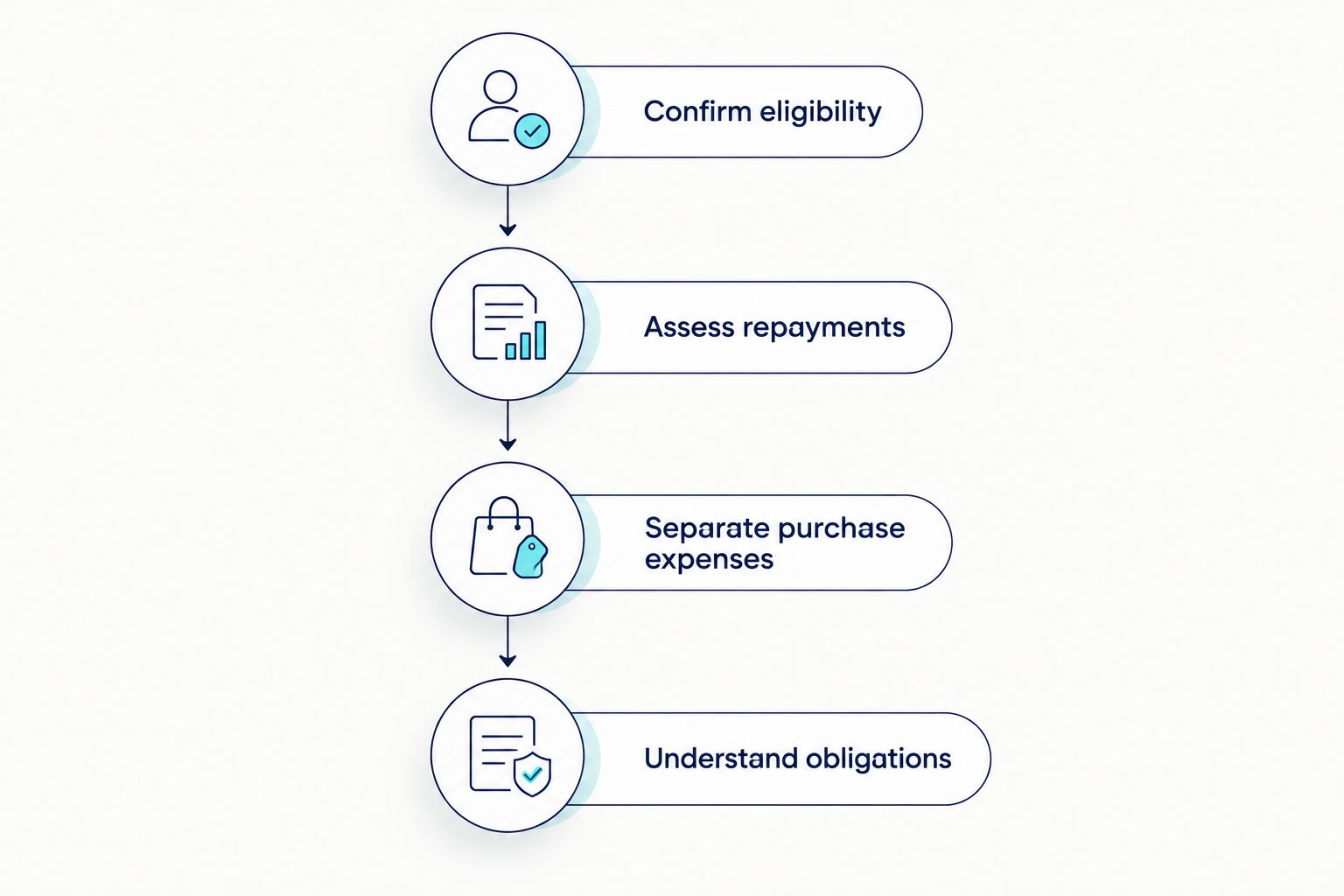
Follow this sequence before committing to a property.
Confirm eligibility
Check government scheme criteria and professional waiver policies first. Then establish whether a guarantor or shared-equity arrangement is relevant to you.
Assess repayments
Review income, existing debts, credit commitments and household expenses. Include property ownership expenses rather than comparing mortgage repayments with rent alone.
Separate purchase expenses
Keep the deposit calculation separate from conveyancing, inspections, government charges and other settlement expenses. Concessions differ by jurisdiction and buyer circumstances.
Understand obligations
Identify who carries the risk and what ends the arrangement. Read the mortgage insurance, guarantee or shared-equity terms before treating the deposit hurdle as solved.
Ask Mortgage Pros to compare the pathways that fit your circumstances, including the lender evidence each requires. This keeps the discussion focused on an assessable application rather than a headline deposit percentage.
Compare your home loan pathways
Discuss your deposit, income and eligibility for low deposit borrowing arrangements.
Which low deposit home loan option should you choose?
For an eligible first-home buyer in 2026, start with a government-guaranteed loan. For an eligible doctor, compare professional LMI waivers alongside that pathway before selecting a lender.
Consider a guarantor only when the family member understands the obligation and release conditions. Use a standard low deposit loan when it fits better than the alternatives, and assess shared equity as an ownership agreement—not simply a smaller mortgage.
FAQ
What’s the best low deposit home loan option in Australia?
A government-guaranteed loan is the starting option for eligible first-home buyers seeking a smaller deposit without LMI. Eligible doctors should also compare professional LMI waivers; other borrowers need to assess standard lending, guarantor or shared-equity pathways.
Can I buy a home with a 5% deposit in 2026?
Eligible first-home buyers can purchase with at least a 5% deposit under the Australian Government 5% Deposit Scheme without paying LMI. You must also meet scheme requirements and the participating lender’s credit assessment, and account for purchase expenses.
Does lenders mortgage insurance protect me?
Lenders mortgage insurance protects the lender, not you. It does not cover your repayments if you lose income, and it is separate from insurance intended to protect a borrower.
Is a guarantor loan better than paying LMI?
A guarantor loan can avoid LMI, but it creates a financial obligation for the guarantor. Compare that security exposure and the release conditions before treating it as the better option.
Can doctors get a low deposit home loan without LMI?
Eligible doctors can qualify for an LMI waiver under some lenders’ professional lending policies. Qualification, income, loan-to-value ratio and property requirements still apply.
Is shared equity the same as a government guarantee?
Shared equity gives another party an ownership interest; a government guarantee supports the lender’s security position. Their ongoing obligations and exit rules are different.
Does a low deposit loan mean I can borrow more?
A low deposit pathway does not remove the lender’s repayment assessment. Your income, expenses, existing debts and the lender’s credit policy still determine your borrowing capacity.
One last thing
Your cash deposit percentage and the lender’s loan-to-value ratio are not always mirror images. The lender uses its assessed property value, which can differ from the purchase price; a lower valuation can increase the cash required to settle.
Before committing, confirm how a valuation shortfall would affect your application and savings. This guide provides general information, not personal financial advice.